Posts

Showing posts with the label Protonotaria citrea

The prothonotary and the yellow warblers.

Image
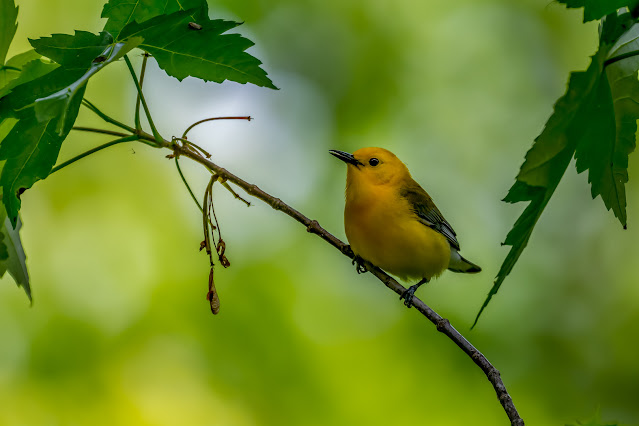
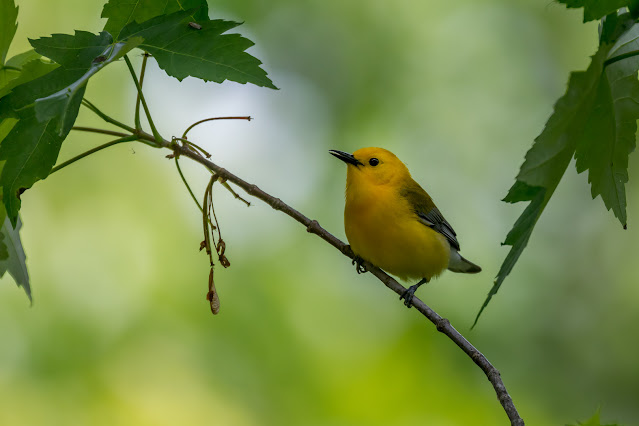
  The prothonotary was back today and I managed to get an image of it with a yellow warbler. It was a good day, as well as the prothonotary we had brown creeper, scarlet tanager, and a black and white warbler. Rondeau Provincial Park, Ontario, Canada, August 11, 2025. Protonotaria citrea Setophaga petechia

New yard bird!!

Image
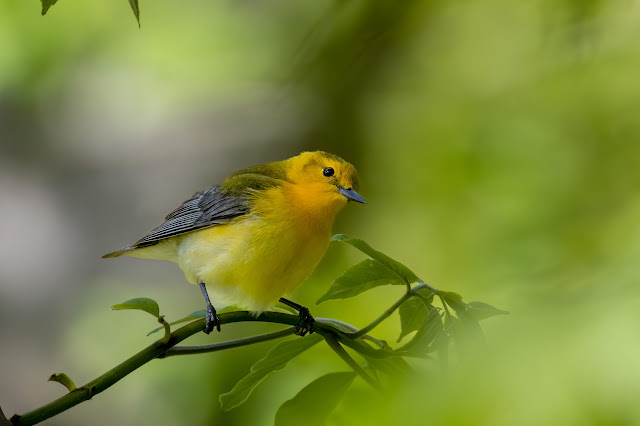
Today Anne spotted and I saw prothonotary warbler at the water in the yard. It moved into the hedge and started grooming. They breed close by but we haven't seen or heard one in the yard before. Not the greatest image but for something like this you take what you can get. Rondeau Provincial Park, Ontario, Canada, July 31, 2025., Protonotaria citrea Most warblers nest either on the ground, in shrubs, or in trees, but the Prothonotary Warbler and the Lucy's Warbler build their nests in holes in standing dead trees. They may also use nest boxes when available.

Prothonotary warbler,

Image
Prothonotary warbler, May 23, 2023, Rondeau Provincial Park, Ontario, Canada. Another from the archives.    Protonotaria citrea. Most warblers nest either on the ground, in shrubs, or in trees, but the Prothonotary Warbler and the Lucy's Warbler build their nests in holes in standing dead trees. They may also use nest boxes when available.

Prothonotary warbler,

Image
Prothonotary warbler, May 25 2023, Rondeau Provincial Park. High in the tree with filtered light. Protonotaria citrea. Most warblers nest either on the ground, in shrubs, or in trees, but the Prothonotary Warbler and the Lucy's Warbler build their nests in holes in standing dead trees. They may also use nest boxes when available. source - allaboutbirds-org

A touch of spring.

Image
I'm tired of winter so I'm looking forward to spring. Prothonotary warbler, Rondeau Provincial Park, Ontario, Canada, June 3, 2021. Protonotaria citrea For Prothonotary Warblers it pays to be bright. Males that are brighter yellow gain access to better nest sites than less colorful males, according to a study conducted in Louisiana. source- Cornell Lab of Ornithology.

Prothonotary warbler

Image
Rondeau Provincial Park, Ontario, Canada, June 3, 2021. We have nesting prothonotary warblers close to our house, I did a quick stop today. The male was singing and finally stopped by on a branch close to me. The Prothonotary Warbler got its name from the bright yellow robes worn by papal clerks, known as prothonotaries, in the Roman Catholic church. Source -Cornell Lab of Ornithology- All About Birds

Prothonotary Warbler

Image
Rondeau Provincial Park, Ontario, Canada, May 18, 2021. At one point I had a breeding pair, doesn't take long. Protonotaria citrea For Prothonotary Warblers it pays to be bright. Males that are brighter yellow gain access to better nest sites than less colorful males, according to a study conducted in Louisiana.

Prothonotary warbler

Image
May 16, 2019, Rondeau Provincial Park, Ontario, Canada. A wee gem of a warbler, with a mouthful of nesting material. Protonotaria citrea For Prothonotary Warblers it pays to be bright. Males that are brighter yellow gain access to better nest sites than less colorful males, according to a study conducted in Louisiana.

The warblers are coming.

Image
Prothonotary warbler, Rondeau Provincial Park, Ontario, Canada, May 14, 2017. We are close to the northern edge of their range. Protonotaria citrea

Prothonotary warbler.

Image
Prothonotary warbler, Rondeau Provincial Park, Ontario, Canada, May 21, 2019. All you can eat bug buffet. Protonotaria citrea For Prothonotary Warblers it pays to be bright. Males that are brighter yellow gain access to better nest sites than less colorful males, according to a study conducted in Louisiana. source - https://www.allaboutbirds.org/guide/Prothonotary_Warbler/

Rtothonotary warbler.

Image
Prothonotary warbler, Rondeau Provincial Park, Ontario, Canada, May 20, 2018 This goes way past a bad hair day. A mouth full of moss and his head disappeared. Using it to line a new nest in a tree cavity. Protonotaria citrea For Prothonotary Warblers it pays to be bright. Males that are brighter yellow gain access to better nest sites than less colourful males, according to a study conducted in Louisiana. source - https://www.allaboutbirds.org/guide/Prothonotary_Warbler

Prothonotary warbler

Image
Winter is staring us in the face, so a little bit of spring glory. Prothonotary warbler, May 11, Rondeau Provincial Park. Protonotaria citrea Most warblers nest either on the ground, in shrubs, or in trees, but the Prothonotary Warbler and the Lucy's Warbler build their nests in holes in standing dead trees. They may also use nest boxes when available.

Just another Prothonotary Warbler.

Image
Because of where we live we can go to the nesting site in Rondeau and see a Prothonotary just about everyday. We are really not the blase about the bird and there is a story behind the expression. When we were in Virginia prothonotarys were common. One of the people we were birding with said, "Oh, it's just another prothonotary. I wish I could see a yellow warbler." In Virginia prothons are common and yellows are rare, the reverse of our situation. Geography is everything. Protonotaria citrea For Prothonotary Warblers it pays to be bright. Males that are brighter yellow gain access to better nest sites than less colorful males, according to a study conducted in Louisiana. source - Cornell Lab of Ornithology.

The Prince of Warblers.

Image
This prothonotary warbler put on a display for about 20 minutes earlier today. The hard part was picking one of the 282 photos to post. Protonotaria citrea For Prothonotary Warblers it pays to be bright. Males that are brighter yellow gain access to better nest sites than less colorful males, according to a study conducted in Louisiana.

A spring time shot

Image
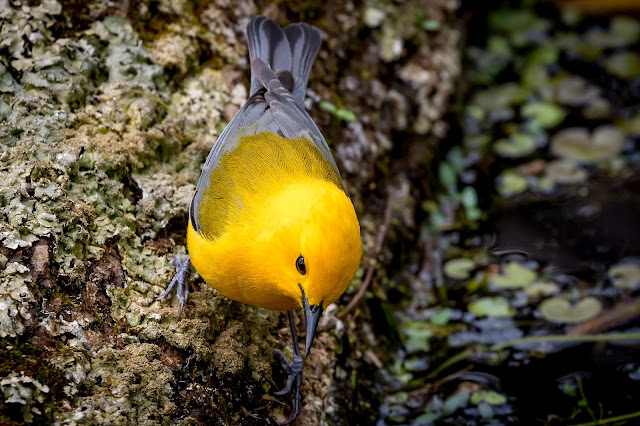
A prothonotary warbler admiring himself in a slough (pronounced slew) Protonotaria citrea Males select at least one cavity and place moss inside prior to attracting a mate. Females then build the remainder of the nest with a foundation of mosses or liverwort. The nest cup is made of rootlets, plant down, grape plants, or cypress bark lined with grasses, sedges, tendrils, rootlets, leaves, petioles, poison ivy, and even fishing line. The nest cup is about 2 inches wide.

Local rock star.

Image
Prothonotary warblers are fairly rare in Canada. Not much habitat for them. We regularly see them at Rondeau Provincial Park Protonotaria citrea The name "Prothonotary" refers to clerks in the Roman Catholic church, whose robes were bright yellow.

Another prothonotary

Image
These pretty little warblers are being cooperative this year. They can be seen most days on the Tulip Tree Trail in Rondeau Provincial Park. Protonotaria citrea

"You got mud on yo' face"

Image
You got mud on yo' face You big disgrace Kickin' your can all over the place Singin' We will we will rock you We will we will rock you Probing in the dirt for things to eat can be a muddy business. Protonotaria citrea Prothonotary Warblers feed on butterflies, moths, flies, beetles, mayflies, and spiders throughout the year The name "Prothonotary" refers to clerks in the Roman Catholic church, whose robes were bright yellow. source - Cornell Lab of Ornithology.

A bird in the hand

Image
is beautiful. This female prothonotary warbler struck a window at the parks visitor centre. Staff put it in a closed cardboard box to let it recuperate. I was lucky enough to be there when it was released. It sat quietly for a moment before flying into a tree. After a few more minutes it headed off into the forest. Protonotaria citrea Prothonotary Warblers breed in wooded swamps and other bottomland forests. Characteristic tree species include willows, sweet gum, willow oak, black gum, tupelo, bald cypress, elms, and river birch. On their wintering grounds Prothonotary Warblers are abundant in mangrove forests.
Image
Prothonotary warblers are a rare sight in Canada. They only occur in southern Ontario close to Lake Erie. Recently we were in Virginia at The Great Dismal Swamp and there were prothonotarys all over. In one short stretch of path we had 6 males chasing each other and displaying on territory. One mans common bird is another mans rarity. Protonotaria citrea The Prothonotary Warbler is one of only two warbler species that nest in cavities. (Lucy's Warbler is the other.) The name "Prothonotary" refers to clerks in the Roman Catholic church, whose robes were bright yellow.