Posts

Showing posts with the label Troglodytes aedon

Often heard, seldom seen.

Image
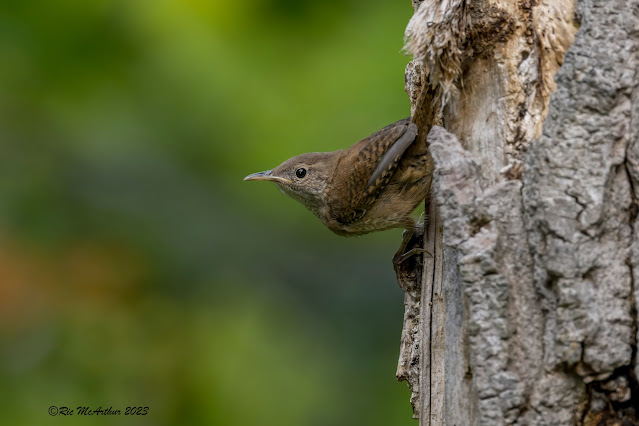
Northern house wren, Rondeau Provincial Park, Ontario, Canada, July 24, 2025. Troglodytes aedon Wrens love brush piles for cover, protection, and a source of insects. If you need to prune trees or cut brush in your yard, consider heaping the cuttings into a pile as a safe place for birds to gather.

Shake your booty.

Image
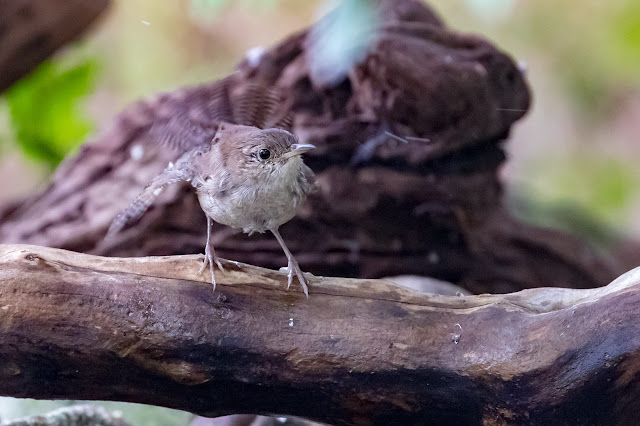
  This handsome little bird is a house wren, it is having an enthusiastic bath on our spall water feature. Rondeau Provincial Park. Ontario, Canada, September 20, 2024. Troglodytes aedon A House Wren weighs about as much as two quarters, but it’s a fierce competitor for nest holes. Wrens will harass and peck at much larger birds, sometimes dragging eggs and young out of a nest site they want – even occasionally killing adult birds. In some areas they are the main source of nest failure for bluebirds, Tree Swallows, Prothonotary Warblers, and chickadees.

House wren.

Image
 Lots of activity at the wren house these days. I think they are on their second nesting. Rondeau Provincial Park, Ontario, Canada, July 1, 2024. Troglodytes aedon.  House Wrens nest inside tree holes and nest boxes. As the season progresses their nests can become infested with mites and other parasites that feed on the wren nestlings. Perhaps to fight this problem, wrens often add spider egg sacs into the materials they build their nests from. In lab studies, once the spiders hatched, they helped the wrens by devouring the nest parasites. source - allaboutbirds.org
Image
 This house wren was having an energetic dust bath in the next door lot. Rondeau Provincial Park, Ontario, Canada, June 5, 2024. Troglodytes aedon When a bird preensit’s distributing oil secreted by a gland throughout its plumage. This oil keeps the feathers pliable, weather-proof, and ready for flight. But this oil can build up, making their feathers greasy and matted. When they take a dust bath, particles bind to the excess oil. After flapping around in the dust, they’ll fly up to a perch to complete the routine, fluffing out their feathers to shake off the excess. The bird now sports fluffier, more flight-worthy feathers.

The supply line.

Image
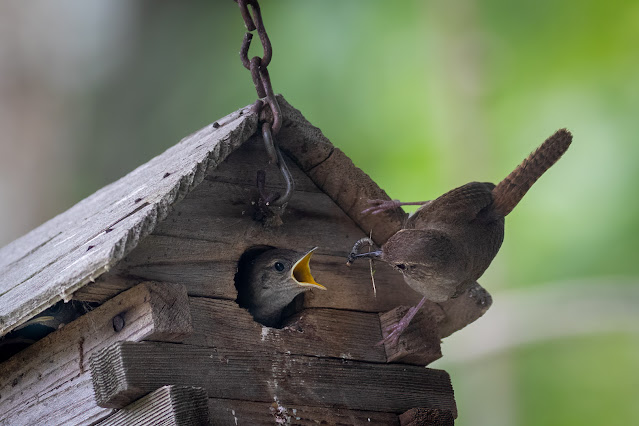
A pair if house wrens passing food for the chicks in the house. Rondeau Provincial Park, July 31, 2023. Troglodytes aedon. The House Wren has one of the largest ranges of any songbird in the New World. It breeds from Canada through the West Indies and Central America, southward to the southernmost point of South America. source -Cornell Lab of Ornithology  

House wren

Image
House wren on the hunt. Rondeau Provincial Park, July 14, 2023. Troglodytes aedon. For House Wren eggs, temperature inside the nest box can be critical to survival. If a sun-drenched nest box warms above about 106 degrees Fahrenheit for an hour, the eggs will begin to die. If a cold snap chills a nest below about 65 degrees Fahrenheit for more than a day it can also doom the eggs. source -Cornell Lab of Ornithology

House wren

Image
Rondeau Provincial Park, July 6, 2023. We seem to have had a fledge of house wrens, the young are all around and the adults are looking worn out. Troglodytes aedon. Male House Wrens returning north to breed in their first year are more likely to settle close to an established male than farther from it. Experienced males tend to settle farther apart. Young males may take clues from more experienced males about what areas are good nesting sites. source -Cornell Lab of Ornithology

House wren at the pond.

Image
Rondeau Provincial Park, July 5, 2022. The elusive house wren, heard starting at 5.00 a.m. but not seen for most of the day. Troglodytes aedon The House Wren has one of the largest ranges of any songbird in the New World. It breeds from Canada through the West Indies and Central America, southward to the southernmost point of South America. source - allaboutbirds.org

House wren,

Image
May 29, 2022, Rondeau Provincial Park, Ontario, Canada. It was flitting through the hedge above the pond then moved out into the open. Troglodytes aedon A House Wren weighs about as much as two quarters, but it’s a fierce competitor for nest holes. Wrens will harass and peck at much larger birds, sometimes dragging eggs and young out of a nest site they want – even occasionally killing adult birds. In some areas they are the main source of nest failure for bluebirds, Tree Swallows, Prothonotary Warblers, and chickadees. source - Cornell Lab of Ornithology.

House wrens

Image
Rondeau Provincial Park, Ontario, Canada, August 6, 2021. Taken just a few hours before all the chicks left the nest. if you look closely you will see another chick on the far left peeking out through the bent in the eve. Troglodytes aedon House Wrens nest inside tree holes and nest boxes. As the season progresses their nests can become infested with mites and other parasites that feed on the wren nestlings. Perhaps to fight this problem, wrens often add spider egg sacs into the materials they build their nests from. In lab studies, once the spiders hatched, they helped the wrens by devouring the nest parasites. Source -Cornell Lab of Ornithology- All About Birds

House wren,

Image
Rondeau Provincial Park, Ontario, Canada, July 26, 2021. In the yard at the little water feature. They have a nest near our bedroom window and the chattering of the young starts at 5.00 a.m. each morning. Troglodytes aedon A House Wren weighs about as much as two quarters, but it’s a fierce competitor for nest holes. Wrens will harass and peck at much larger birds, sometimes dragging eggs and young out of a nest site they want – even occasionally killing adult birds. In some areas they are the main source of nest failure for bluebirds, Tree Swallows, Prothonotary Warblers, and chickadees. Source -Cornell Lab of Ornithology- All About Birds

House wren

Image
Sept 30, 2018, House wren, Rondeau Provincial Park, Ontario, Canada. Troglodytes aedon A House Wren weighs about as much as two quarters, but it’s a fierce competitor for nest holes. Wrens will harass and peck at much larger birds, sometimes dragging eggs and young out of a nest site they want – even occasionally killing adult birds. source - https://www.allaboutbirds.org/guide/House_Wren/

House wren

Image
House wren shaking off after a quick bath. Rondeau Provincial Park, Nov 9, 2018. Troglodytes aedon Male House Wrens returning north to breed in their first year are more likely to settle close to an established male than farther from it. Experienced males tend to settle farther apart. Young males may take clues from more experienced males about what areas are good nesting sites. source -  https://www.allaboutbirds.org/guide/House_Wren/

House wren.

Image
House wren, Rondeau Provincial Park, Ontario, Canada, Sept 7, 2018. Fresh from a bath in the small pond in the yard. Troglodytes aedon House Wrens nest inside tree holes and nest boxes. As the season progresses their nests can become infested with mites and other parasites that feed on the wren nestlings. Perhaps to fight this problem, wrens often add spider egg sacs into the materials they build their nests from. In lab studies, once the spiders hatched, they helped the wrens by devouring the nest parasites. source - https://www.allaboutbirds.org/guide/House_Wren/overview

Feeding junior

Image
This wren house is under the eaves next to our living room. We get to watch the steady routine of the adults coming in with various insects for the brood. Troglodytes aedon . For House Wren eggs, temperature inside the nest box can be critical to survival. If a sun-drenched nest box warms above about 106 degrees Fahrenheit for an hour, the eggs will begin to die. If a cold snap chills a nest below about 65 degrees Fahrenheit for more than a day it can also doom the eggs.

House wren

Image
House wren , a photo by ricmcarthur on Flickr. The fully cocked tail is a good field mark for this little bird. He landed on a small flag holder hear its nest and sang its warning song. I guess I was to close. Scientific stuff Troglodytes aedon A plain brown bird with an effervescent voice, the House Wren is a common backyard bird over nearly the entire Western Hemisphere. Listen for its rush-and-jumble song in summer and you’ll find this species zipping through shrubs and low tree branches, snatching at insects. House Wrens will gladly use nestboxes, or you may find their twig-filled nests in old cans, boots, or boxes lying around in your garage. http://www.allaboutbirds.org/guide/house_wren/id

Home delivery

Image
Home delivery , a photo by ricmcarthur on Flickr. The house wrens have used the nesting box right outside the bedroom again this year. It's interesting watching their antics as they come and go. It would be nice if they didn't start chattering at 5.30 in the morning. Troglodytes aedon Taken through a window at Rondeau Provincial Park, Ontario, Canada.