Posts

Showing posts with the label yellow-rumped warbler

Yellow-rumped warbler.

Image
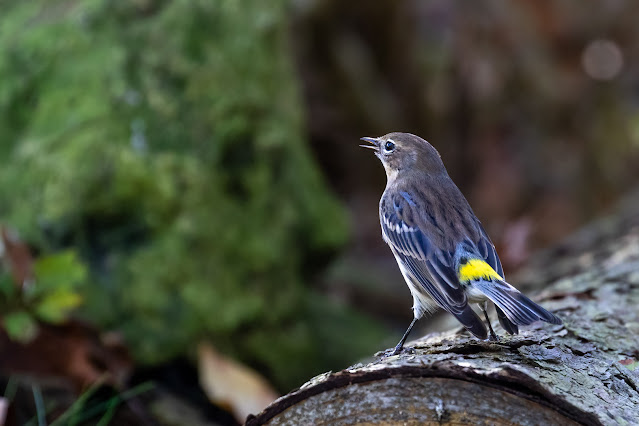
  Another from the archives, so ready for spring. Yellow-rumped warbler. October 7, 2023, Rondeau Provincial Park, Ontario, Canada, in our yard. Setophaga coronata Yellow-rumped Warblers winter across much of central and southeastern U.S., and they sometimes come to backyards if food is offered. To attract them, try putting out sunflower seed, raisins, suet, and peanut butter.

Yellow-rumped warbler

Image
Yellow-rumped warbler, Rondeau Provincial Park, August 1, 2023. This is the earliest we recall having a yellow-rump at the water. Setophaga coronata. When Yellow-rumped Warblers find themselves foraging with other warbler species, they typically let Palm, Magnolia and Black-throated Green warblers do as they wish, but they assert themselves over Pine and Blackburnian warblers. source -Cornell Lab of Ornithology

Yellow-rumped warbler

Image
Yellow-rumped warbler, May 6, 2020, Rondeau Provincial Park. Setophaga coronata. Yellow-rumped Warblers are perhaps the most versatile foragers of all warblers. They're the warbler you're most likely to see fluttering out from a tree to catch a flying insect, and they're also quick to switch over to eating berries in fall. Other places Yellow-rumped Warblers have been spotted foraging include picking at insects on washed-up seaweed at the beach, skimming insects from the surface of rivers and the ocean, picking them out of spiderwebs, and grabbing them off piles of manure. source -allaboutbirds-org.

Out of the shadows.

Image
Yellow-rumped warbler, Rondeau Provincial Park, Ontario, Canada, Oct 14, 2019. Setophaga coronata The Yellow-rumped Warbler is the only warbler able to digest the waxes found in bayberries and wax myrtles. Its ability to use these fruits allows it to winter farther north than other warblers, sometimes as far north as Newfoundland.

Imitating a rubber ducky.

Image
This yellow rumps pose made me think of the yellow rubber duck. Yellow-rumped warbler was content to just sit after its gyrations in the water. Rondeau Provincial Park, Oct 16, 2022. Setophaga coronata. The Yellow-rumped Warbler is the only warbler able to digest the waxes found in bayberries and wax myrtles. Its ability to use these fruits allows it to winter farther north than other warblers, sometimes as far north as Newfoundland.

Yellow-rumped warbler

Image
Yellow-rumped warbler, Rondeau Provincial Park, Ontario, Canada, Nov 9, 2021. New photo blind/hide set is finished. One of the first birds to come in to the pond area. Setophaga coronata The Yellow-rumped Warbler is the only warbler able to digest the waxes found in bayberries and wax myrtles. Its ability to use these fruits allows it to winter farther north than other warblers, sometimes as far north as Newfoundland. source- Cornell Lab of Ornithology.

That's why they call it a yellow-rumped warbler.

Image
Yellow-rumped warbler. Rondeau Provincial Park, Ontario, Canada, Oct 12, 2021. We had an influx of at least 12 in or around the pond at one time. This one was displaying the yellow rump which is often hidden on a perched bird. They also have yellow on the crown and the sides. Setophaga coronata The Yellow-rumped Warbler is the only warbler able to digest the waxes found in bayberries and wax myrtles. Its ability to use these fruits allows it to winter farther north than other warblers, sometimes as far north as Newfoundland. source- Cornell Lab of Ornithology.

Yellow-rumped warbler

Image
Oct 23, 2020, Rondeau Provincial Park, Ontario, Canada. A regular fall visitor to the yard and the pond. Setophaga coronata The Yellow-rumped Warbler is the only warbler able to digest the waxes found in bayberries and wax myrtles. Its ability to use these fruits allows it to winter farther north than other warblers, sometimes as far north as Newfoundland. source - https://www.allaboutbirds.org/guide/Yellow-rumped_Warbler

Yellow-rumped warbler

Image
Rondeau Provincial Park, Ontario, Canada, May 17, 2018. Setophaga coronata The Yellow-rumped Warbler is the only warbler able to digest the waxes found in bayberries and wax myrtles. Its ability to use these fruits allows it to winter farther north than other warblers, sometimes as far north as Newfoundland. The oldest recorded Yellow-rumped Warbler was at least 7 years old. source - https://www.allaboutbirds.org/guide/Yellow-rumped_Warbler

Yellow-rumped warbler.

Image
Yellow-rumped warbler awaiting its turn in the pond, Rondeau Provincial Park, Oct 21, 2018. Setophaga coronata Yellow-rumped Warblers are perhaps the most versatile foragers of all warblers. They're the warbler you're most likely to see fluttering out from a tree to catch a flying insect, and they're also quick to switch over to eating berries in fall. Other places Yellow-rumped Warblers have been spotted foraging include picking at insects on washed-up seaweed at the beach, skimming insects from the surface of rivers and the ocean, picking them out of spiderwebs, and grabbing them off piles of manure. source - https://www.allaboutbirds.org/guide/Yellow-rumped_Warbler/

Yellow-rumped warbler.

Image
Yellow rumped warbler. Whe yellow rumps show up it is usually a sign that the fall migration is coming to a close. They aren't here in big numbers but that will change. Setophaga coronata  Male Yellow-rumped Warblers tend to forage higher in trees than females do. source -  https://www.allaboutbirds.org/…/Yellow-rumped_W…/lifehistory

Yellow-rumped warbler.

Image
Another of the visitors to the yard and pond. A few minutes later he was splashing away. Setophaga coronata The Yellow-rumped Warbler is the only warbler able to digest the waxes found in bayberries and wax myrtles. Its ability to use these fruits allows it to winter farther north than other warblers, sometimes as far north as Newfoundland.

So, why do they call it a yellow rump?

Image
Lots of yellow rumped warblers around today and no two of them look alike. Setophaga coronata  Male Yellow-rumped Warblers tend to forage higher in trees than females do.