Posts

Showing posts with the label Oreothlypis ruficapilla

Nashville warbler

Image
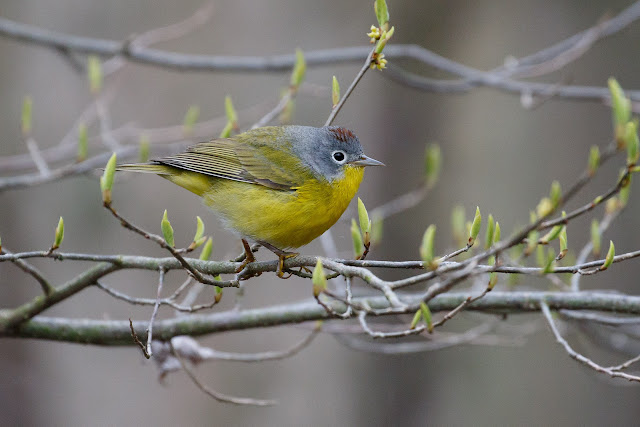
Nashville warbler, Rondeau Provincial Park, Ontario, Canada, May 7, 2019. Cold, damp weather os bringing some warblers down low where they can be seen easier than usual. Oreothlypis ruficapilla The Nashville Warbler sometimes uses porcupine quills as nest material. source -  https://www.allaboutbirds.org/guide/Nashville_Warbler/

I'm forever blowing bubbles.

Image
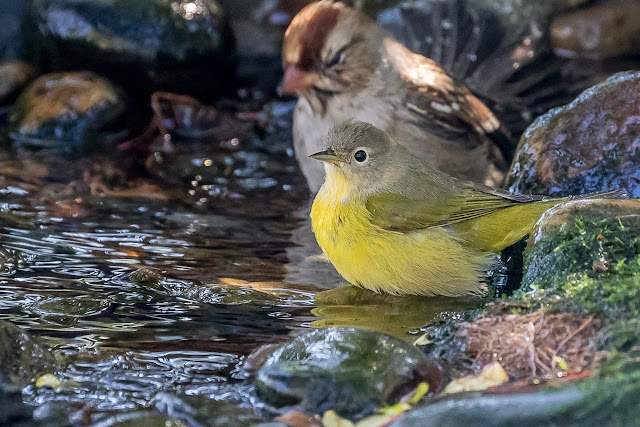
Nashville warbler doing a head plunge into our small water feature. The plunge was followed by a robust bath. Oreothlypis ruficapilla The Nashville Warbler sometimes uses porcupine quills as nest material.

Nashville warbler from warmer times.

Image
One of the many species that come to our little water feature. Oreothlypis ruficapilla The Nashville Warbler sometimes uses porcupine quills as nest material. Most first-year Nashville Warblers migrate along the Atlantic coast, while adults tend to migrate along inland routes. source -  https://www.allaboutbirds.org/…/Nashville_Warbl…/lifehistory

Nashville warbler

Image
We had a number of Nashville's in the yard during the week. This male, non breeding plumage sat still so I took its photo. Oreothlypis ruficapilla Most first-year Nashville Warblers migrate along the Atlantic coast, while adults tend to migrate along inland routes.

Nashville warbler

Image
Another visitor to our pond back in October. Oreothlypis ruficapilla The Nashville Warbler sometimes uses porcupine quills as nest material. source - Cornell Lab of Ornithology

Nashville warbler

Image
Nashville warbler , a photo by ricmcarthur on Flickr. Each fall we get a large number of warbler species in their migration to their wintering grounds. Yesterday we had 5 warbler species, a Swainson's thrush, bluebirds, red and white breasted nuthatches among others. Cool Facts from the Cornell Lab of Ornithology: The Nashville Warbler sometimes uses porcupine quills as nest material. Most first-year Nashville Warblers migrate along the Atlantic coast, while adults tend to migrate along inland routes. The Nashville Warbler does not regularly breed near Nashville, Tennessee, but was first observed there in 1811 by Alexander Wilson, who named the species. Scientific stuff: Oreothlypis ruficapilla Medium-sized warbler. Gray head. White eyering. Plain olive-green back and wings. Yellow throat, breast, and belly. Photo taken at Rondeau Provincial Park, Ontario, Canada.