Posts

Showing posts with the label Setophaga pensylvanica

Chestnut-sided warbler

Image
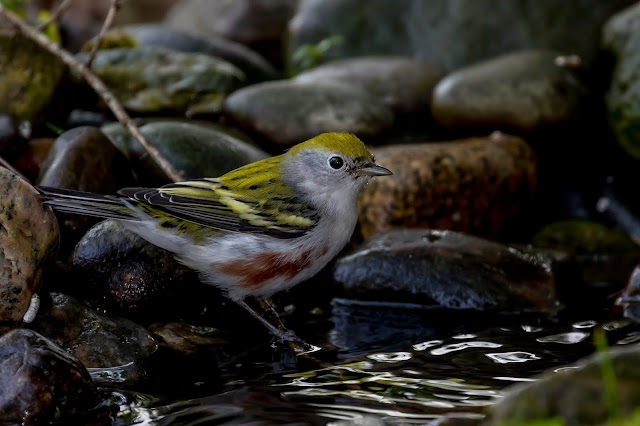
  Up close and personal, September 18, 2025. Our yard, Rondeau Provincial Park, Ontario, Canada. Lots of warbler activity the last two days and this is one of 14 species of warbler that came by the yard. Setophaga pensylvanica The Chestnut-sided Warbler sings two basic songs: one is accented at the end (the  pleased-to- meetcha  song), and the other is not. Males sing the accented songs primarily to attract a female; once nesting is well underway they switch over to the unaccented songs, which are used mostly in territory defense and aggressive encounters with other males. Some males sing only unaccented songs, and they are less successful at securing mates than males that sing both songs. source-allaboutbirds-org

Chestnut-sided warbler

Image
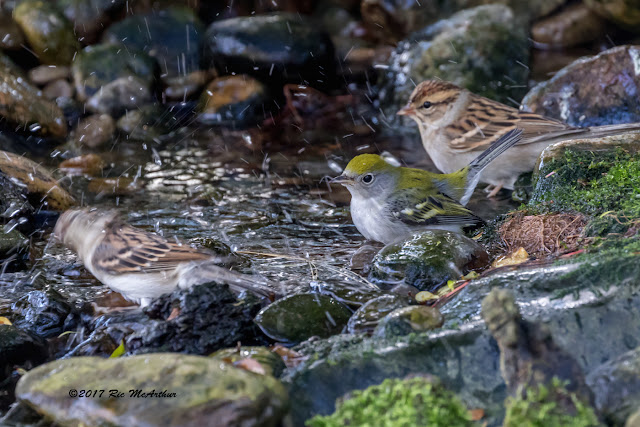
  Fall migration is on. This chestnut-sided dropped by the water feature for a quick bath. Photo by Anne. Rondeau Provincial Park, Ontario, Canada, August 24, 2025. Setophaga pensylvanica The Chestnut-sided Warbler sings two basic songs: one is accented at the end (the  pleased-to- meetcha  song), and the other is not. Males sing the accented songs primarily to attract a female; once nesting is well underway they switch over to the unaccented songs, which are used mostly in territory defense and aggressive encounters with other males. Some males sing only unaccented songs, and they are less successful at securing mates than males that sing both songs. source - allaboutbirds-org.

Chestnut-sided warbler.

Image
 A pretty good day at the pond, had 4 warbler species plus all the usual ones. Rondeau Provincial Park, Ontario, Canada, August 22, 2024. Setophaga pensylvanica The Chestnut-sided Warbler sings two basic songs: one is accented at the end (the  pleased-to- meetcha  song), and the other is not. Males sing the accented songs primarily to attract a female; once nesting is well underway they switch over to the unaccented songs, which are used mostly in territory defense and aggressive encounters with other males. 

Chestnut-sided warbler.

Image
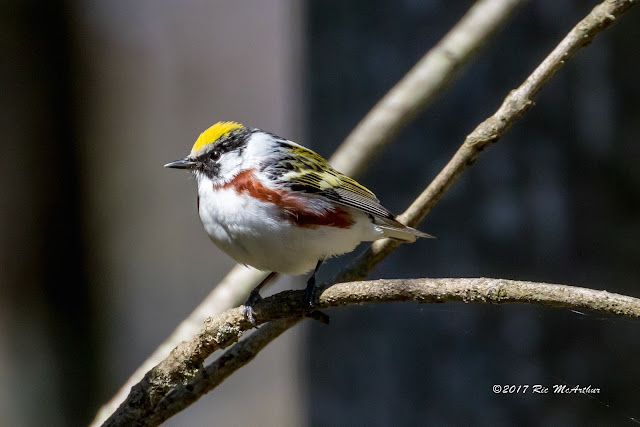
  Another from the archives, May 29, 2023, Rondeau Provincial Park, Ontario, Canada. Just before its bath in our little water feature. Setophaga pensylvanica.  On the wintering grounds in Central America the Chestnut-sided Warbler joins in mixed-species foraging flocks with the resident antwrens and tropical warblers. Individual warblers return to the same areas year after year, joining back up with the same foraging flock it associated with the year before.

Chestnut-sided warbler

Image
Chestnut-sided warbler, near Rondeau Provincial Park, May 17, 2023. Setophaga pensylvanica. The Chestnut-sided Warbler sings two basic songs: one is accented at the end (the pleased-to-meetcha song), and the other is not. Males sing the accented songs primarily to attract a female; once nesting is well underway they switch over to the unaccented songs, which are used mostly in territory defense and aggressive encounters with other males. Some males sing only unaccented songs, and they are less successful at securing mates than males that sing both songs. source-allaboutbirds-org

Chestnut -sided warbler

Image
Rondeau Provincial Park, May 23, 2022. Snow pellets, cold and overcast so I'm still working thru the archives. Setophaga pensylvanica. The Chestnut-sided Warbler sings two basic songs: one is accented at the end (the pleased-to-meetcha song), and the other is not. Males sing the accented songs primarily to attract a female; once nesting is well underway they switch over to the unaccented songs, which are used mostly in territory defense and aggressive encounters with other males. Some males sing only unaccented songs, and they are less successful at securing mates than males that sing both songs. source -allaboutbirds-org.

Chestnut-sided warbler

Image
Rondeau Provincial Park, Ontario, Canada, Aug 23, 2021. Fall migration is picking up. We had 7 species of warbler, including this chestnut-sided warbler in the yard on Monday. Setophaga pensylvanica On the wintering grounds in Central America the Chestnut-sided Warbler joins in mixed-species foraging flocks with the resident antwrens and tropical warblers. Individual warblers return to the same areas year after year, joining back up with the same foraging flock it associated with the year before. source- Cornell Lab of Ornithology.

Chestnut-sided warbler

Image
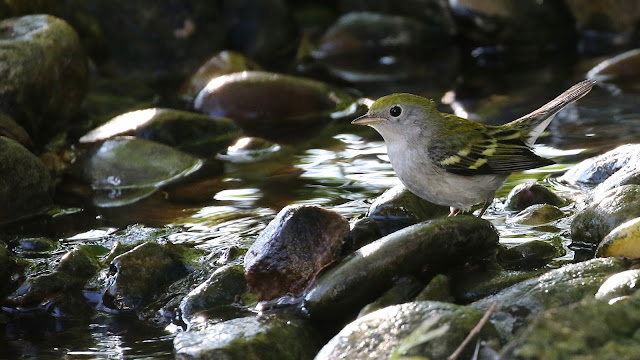
Sept 24, 2020, Rondeau Provincial Park, Ontario, Canada. A fall visitor to the pond. Setophaga pensylvanica In fall, this bird molts into lime-green and grayish white plumage with a distinctive white eyering, and heads to thickets, shade-coffee plantations, and second growth forest in Central America.

Chestnut-sided warbler,

Image
May 19, 2020, Rondeau Provincial Park, Ontario, Canada. One of my favourite warblers, he put on a show up close and personal. Setophaga pensylvanica The Chestnut-sided Warbler sings two basic songs: one is accented at the end (the pleased-to-meetcha song), and the other is not. Males sing the accented songs primarily to attract a female; once nesting is well underway they switch over to the unaccented songs, which are used mostly in territory defense and aggressive encounters with other males. source - https://www.allaboutbirds.org/guide/Chestnut-sided_Warbler

Chestnut-sided warbler.

Image
May 10, 2018, Rondeau Provincial Park, Ontario, Canada. Haven't seen a warbler yet but I'm sure there are a few species somewhere but there isn't anyone to see them. Setophaga pensylvanica The Chestnut-sided Warbler sings two basic songs: one is accented at the end (the pleased-to-meetcha song), and the other is not. Males sing the accented songs primarily to attract a female; once nesting is well underway they switch over to the unaccented songs, which are used mostly in territory defense and aggressive encounters with other males. source - Cornell Lab of Ornithology.

Chestnut-sided warbler

Image
Rondeau Provincial Park, Ontario, Canada, May 15, 2018. Hopefully coming to a tree near you "soon". Setophaga pensylvanica The oldest recorded Chestnut-sided Warbler was at least 6 years, 11 months old when it was found in Rhode Island in 1980. It had been banded in the same state in 1973. source - Cornell Lab of Ornithology.

A touch of spring.

Image
Chestnut-sided warbler, Rondeau Provincial Park, Ontario, Canada, May 5, 2018. Waiting for a freezing ice storm to start. Not enjoying winter. Setophaga pensylvanica The Chestnut-sided Warbler sings two basic song types: one is accented at the end (the pleased-to-MEETCHA song), and the other is not. The accented songs are used primarily to attract a female and decrease in frequency once nesting is well under way. The unaccented songs are used mostly in territory defense and aggressive encounters with other males. Some males sing only unaccented songs, and they are less successful at securing mates than males that sing both songs. spource -  https://www.allaboutbirds.org/guide/Chestnut-sided_Warbler

Chestnut-sided warbler, Rondeau Provincial Park, Ontario, Canada, May 5, 2018

Image
Power was out for two days, just going through 900 photos. Setophaga pensylvanica The Chestnut-sided Warbler sings two basic song types: one is accented at the end (the pleased-to-MEETCHA song), and the other is not. The accented songs are used primarily to attract a female and decrease in frequency once nesting is well under way. The unaccented songs are used mostly in territory defense and aggressive encounters with other males. Some males sing only unaccented songs, and they are less successful at securing mates than males that sing both songs. source -  https://www.allaboutbirds.org/guide/Chestnut-sided_Warbler

Chestnut-sided warbler.

Image
I've been going through old photos and deleting the so-so ones. During that process I'm seeing some old favourites like this warbler. Setophaga pensylvanica The Chestnut-sided Warbler sings two basic song types: one is accented at the end (the pleased-to-MEETCHA song), and the other is not. The accented songs are used primarily to attract a female and decrease in frequency once nesting is well under way. The unaccented songs are used mostly in territory defense and aggressive encounters with other males. Some males sing only unaccented songs, and they are less successful at securing mates than males that sing both songs. source -  https://www.allaboutbirds.org/guide/Chestnut-sided_Warbler

Weather forecast- morning showers.

Image
Chestnut sided warbler, Rondeau Provincial Park. Setophaga pensylvanica  On the wintering grounds in Central America the Chestnut-sided Warbler joins in mixed-species foraging flocks with the resident antwrens and tropical warblers. An individual warbler will return to the same area in subsequent years, joining back up with the same foraging flock it associated with the year before. Source -  https://www.allaboutbirds.org/…/Chestnut-sided_…/lifehistory

Pleased to meet cha

Image
Or so the story goes. The Chestnut sided warbler song supposedly says, pleased, pleased, pleased to meet cha. I can hear it but some can't. Setophaga pensylvanica The Chestnut-sided Warbler sings two basic song types: one is accented at the end (the pleased-to-MEETCHA song), and the other is not. The accented songs are used primarily to attract a female and decrease in frequency once nesting is well under way. The unaccented songs are used mostly in territory defense and aggressive encounters with other males. Some males sing only unaccented songs, and they are less successful at securing mates than males that sing both songs.

A great birding day.

Image
We had a great warbler day at the pond in the yard today with Anne spotting while I tried to take photos of everything. Among others, 10 warbler species -Cape May, Bay Breasted, Blackpoll,Black throated blue, Black throated green,yellow rump, Nashville, northern Parula, Tennessee and this Chestnut-Sided. Others in the yard included Hairy, Downy, Red-Bellied and Flicker, red breasted and white breasted nuthatches, hummingbird, ruby crowned and golden crowned kinglets, tufted t itmouse, blue headed vireo and a junco. Then there was the pontoon ride, sora, snipe, American bittern, Rusty blackbirds, ruddy ducks, coots, mallards, widgeon, great blue heron, great egret, sandhill cranes, harrier, kingfisher and two more warbler species - Palm and Yellow. To top everything off it was a gorgeous day weather wise. Setophaga pensylvanica On the wintering grounds in Central America the Chestnut-sided Warbler joins in mixed-species foraging flocks with the resident antwrens and trop...
Image
We watched this chestnut-sided warbler feeding for several minutes. It was bouncing around a branch checking each leaf bud for insects. Setophaga pensylvanica The Chestnut-sided Warbler sings two basic song types: one is accented at the end (the pleased-to-MEETCHA song), and the other is not. The accented songs are used primarily to attract a female and decrease in frequency once nesting is well under way. The unaccented songs are used mostly in territory defense and aggressive encounters with other males. Some males sing only unaccented songs, and they are less successful at securing mates than males that sing both songs. source - Cornell Lab of ornithology.
Image
This is a chestnut-sided warbler and its call sounds a little like -"pleased, pleased, pleased to MEETCHA." Setophaga pensylvanica The Chestnut-sided Warbler sings two basic song types: one is accented at the end (the pleased-to-MEETCHA song), and the other is not. The accented songs are used primarily to attract a female and decrease in frequency once nesting is well under way. The unaccented songs are used mostly in territory defense and aggressive encounters with other males. Some males sing only unaccented songs, and they are less successful at securing mates than males that sing both songs. source: Cornell Lab or Ornithology