Posts

Showing posts with the label black capped chickadee

Bath time.

Image
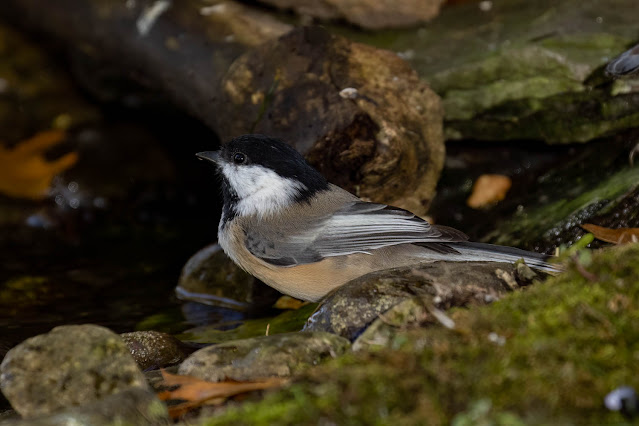
 A Nashville warbler and a black capped chickadee in close proximity in our water feature. Rondeau Provincial Park, Ontario, Canada, October 12, 2024. Poecile atricapillus Black-capped Chickadee. Nashville Warbler Leiothlypis ruficapilla
Black capped chickadee

Image
Rondeau Provincial Park, Oct 14, 2022. a regular visitor to the water feature in the yard. Poecile atricapillus The Black-capped Chickadee hides seeds and other food items to eat later. Each item is placed in a different spot and the chickadee can remember thousands of hiding places. source - allboutbirds - org

Black capped chickadee

Image
Rondeau Provincial Park, March 21, 2021. A pond visitor, they have been scarce for a week or so. Poecile atricapillus Even when temperatures are far below zero, chickadees virtually always sleep in their own individual cavities. In rotten wood, they can excavate nesting and roosting holes entirely on their own. Source -Cornell Lab of Ornithology- All About Birds

Nest building.

Image
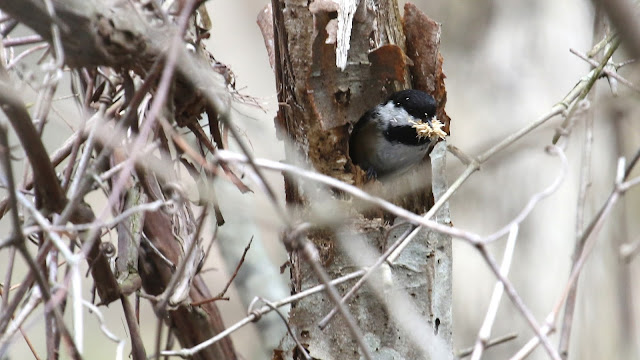
Spotted this black capped chickadee and its partner excavating a hole in this stump today. Hope it stays active so I can follow it through the season. Poecile atricapillus The Black-Capped Chickadee hides seeds and other food items to eat later. Each item is placed in a different spot and the chickadee can remember thousands of hiding places.

Chickadee

Image
Not a large selection of birds this time of year, so I take what I can get. This chickadee was good enough to pose for me. Poecile atricapillus According to Cornell Lab of Ornithology, every autumn Black-capped Chickadees allow brain neurons containing old information to die, replacing them with new neurons so they can adapt to changes in their social flocks and environment even with their tiny brains. Not sure how they figured that out.
Image
Excavate -to make hollow by removing the inner part; make a hole or cavity in; form into a hollow, as by digging A pair of chickadees were busy excavating a nest in a small tree at Rondeau yesterday. Not many birds migrating through yet so it was nice to have something to watch. Poecile atricapillus According to Cornell Lab of Ornithology every autumn Black-capped Chickadees allow brain neurons containing old information to die, replacing them with new neurons so they can adapt to changes in their social flocks and environment even with their tiny brains. Not sure how Cornell knows that.