Posts

Showing posts with the label dunlin

Dunlin

Image
Oct 27, 2020, Rondeau Provincial Park, Ontario, Canada. Seen on the last cruise of the season on the pontoon boat. Calidris alpina Dazzling in its breeding finery, with vivid rusty back and black belly patch, the Dunlin was once called the Red-backed Sandpiper. It’s now named for its nonbreeding plumage, a mousy gray-brown or “dun” color.

Slip sliding away.

Image
Red phalarope and a dunlin at Keith McLeans Conservation Area, Ontario, Canada, Dec 7, 2019. Unusual for this late in the year. Later they were feeding at the edge of the ice where some melting had occurred. Phalaropus fulicarius - red phalarope Calidris alpina - dunlin

A late Dunlin

Image
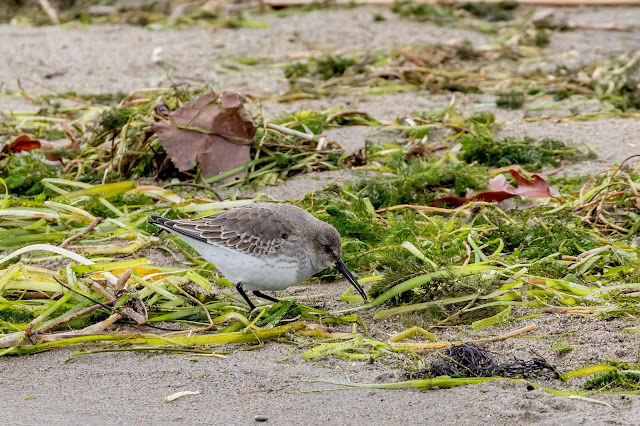
Another bird from the pontoon. An adult non-breeding Dunlin. Credit where credit is due, Anne is much better at identifying birds, especially shorebirds. Many of the ids are by her. Calidris alpina The oldest recorded Dunlin was at least 12 years, 5 months old when it was recaptured and re released during banding operations in California. Adult Description Medium-sized sandpiper. Moderately short neck. Moderately long, drooping bill. Moderately long, blackish legs. Slightly hunched appearance. In breeding plumage has black belly, rufous cap, and rufous back. Nonbreeding plumage is all dull brownish gray, with whitish belly. source -https://www.allaboutbirds.org/guide/Dunlin/id

See you spread them like this then flap.

Image
Looks like this Black-bellied plover is giving the Dunlin flying lessons. Black-bellied plover - Pluvialis squatarola Wary and quick to give alarm calls, the Black-bellied Plover functions worldwide as a sentinel for mixed groups of shorebirds. Dunlin -Calidris alpina Dunlin breeding in northern Alaska apparently move west, migrating down the eastern side of Siberia and Asia to Japan and China.

Dunlin at the bar.

Image
Earlier this fall we came upon numerous flocks of dunlin out on the sand bars in Rondeau Bay. We were able to get close without them spooking. Calidris alpina The Dunlin is a familiar shorebird around the world, where its bright reddish back and black belly, and long, drooping bill distinguish it from nearly all other shorebirds. It breeds across the top of both North America and Eurasia, and winters along coasts around the northern hemisphere.  source- Cornell Lab of Ornithology.