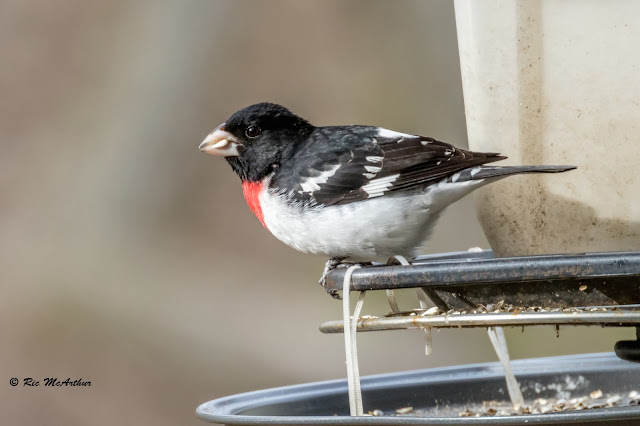
Posts

Showing posts with the label pheucticus ludovicianus

Rose-breasted grosbeak.

Image
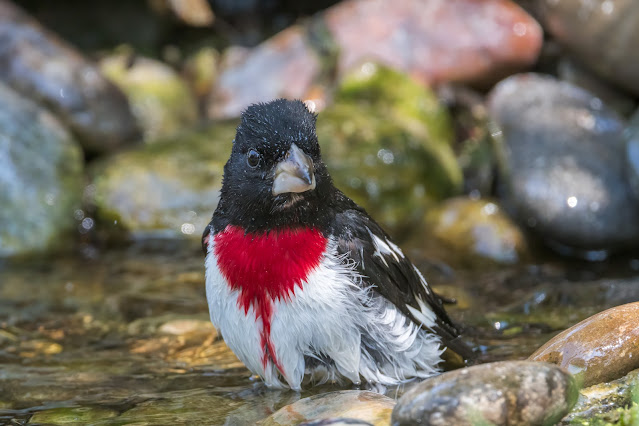
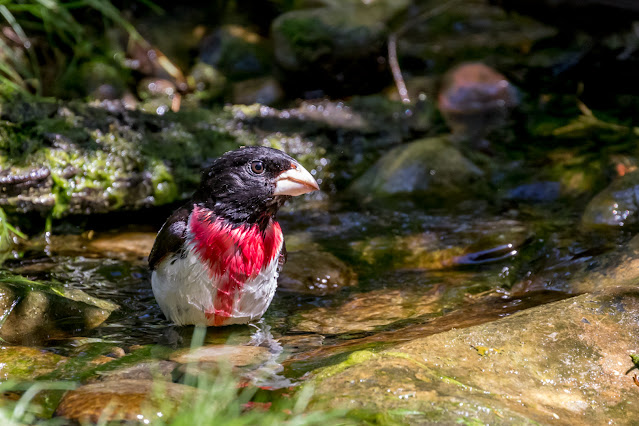
 A very colourful bird, it even looks good when it is wet. Our yard, Rondeau Provincial Park, Ontario, Canada, June 29, 2925. Pheucticus ludovicianus Rose-breasted Grosbeaks build such flimsy nests that eggs are often visible from below through the nest bottom.

Rose-breasted grosbeak.

Image
Rondeau Provincial Park, Ontario, Canada, April 29, 2024. Grosbeaks and Baltimore orioles came back in large numbers this weekend. Nice to have flashes of colour around the yard. Pheucticus ludovicianus This bird’s sweet, robin-like song has inspired many a bird watcher to pay tribute to it. A couple of early twentieth-century naturalists said it is “so entrancingly beautiful that words cannot describe it,” and “it has been compared with the finest efforts of the robin and… the Scarlet Tanager, but it is far superior to either.” Present-day bird watchers have variously suggested it sings like a robin that has had opera training, is drunk, refined, in a hurry, or unusually happy. source - allaboutbirds-org

From warmer times in the stream.

Image
 Rose-breasted grosbeak enjoying a bath when the stream was open. Rondeau Provincial Park,Ontario, Canada,  June 10, 2023. Pheucticus ludovicianus.  The male Rose-breasted Grosbeak takes a turn incubating the eggs for several hours during the day, while the female incubates the rest of the day and all night long. Both sexes sing quietly to each other when they exchange places. The male sometimes sings his normal song at full volume from inside the nest. source- allaboutbirds-org

Male rose-breasted grosbeak

Image
Rondeau Provincial Park, June 6, 2023. Shortage of new birds, so here is a regular visitor to the yard. Pheucticus ludovicianus. Researchers used mounted specimens of male Rose-breasted Grosbeaks to explore aggressive behavior. Live male birds attacked the white rump and flanks of the models, suggesting that the white markings are more important than the red chest in stimulating aggression.

That's why they call it a grosbeak.

Image
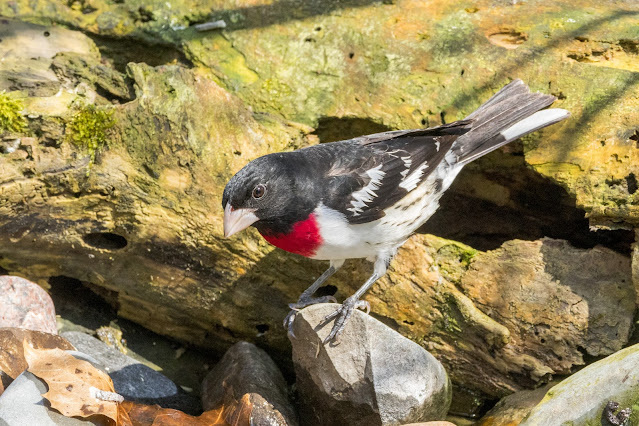
Male rose-breasted grosbeak, Rondeau Provincial Park, June 21, 2022. Pheucticus ludovicianus During the breeding season Rose-breasted Grosbeaks eat a lot of insects, as well as wild fruit and seeds. They mostly feed on berries during fall migration, and on their wintering grounds they have a varied diet of invertebrates and plant material. Grosbeaks usually glean their food from dense foliage and branches. They also snag food while hovering, and sometimes fly out to hawk for insects in midair. The animal portion of their diet includes beetles, bees, ants, sawflies, bugs, butterflies, and moths. Their vegetarian fare includes elderberries, blackberries, raspberries, mulberries, juneberries, and seeds of smartweed, pigweed, foxtail, milkweed, plus sunflower seeds, garden peas, oats, wheat, tree flowers, tree buds, and cultivated fruit. source - Cornell Lab of Ornithology.

Rose-breasted grosbeak

Image
May 13, 2020, Rondeau Provincial Park, Ontario, Canada. They've been back for awhile and are in our yard daily. Pheucticus ludovicianus Rose-breasted Grosbeaks build such flimsy nests that eggs are often visible from below through the nest bottom. source - https://www.allaboutbirds.org/guide/Rose-breasted_Grosbeak

Rose-breasted grosbeak

Image
April 29, 2020, Rondeau Provincial Park, Ontario, Canada. Grosbeaks returned in good numbers today, we had at least 6 at the feeders this afternoon. Photo through the Wonderful Wildlife Window. Pheucticus ludovicianus Rose-breasted Grosbeaks build such flimsy nests that eggs are often visible from below through the nest bottom. source - Cornell Lab of Ornithology.
Colour in the yard.

Image
Rose-breasted grosbeak, Rondeau Provincial Park, Ontario, Canada, May 1, 2019. Rose-breasted grosbeaks, Baltimore orioles, Ruby-throated hummingbirds all in the yard today. Finally some colour. Also had a big push of warblers in the park but they didn't stay, kept flying north. Pheucticus ludovicianus Rose-breasted Grosbeaks build such flimsy nests that eggs are often visible from below through the nest bottom. source -  https://www.allaboutbirds.org/guide/Rose-breasted_Grosbeak/

Rose breasted grosbeak.

Image
A few new birds in the area including this Rose breasted grosbeak. Rondeau Provincial Park. Pheucticus ludovicianus Rose-breasted Grosbeaks build such flimsy nests that eggs are often visible from below through the nest bottom.

That's a mouth full

Image
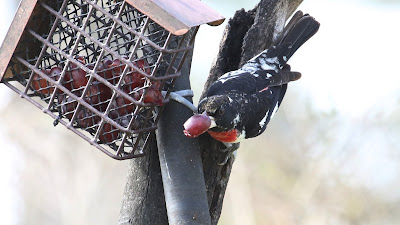
We have several grape feeders out for grosbeaks, red bellied woodpeckers, orioles and robins. This rose breasted grosbeak managed to pull one right out. side note - had our first hummingbird of the season this evening. Pheucticus ludovicianus Rose-breasted Grosbeaks build such flimsy nests that eggs are often visible from below through the nest bottom. source - Cornell Lab of Ornithology.
Image
I like the way parrots have a way of holding their head sideways. This rose-breasted grosbeak is holding its head the same way. Curious that the behaviour of to separate species is so similar. Pheucticus ludovicianus Rose-breasted Grosbeaks build such flimsy nests that eggs are often visible from below through the nest bottom. Two males share the record for the oldest Rose-breasted Grosbeak. Both birds were at least 12 years, 11 months old when captured and released—one by a Vermont bird bander in 1984, and the other by a Maryland bird bander in 1987. source - Cornell Lab of Ornithology.
The grape eater.

Image
The grape eater. , a photo by ricmcarthur on Flickr. We had an immature grosbeak at the grape bag yesterday. If you look closely you can see its tongue as it eats a bit of grape. If you look really closely you can see the sun reflecting in its eye. pheucticus ludovicianus