Posts

Showing posts with the label richard mcarthur

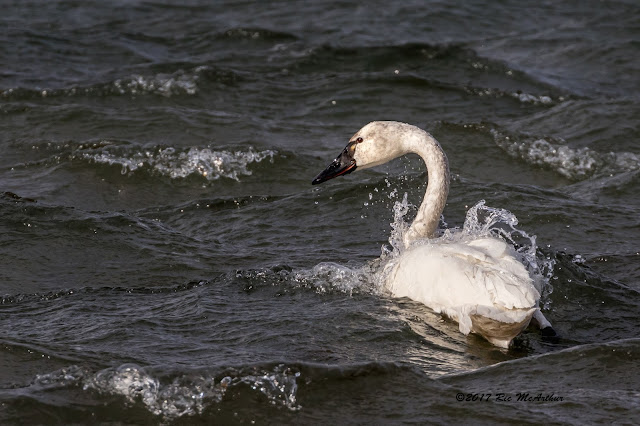
On a cold and blustery day...
Image
A small opening in the ice on Rondeau Bay resulted in two tundra swans coming close to shore. The wind was strong causing waves in the small open area. Cygnus columbianus Tundra Swans wintering in Chesapeake Bay feed almost exclusively on clams that they dislodge from the mud. But it can be challenging to enjoy a peaceful meal: often the swan has to fend off a Ring-billed, Herring, or Greater Black-backed gull that swoops in to grab a clam from the swan’s bill—a successful tactic in about half of these “kleptoparasitic” encounters.
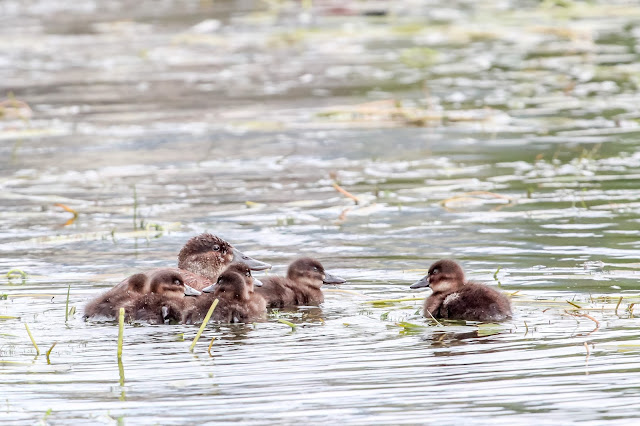
Andean ruddy duck.

Image
Another photo from our Ecuador trip. While on the short boat trip we saw Andean ruddy ducks which look pretty much the same as out ruddy ducks in North America. The chicks were a real treat. Can you tell that it's the slow season and I have a chance to go through last year's photos? Oxyura ferruginea

Reed boat.

Image
While we were in Ecuador in March 2016 we went on a side trip to Otavalo and the indigenous market there. On the way we went on a short bird watching boat excursion. We saw several new species and this reed boat tied to the dock. We didn't see any in use on the lake but it was interesting nevertheless.

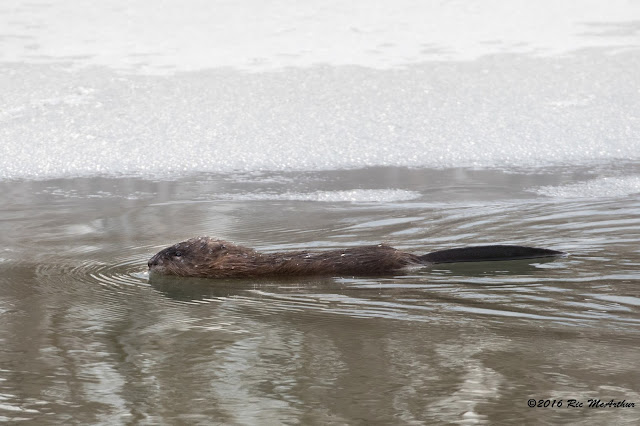
A polar plunge

Image
We spotted this muskrat taking a swim on Dec 28. So far it has been a mild winter and they have good insulation, but still.... Ondatra zibethicus A muskrat s basically a large field mouse that has adapted to life in and around water They have specially evolved teeth that protrude ahead of the cheeks and lips that can be closed behind them, permitting it to chew on stems and roots under water "with its mouth closed"

Sandhill cranes in flight

Image
When we went looking for the Smith's Longspur three were a lot of sandhill cranes flying around. None came close for crisp photos so this is what you get today. Antigone canadensis The Sandhill Crane’s call is a loud, rolling, trumpeting sound whose unique tone is a product of anatomy: Sandhill Cranes have long tracheas (windpipes) that coil into the sternum and help the sound develop a lower pitch and harmonics that add richness.

Tundra swans

Image
Tundra swans walking/paddling/swimming in a shallow semi frozen pond in a farmers field. Cygnus columbianus  Lewis and Clark provided the first written description of the Tundra Swan during their expedition to the West, where the birds’ whistle-like calls prompted Meriwether Lewis to dub them “whistling swans.”

Northern Cardinal

Image
One of our under appreciated birds. It's common here so it can't be special. Stunning really. Cardinalis cardinalis.  The male cardinal fiercely defends its breeding territory from other males. When a male sees its reflection in glass surfaces, it frequently will spend hours fighting the imaginary intruder.

Booted Racket-tailed hummingbird.

Image
One of the 41 species of hummingbird we saw in Ecuador. Booted Racket-tail Hummingbird. Ocreatus underwoodii

Smith's Longspur.

Image
We took a road trip to see the Smith's Longspur and the bird was exactly where the directions said. It was hanging out with two Lapland Longspurs and a bunch of snow buntings. A lifer for us. We had never seen buntings on a wire before. Calcarius pictus "Longspur" refers to the elongated claw of the hind toe.

Pied billed grebe.

Image
We were checking to see what ducks ere in the marina at Erieau now that Rondeau Bay is frozen over. One was a pied billed grebe eating a fish. Podilymbus podiceps Part bird, part submarine, the Pied-billed Grebe is common across much of North America. These small brown birds have unusually thick bills that turn silver and black in summer. These expert divers inhabit sluggish rivers, freshwater marshes, lakes, and estuaries. They use their chunky bills to kill and eat large crustaceans along with a great variety of fish, amphibians, insects, and other invertebrates. Rarely seen in flight and often hidden amid vegetation, Pied-billed Grebes announce their presence with loud, far-reaching calls.

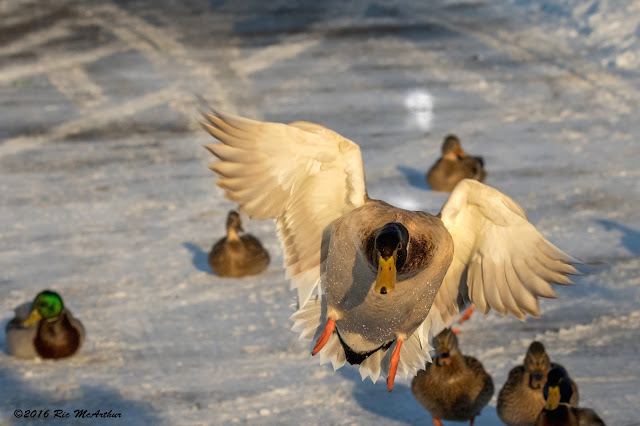
Incoming.

Image
A group of mallards were in a parking lot next to a river and crowded the car looking for a handout. More kept flying in. We didn't have anything for them. Anas platyrhynchos Ducks are strong fliers; migrating flocks of Mallards have been estimated traveling at 55 miles per hour.

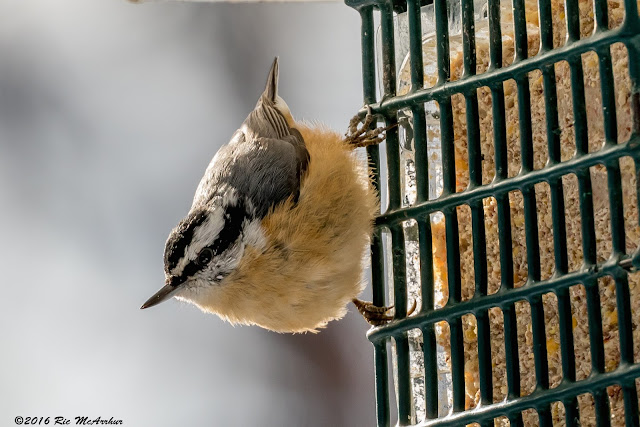
Red-breasted nuthatch, Rondeau Provincial Park, Dec 19,2016

Image
Our feeders are getting lots of activity in this cold weather. Heated pet bowl is providing water for the wildlife. Sitta canadensis Red-breasted Nuthatches migrate southward earlier than many irruptive species. They may begin in early July and may reach their southernmost point by September or October.