Posts

Showing posts with the label eastern chipmunk

Chillin'

Image
  I've seen chipmunks do some strange things, but this takes the cake. Completely relaxed sprawled out on a branch in the hedge above the water, it ignored the birds coming in for baths. We call this type of pose - doing a Mickey. He is one of our indoor cats and he flops on top of things and just flows over obstacles as if they weren't there. Rondeau Provincial Park, Ontario, Canada, June 4, 2025 Tamias striatus. The chipmunk is mainly active during the day , spending most of its day foraging. It prefers bulbs, seeds , fruits, nuts, green plants, mushrooms, insects, worms, and bird eggs. It commonly transports food in pouches in its cheeks.

Chillin'

Image
Eastern chipmunk chilling beside the water feature. Tamias striatus. The chipmunk is mainly active during the day, spending most of its day foraging. It prefers bulbs, seeds, fruits, nuts, green plants, mushrooms, insects, worms, and bird eggs. It commonly transports food in pouches in its cheeks.
The reflecting pool.

Image
Eastern chipmunk drinking at the pond. Water flow was slow, allowing for a reflection, as the filter was partially blocked by leaves. Tamias striatus Males will compete for a female, and may mate with several females during one breeding season. Females give birth after 30 days of pregnancy, and the female will rear (raise and looking after) the young without the males help. Litter size ranges from 3-6 young, and females will usually only produce one litte r a year. Baby chipmunks are naked and blind at birth and require a lot of attention from their mothers. By the time baby chipmunks are one month old, they look like adults and will start to leave the burrow to find food (forage). source -  https://wildlifeinontario.wordpress.com/m…/eastern-chipmunk/

Explosion imminent.

Image
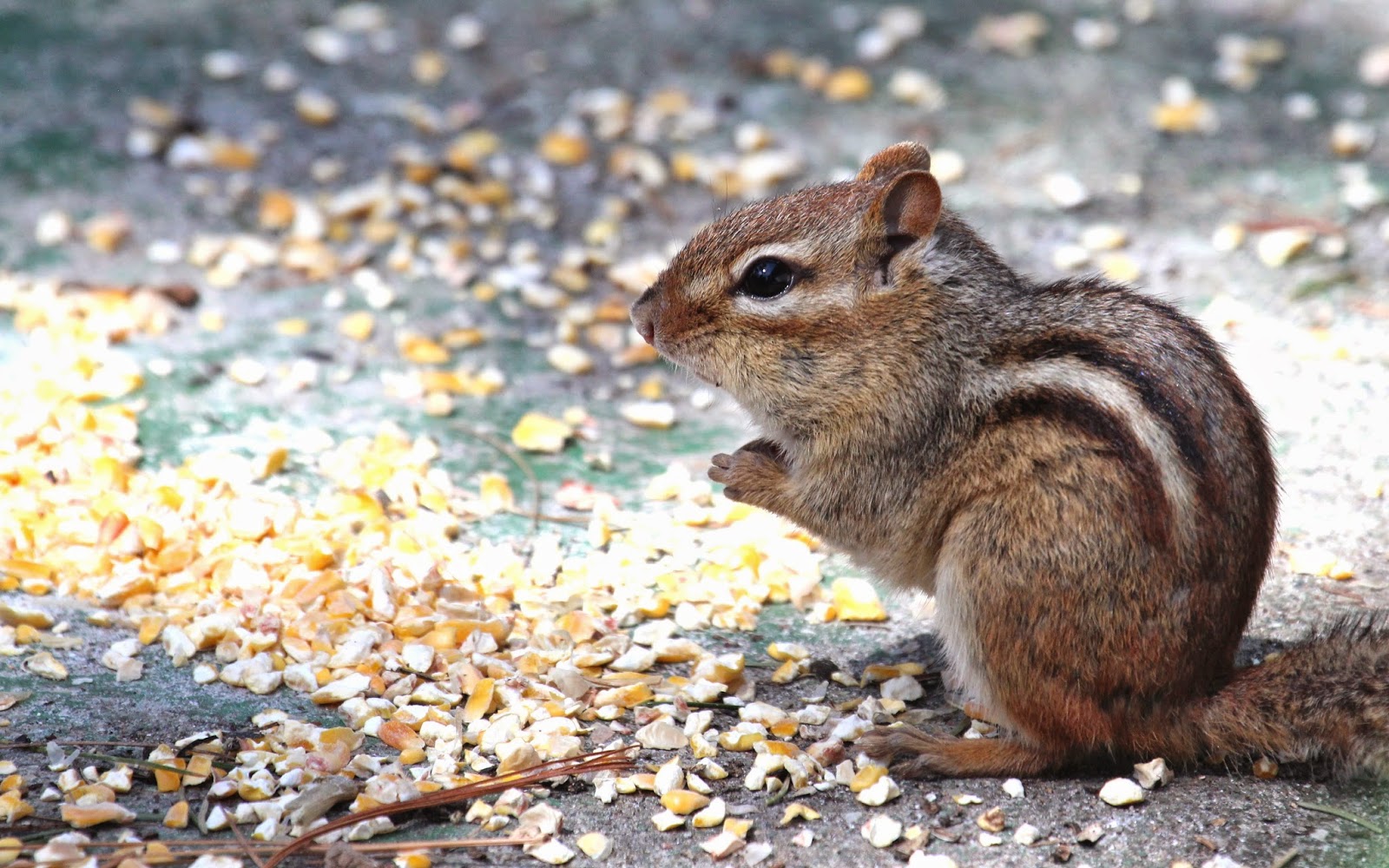
If he stuffs much more into those cheek pouches he gonna explode. This chipmunk was helping himself to the corn we put out for ground feeding birds. He was being greedy and was trying to eat the entire pile by himself. Tamius striatus During winter, chipmunks mostly stay in their burrows. They wake up every few days or weeks to snack from their stored food. That means they don't hibernate.