Posts

Showing posts with the label black and white warbler

A wrench of warblers.

Image
 We had thirteen species of warblers today, I missed photographing 3 but Anne and I got the other 10. This is group- wrench- of warblers including black and white, black throated green and a chestnut sided warbler having a communal bath in our little water feature. The birds were coming and going so fast it was hard to get more than three species together. Rondeau Provincial Park, Ontario, Canada, September 17, 2025.

Enthusiastic.

Image
Enthusiastic. Having or showing intense and eager enjoyment, interest, or approval. Black and white warbler enjoying its morning bath. Rondeau Provincial Park, Ontario, Canada. August 4, 2024. Mniotilta varia. The Black-and-white Warbler is the only member of the genus Mniotilta. The genus name means “moss-plucking,” a reference to its habit of probing bark and moss for insects.

Doing the Fandango.

Image
Black and white warbler, Rondeau Provincial Park, August 9, 2023. Grooming after a enthusiastic bath. Mniotilta varia. Black-and-white Warblers have an extra-long hind claw and heavier legs than other wood-warblers, which help them hold onto and move around on bark. source -Cornell Lab of Ornithology (Fandango is a lively partner dance originating in Portugal and Spain, usually in triple meter, traditionally accompanied by guitars, castanets)

Black and white warbler

Image
In our water feature, Rondeau Provincial Park, Ontario, Canada, Sept 14, 2021. The fall migration is continuing, 6 species at the water today. Mniotilta varia As warblers go, Black-and-white Warblers are combative: they’ll attack and fight with other species that enter their territory, including Black-capped Chickadees, Red-breasted Nuthatches, and American Redstarts. This aggressive behavior extends to the wintering grounds, where they defend territories and when feeding in mixed flocks will drive other Black-and-white Warblers away. source- Cornell Lab of Ornithology.

Black and white warbler.

Image
Black and white warbler, sept 29, 2019, Rondeau Provincial Park, Ontario, Canada. The birds are using the pond as a splash pad, everybody gets wet. Mniotilta varia Black-and-white Warblers have an extra-long hind claw and heavier legs than other wood-warblers, which help them hold onto and move around on bark.

Black and white warbler.

Image
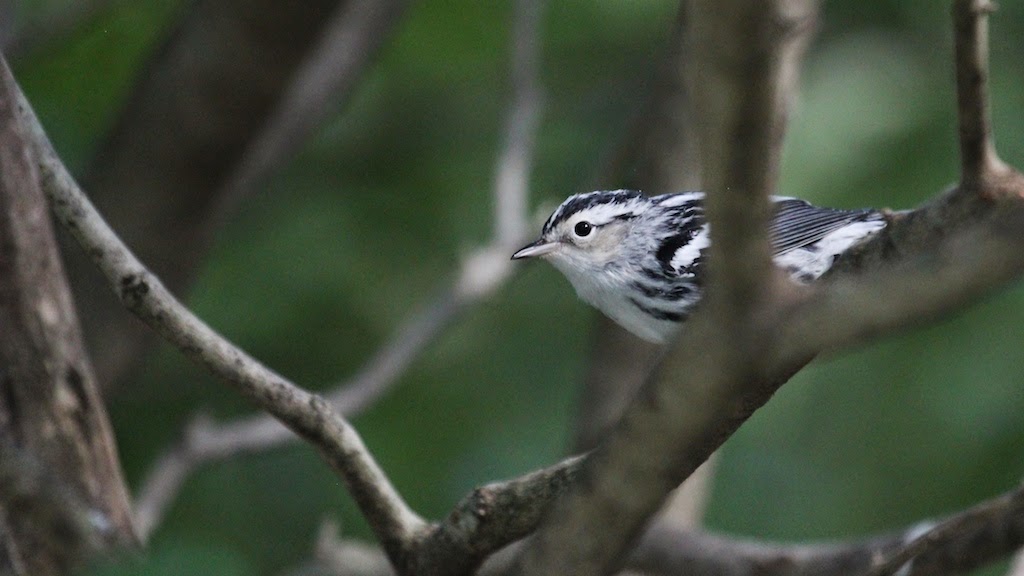
Black and white warbler,Newfoundland and Labrador, Canada, June 6, 2018. Saw this little guy near Salmonier Nature Park. If you are near there it is worthwhile to stop and go for a walk. Mniotilta varia The Black-and-white Warbler is the only member of the genus Mniotilta. The genus name means “moss-plucking,” a reference to its habit of probing bark and moss for insects. source -  https://www.allaboutbirds.org/guide/Black-and-white_Warbler/

Fall warblers

Image
We are getting our fall warbler migration coming through. The black and white warbler is courteous enough to have the same plumage spring and fall, basic black with white. Some of the "confusing" fall warblers who look nothing like their spring plumage. Mniotilta varia Black-and-white Warblers have an extra-long hind claw and heavier legs than other wood-warblers, which help them hold onto and move around on bark. The oldest known Black-and-white Warbler was 11 years, 3 months old—a female that was banded in North Carolina in the 1950s and recovered in Pennsylvania more than a decade later. source - Cornell Lab of Ornithology