Posts

Showing posts with the label Sitta canadensis

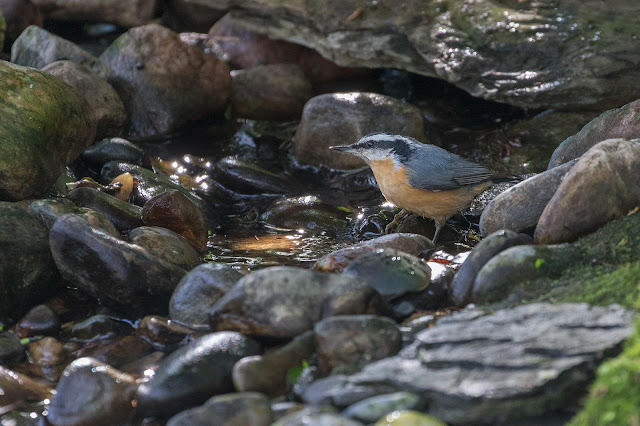
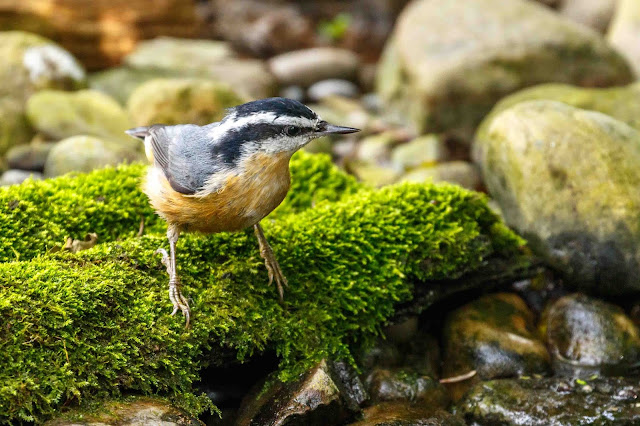
Red-breasted nuthatch

Image
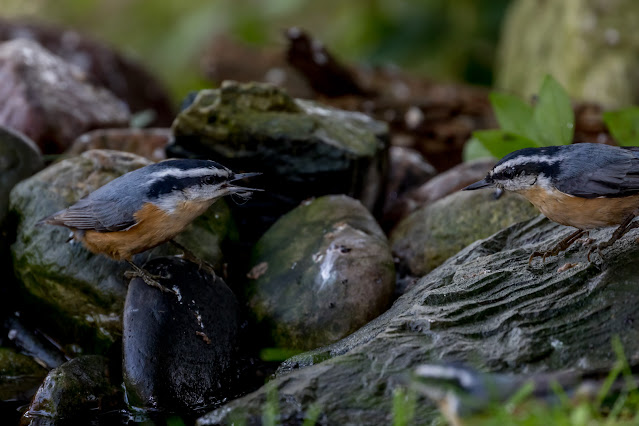
We have been inundated with red-breasted nuthatches this year. Here there are 6 of them in the water at the same time. We have seen up to 11 at a time. Unfortunately they are aggressive to other birds coming in for water. They take on everything from warblers to mourning doves. Rondeau Provincial Park, Ontario, Canada, September 6, 2025.  Sitta canadensis During nest building, the Red-breasted Nuthatch is aggressive, chasing away other hole-nesting birds such as the House Wren, White-breasted Nuthatch, and Downy Woodpecker. A particularly feisty nuthatch may go after Yellow-rumped Warblers, House Finches, Violet-Green Swallows, and Cordilleran Flycatchers.

Red-breasted nuthatch.

Image
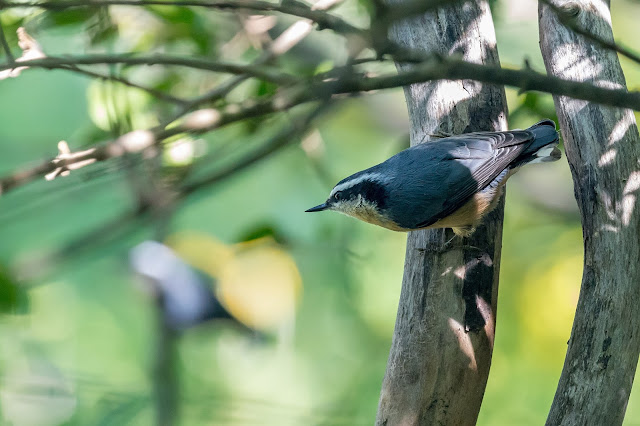
 Looking out from a snag in the yard to see if the coast is clear. We had a Cooper's hawk in a tree and the red-breasted wasn't going out until it was sure it was clear. The hawk left without breakfast. Rondeau Provincial Park, Ontario , Canada., August 27, 2025. Sitta canadensis The Red-breasted Nuthatch collects resin globules from coniferous trees and plasters them around the entrance of its nest hole. It may carry the resin in its bill or on pieces of bark that it uses as an applicator. The male puts the resin primarily around the outside of the hole while the female puts it around the inside. The resin may help to keep out predators or competitors. The nuthatch avoids the resin by diving directly through the hole.

Stalking the wild spruce cone.

Image
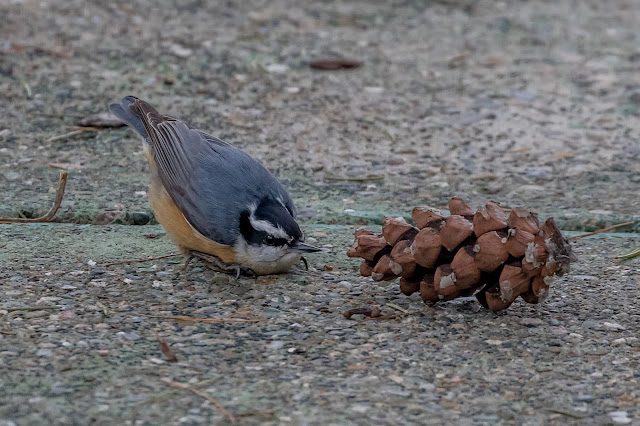
  A rare shot to a red-crested nuthatch stalking a spruce cone, a dangerous proposition Rondeau Provincial Park, Ontario, Canada, March 12, 2018. Sitta canadensis During nest building, the Red-breasted Nuthatch is aggressive, chasing away other hole-nesting birds such as the House Wren, White-breasted Nuthatch, and Downy Woodpecker. A particularly feisty nuthatch may go after Yellow-rumped Warblers, House Finches, Violet-Green Swallows, and Cordilleran Flycatchers., 

No foolin'

Image
Red-breasted nuthatch, Rondeau Provincial Park, April 1, 2023. Sitta canadensis -descends head downwards on tree trunks and branches to search in nooks and crannies of the bark for tiny organisms -wedges hard-shelled nuts in a bark crevice and then hammers them with its bill. -carries spruce or pine pitch, often from some distance, in its bill to smear on the entrance of its nest cavity -has a greatly enlarged hind toe and a stubby tail, which are probably both adaptations for climbing downwards source - Hinterland Who's Who

Red-breasted nuthatch

Image
Rondeau Provincial Park, Feb 18, 2023. Sitta canadensis Diet includes both insects and seeds. Feeds mainly on insects and spiders in summer; in winter, eats many seeds, especially those of conifers. Young are fed mostly or entirely on insects and spiders.

Red-breasted nuthatch

Image
Red-breasted nuthatch , Rondeau Provincial Park, Apr 25, 2021. Not a lot of colour around these days, just a few goldfinches starting to brighten up for spring. Blue jays and cardinals are great but the grey weather is boring. Sitta canadensis Descends head downwards on tree trunks and branches to search in nooks and crannies of the bark for tiny organisms. Has a greatly enlarged hind toe and a stubby tail, which are probably both adaptations for climbing downwards

Red-breasted nuthatch

Image
Red-breasted nuthatch, Oct 22, 2022, Rondeau Provincial Park. It has been grey and overcast or snowing/raining for a while, so one from the archives. Sitta canadensis. The oldest known Red-breasted Nuthatch was 7 years, 6 months old. source - allaboutbirds.org

Good to the last drop.

Image
Red-breasted nuthatch having a drink at the water feature in the yard. Rondeau Provincial Park, Dec 4, 2022 Sitta canadensis. Red-breasted Nuthatches migrate southward earlier than many irruptive species. They may begin in early July and may reach their southernmost point by September or October. Feeds mainly on insects and spiders in summer; in winter, eats many seeds, especially those of conifers. Young are fed mostly or entirely on insects and spiders.

Disputed territory.

Image
A pair of red-breasted nuthatches deciding who had rights to the small water feature we have in the yard. Rondeau Provincial Park, Ontario, Canada,Sept 24, 2020. Sitta canadensis Red-breasted Nuthatches sometimes steal nest-lining material from the nests of other birds, including Pygmy Nuthatches and Mountain Chickadees. source- Cornell Lab of Ornithology.

Red-breasted nuthatch

Image
Rondeau Provincial Park, Ontario, Canada, April 19, 2021. A moment before an energetic bath at the stream. Sitta canadensis Red-breasted Nuthatches migrate southward earlier than many irruptive species. They may begin in early July and may reach their southernmost point by September or October.

Red-breasted nuthatch,

Image
Rondeau Provincial Park, Ontario, Canada, Oct 23, 2020. Slowed down long enough for a close up. Sitta canadensis Red-breasted Nuthatches sometimes steal nest-lining material from the nests of other birds, including Pygmy Nuthatches and Mountain Chickadees.

Red-breasted nuthatch

Image
Rondeau Provincial Park, Ontario, Canada, Oct 4. 2020. This red-breasted nuthatch got knocked off the peanut feeder by a tufted titmouse but it immediately returned to hover at the bottom of the feeder before landing again. After a little dancing the shared the feeder. Sitta canadensis The Red-breasted Nuthatch collects resin globules from coniferous trees and plasters them around the entrance of its nest hole. It may carry the resin in its bill or on pieces of bark that it uses as an applicator. The male puts the resin primarily around the outside of the hole while the female puts it around the inside. The resin may help to keep out predators or competitors. The nuthatch avoids the resin by diving directly through the hole.

Red-breasted nuthatch

Image
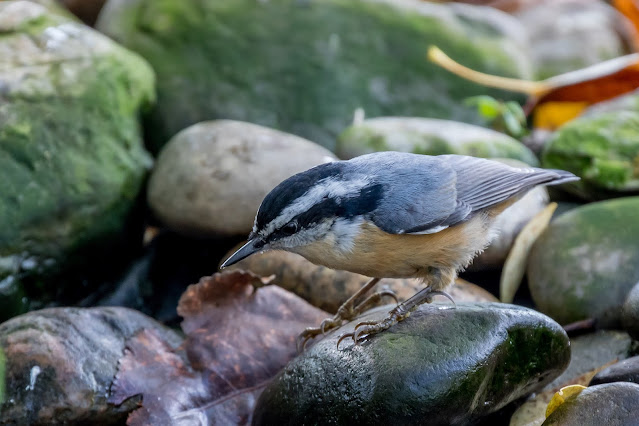
Rondeau Provincial Park, Ontario, Canada, August 20, 2020. A recent visitor to our pond. Sitta canadensis Red-breasted Nuthatches migrate southward earlier than many irruptive species. They may begin in early July and may reach their southernmost point by September or October. source -  https://www.allaboutbirds.org/guide/Red-breasted_Nuthatch/

Late to the party.

Image
Red-breasted nuthatch, Rondeau Provincial Park, Ontario, Canada, March 12, 2018. Checked out the pine cone but it had already been picked over. Sitta canadensis During nest building, the Red-breasted Nuthatch is aggressive, chasing away other hole-nesting birds such as the House Wren, White-breasted Nuthatch, and Downy Woodpecker. A particularly feisty nuthatch may go after Yellow-rumped Warblers, House Finches, Violet-Green Swallows, and Cordilleran Flycatchers. source - Cornell Lab of Ornithology.
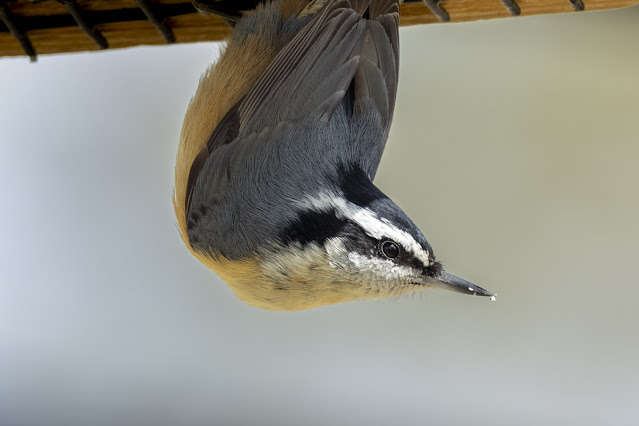
Red-breasted nuthatch.

Image
Red-breasted nuthatch, sept 30, 2018, Rondeau Provincial Park. Sitta canadensis The Red-breasted Nuthatch collects resin globules from coniferous trees and plasters them around the entrance of its nest hole. It may carry the resin in its bill or on pieces of bark that it uses as an applicator. The male puts the resin primarily around the outside of the hole while the female puts it around the inside. The resin may help to keep out predators or competitors. The nuthatch avoids the resin by diving directly through the hole. source - https://www.allaboutbirds.org/guide/Red-breasted_Nuthatch

Red-breasted nuthatch.

Image
Red-breasted nuthatch, Oct 11, 2018, Rondeau Provincial Park. Up in a spruce tree. Sitta canadensis Red-breasted Nuthatches migrate southward earlier than many irruptive species. They may begin in early July and may reach their southernmost point by September or October. source -  https://www.allaboutbirds.org/guide/Red-breasted_Nuthatch

Red-breasted nuthatch, Sept 18, 2018, Rondeau Provincial Park, Ontario, Canada.

Image
Another of the birds frequenting our water feature this fall. Sitta canadensis Red-breasted Nuthatches migrate southward earlier than many irruptive species. They may begin in early July and may reach their southernmost point by September or October.

Red-breasted nuthatch.

Image
On the suet feeder log in the yard. We didn't see them through the winter but they have been back for a few weeks now. Sitta canadensis Red-breasted Nuthatches migrate southward earlier than many irruptive species. They may begin in early July and may reach their southernmost point by September or October. source -https://www.allaboutbirds.org/guide/Red-breasted_Nuthatch

Red-breasted nuthatch

Image
Normally we don't have red-breasted nuthatches in the summer. They are around in the cooler weather looking for a quick meal. The cold front that came through Wednesday night brought this one to the pond. Sitta canadensis The Red-breasted Nuthatch collects resin globules from coniferous trees and plasters them around the entrance of its nest hole. It may carry the resin in its bill or on pieces of bark that it uses as an applicator. The male puts the resin primarily around the outside of the hole while the female puts it around the inside. The resin may help to keep out predators or competitors. The nuthatch avoids the resin by diving directly through the hole. source - https://www.allaboutbirds.org/guide/Red-breasted_Nuthatch/lifehistory

Red breasted nuthatch.

Image
A pond bird from warmer times. Sitta canadensis Red-breasted Nuthatches migrate southward earlier than many irruptive species. They may begin in early July and may reach their southernmost point by September or October.