Posts

Showing posts with the label tundra swan

They're back.

Image
Large numbers of Tundra swans have arrived at Rondeau Provincial Park, Ontario, Canada, March 12, 2019. This is a small portion of the swans roosting on the ice. They were about a mile out. Cygnus columbianus Based on banding records, the oldest known Tundra Swan was a female and at least 23 years, 7 months old when she was identified by her band in the wild, in Ohio. She had been banded in the same state. source -  https://www.allaboutbirds.org/guide/Tundra_Swan/

Fly over.

Image
Tundra swan, March 16, 2017 near Rondeau Provincial Park, Ontario, Canada. Saw a flight of about 50 tundras yesterday afternoon but didn't have a photo opportunity. Cygnus columbianus Lewis and Clark provided the first written description of the Tundra Swan during their expedition to the West, where the birds’ whistle-like calls prompted Meriwether Lewis to dub them “whistling swans.” source - https://www.allaboutbirds.org/guide/Tundra_Swan/overview

Tundra swans, Rondeau Provincial Park, March 16, 2017

Image
I came across a flock of over 1,000 tundra swans today just outside of Rondeau Provincial Park. They were flying over the road making a cacophony of sound. Many were flying low and just clearing a cedar hedge row. These are not cropped. One still had dirt on its face from foraging in the corn stubble. Cygnus columbianus Based on banding records, the oldest known Tundra Swan was a female and at least 23 years, 7 months old when she was identified by her band in the wild, in Ohio. She had been banded in the same state.

On a cold and blustery day...

Image
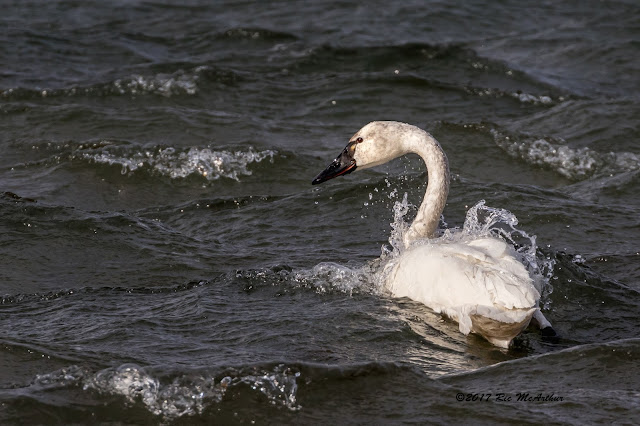
A small opening in the ice on Rondeau Bay resulted in two tundra swans coming close to shore. The wind was strong causing waves in the small open area. Cygnus columbianus Tundra Swans wintering in Chesapeake Bay feed almost exclusively on clams that they dislodge from the mud. But it can be challenging to enjoy a peaceful meal: often the swan has to fend off a Ring-billed, Herring, or Greater Black-backed gull that swoops in to grab a clam from the swan’s bill—a successful tactic in about half of these “kleptoparasitic” encounters.

Tundra swans

Image
Tundra swans walking/paddling/swimming in a shallow semi frozen pond in a farmers field. Cygnus columbianus  Lewis and Clark provided the first written description of the Tundra Swan during their expedition to the West, where the birds’ whistle-like calls prompted Meriwether Lewis to dub them “whistling swans.”

Way down the bay.

Image
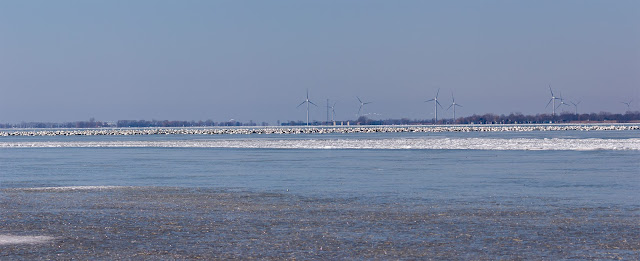
Rondeau Bay finally has open areas, just in time to provided a resting place for migrating tundra swans. Most of the swans seem to have moved elsewhere but there were about 1,000 in the bay. They were approx. 1.5 miles from where I took this photo. The tree line in the distance is the end of the bay and just past them is Lake Erie. Cygnus columbianus Order: Anseriformes Family: Anatidae During the breeding season the Tundra Swan sleeps almost entirely on land, but in the winter it sleeps more often on water. source - Cornell Lab of Ornithology.

Get in line boys.

Image
Winged Giants Tundra swans are very large birds with wing spans in excess of 6 feet. They are about 5 feet tall and weigh about 16 pounds. The swans have returned in large numbers to the Rondeau area. They are on their annual migration to the high arctic breeding grounds. The Friends of Rondeau Provincial Park hold a festival each March to celebrate this sign of spring. This year we had reasonable weather and birds at the same time. Often the weather is so bad you can't see the birds, or the have already passed through the area. It was nice to have a large number of people see these birds and to have a chance to photograph them. Cugnus columbianus.