Posts

Showing posts with the label magnolia warbler

Magnolia warbler.

Image
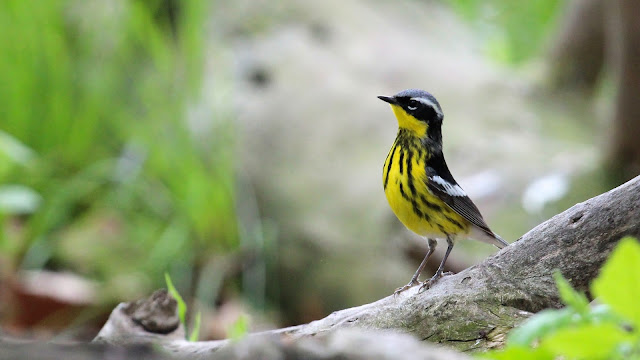
 Male magnolia t the pond, a striking bird, not rare but we hear it more than see it during migration. Rondeau Provincial Park, Ontario, Canada, May 24, 2024. Setophaga magnolia In 1810, Alexander Wilson collected a warbler from a magnolia tree in Mississippi, giving it the English name "Black-and-yellow Warbler" and "magnolia" for the scientific species name, which became the common name over time.

Magnolia warbler 2018

Image
Rondeau Provincial Park, Ontario, Canada, May 10, 2018. Still no warblers coming through so here is one from the archives. ,  Though it has very specific habitat preferences in the breeding season, the Magnolia Warbler occupies a very broad range of habitats in winter: from sea level to 5,000 feet in cacao plantations, orchards, forests, and thickets.

A burst of colour.

Image
Magnolia warbler, Rondeau Provincial Park, May 12, 2023. Another of the magnificent song birds migrating through our area. Setophaga magnolia In 1810, Alexander Wilson collected a warbler from a magnolia tree in Mississippi, giving it the English name "Black-and-yellow Warbler" and "magnolia" for the scientific species name, which became the common name over time. source -allaboutbirds-org

Magnolia warbler

Image
Rondeau Provincial Park, Ontario, Canada, spring 2021. One of the jewels of sping migration through our area. Setophaga magnolia The male Magnolia Warbler has two songs. The first song, issued in courtship and around the nest, consists of three short phrases with an accented ending. The second song, possibly issued in territory defense against other males, is similar to the first but is sweeter and less accented. source- Cornell Lab of Ornithology.

Magnolia warbler,

Image
Sept 25, 2021, Rondeau Provincial Park, Ontario, Canada. Didn't seem happy that the goldfinch was intruding on his bath time. Setophaga magnolia In 1810, Alexander Wilson collected a warbler from a magnolia tree in Mississippi, giving it the English name "Black-and-yellow Warbler" and "magnolia" for the scientific species name, which became the common name over time. source- Cornell Lab of Ornithology.
Magnolia warbler

Image
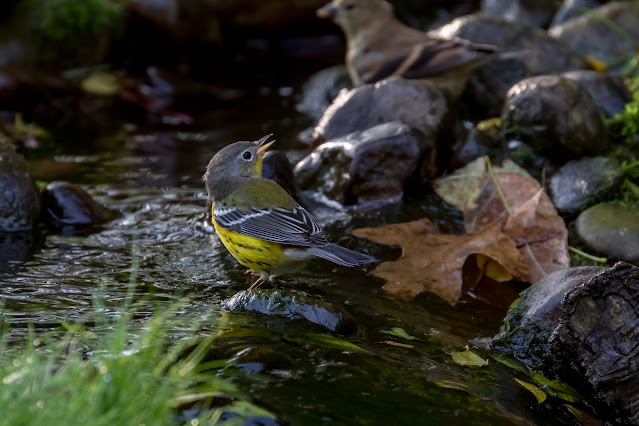
Rondeau Provincial Park, Ontario, Canada, June 4, 2021. A late day visitor to the pond. Setophaga magnolia In 1810, Alexander Wilson collected a warbler from a magnolia tree in Mississippi, giving it the English name "Black-and-yellow Warbler" and "magnolia" for the scientific species name, which became the common name over time. Source -Cornell Lab of Ornithology- All About Birds

Magnolia warbler.

Image
Magnolia warbler, Rondeau Provincial Park, May 10, 2018 Going through a few thousand photos from the spring migration and came across this image. Setophaga magnolia Though it has very specific habitat preferences in the breeding season, the Magnolia Warbler occupies a very broad range of habitats in winter: from sea level to 5,000 feet in cacao plantations, orchards, forests, and thickets. source -  https://www.allaboutbirds.org/guide/Magnolia_Warbler/

Magnolia warbler.

Image
Still eager for the spring migration. In the meantime here's a male magnolia warbler decked out in breeding plumage. Setophaga magnolia The name of the species was coined in 1810 by Alexander Wilson, who collected a specimen from a magnolia tree in Mississippi. He actually used the English name "Black-and-yellow Warbler" and used "magnolia" for the Latin species name, which became the common name over time.

Magnolia warbler

Image
 Rondeau Provincial Park, May 7/16 Setophaga magnolia . Though it has very specific habitat preferences in the breeding season, the Magnolia Warbler occupies a very broad range of habitats in winter: from sea level to 1,500 meters elevation, and most landscape types, except cleared fields. source - Cornell Lab of Ornithology.

...and stretch.

Image
Looks like this magnolia warbler is doing exercises, or maybe looking for predators. Taken in May 2015 at our little water feature. Setophaga magnolia The name of the species was coined in 1810 by Alexander Wilson, who collected a specimen from a magnolia tree in Mississippi. He actually used the English name "Black-and-yellow Warbler" and used "magnolia" for the Latin species name, which became the common name over time. source - Cornell Lab of Ornithology.