Posts

Showing posts with the label pied-billed grebe

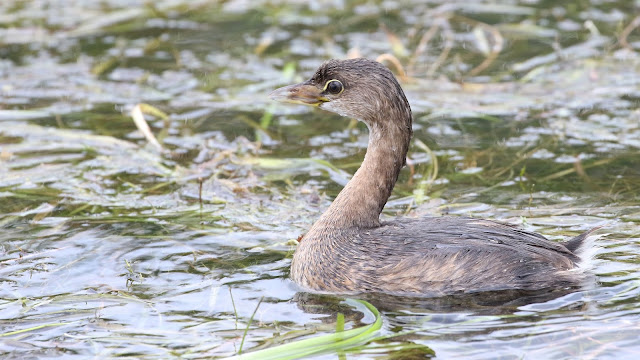
Pied-billed grebe eating sushi.

Image
Spotted this bird while out on the pontoon boat. Lots of activity along the marsh edge this time of year. Rondeau Provincial Park, Ontario, Canada, Sept 10, 2022. The latin name makes me think the grebe is doing podcasts. Podilymbus podiceps Pied-billed Grebes can trap water in their feathers, giving them great control over their buoyancy. They can sink deeply or stay just at or below the surface, exposing as much or as little of the body as they wish. The water-trapping ability may also aid in the pursuit of prey by reducing drag in turbulent water. source - allaboutbirds.org

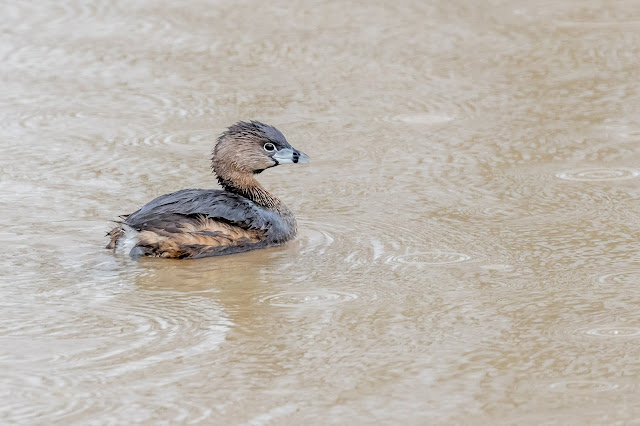
Pied-billed grebe

Image
Rondeau Provincial Park, Ontario, Canada, Sept 15, 2020 While out on the pontoon boat we found this grebe, not very concerned about us. Podilymbus podiceps Pied-billed Grebe chicks typically leave the nest the first day after hatching and spend much of their first week riding around on a parent’s back. They usually spend most of their first 3 weeks on or near the nest platform.

Pied-billed grebe.

Image
Rondeau, Ontario, Canada, March 13, 2019. First one I've seen this year. Lots of duck species today - wood, mallard, wigeon, pintail, hooded merganser, red-breasted merganser and lots of tundra swans. Podilymbus podiceps Pied-billed Grebes can trap water in their feathers, giving them great control over their buoyancy. They can sink deeply or stay just at or below the surface, exposing as much or as little of the body as they wish. The water-trapping ability may also aid in the pursuit of prey by reducing drag in turbulent water. source - https://www.allaboutbirds.org/guide/Pied-billed_Grebe/

“feet at the buttocks”

Image
A pied billed grebe, nonbreeding plumage. Racing away from the pontoon boat as we drifted closer. We try not to get too close but sometimes I miscalculate. Podilymbus podiceps The Latin genus name for “grebe” means “feet at the buttocks”—an apt descriptor for these birds, whose feet are indeed located near their rear ends. This body plan, a common feature of many diving birds, helps grebes propel themselves through water. Lobed (not webbed) toes further assist with swimming. Pied-billed Grebes pay for their aquatic prowess on land, where they walk awkwardly.

Pied-billed grebe, Rondeau Bay, Ontario.

Image
Got really close to a pied billed grebe today. Hard to pick one photo out of 83 to post. Not certain but I think this is a non breeding adult. Podilymbus podiceps Pied-billed Grebes can trap water in their feathers, giving them great control over their buoyancy. They can sink deeply or stay just at or below the surface, exposing as much or as little of the body as they wish. The water-trapping ability may also aid in the pursuit of prey by reducing drag in turbulent water.

Pied-billed grebe

Image
We went to the hawk watch at Holiday Beach in southern Ontario on the weekend. There weren't a lot of birds passing through but we did find four pied-billed grebes in the marsh which is adjacent to the tower. Podilymbus podiceps   These are brown birds, slightly darker above and more tawny-brown on the underparts. During spring and summer, the crown and nape are dark and the throat is black. While breeding, the bill is whitish with a black band (“pied’), but otherwise is yellow-brown. Juveniles have striped faces. Like other grebes, the Pied-billed Grebe eats large quantities of its own feathers. Feathers may at times fill up more than half of a grebe’s stomach, and they are sometimes fed to newly hatched chicks. The ingested plumage appears to form a sieve-like plug that prevents hard, potentially harmful prey parts from passing into the intestine, and it helps form indigestible items into pellets which they can regurgitate. The longest-lived Pied-billed Grebe on reco...