Posts

Showing posts with the label Fulica americana

American coot

Image
American coot, Rondeau Provincial Park, Sept 15, 2016. Fulica americana Although it swims like a duck, the American Coot does not have webbed feet like a duck. Instead, each one of the coot’s long toes has broad lobes of skin that help it kick through the water. The broad lobes fold back each time the bird lifts its foot, so it doesn’t impede walking on dry land, though it supports the bird’s weight on mucky ground. source - allaboutbirds-org.
Image
Wearing the latest fashion - Camo. American coot, Oct 8, 2020, Rondeau Provincial Park, Ontario, Canada. While out on the pontoon boat we came across this coot, don't know if it was trying to hide from the waterfowl hunters. Fulica americana Although it swims like a duck, the American Coot does not have webbed feet like a duck. Instead, each one of the coot’s long toes has broad lobes of skin that help it kick through the water. The broad lobes fold back each time the bird lifts its foot, so it doesn’t impede walking on dry land, though it supports the bird’s weight on mucky ground.

American coot

Image
This one came in reasonably close to shore and didn't seemed bothered that I was there. Fulica americana The waterborne American Coot is one good reminder that not everything that floats is a duck. A close look at a coot—that small head, those scrawny legs—reveals a different kind of bird entirely. Their dark bodies and white faces are common sights in nearly any open water across the continent, and they often mix with ducks. But they’re closer relatives of the gangly Sandhill Crane and the nearly invisible rails than of Mallards or teal. source - https://www.allaboutbirds.org/guide/American_Coot/

Doing the Hokey Pokey.

Image
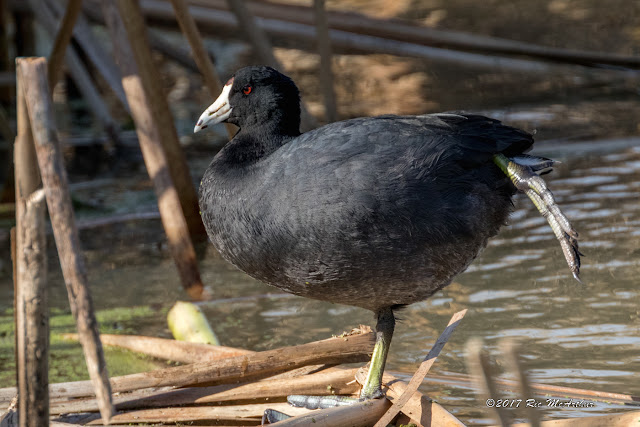
Spotted this American Coot in a drainage ditch, seems he know the hokey pokey. "Now put your right foot in Your right foot out Right foot in Then you shake it all about" Fulica americana Although it swims like a duck, the American Coot does not have webbed feet like a duck. Instead, each one of the coot’s long toes has broad lobes of skin that help it kick through the water. The broad lobes fold back each time the bird lifts its foot, so it doesn’t impede walking on dry land, though it supports the bird’s weight on mucky ground. source - https://www.allaboutbirds.org/guide/American_Coot/lifehistory

The water walker.

Image
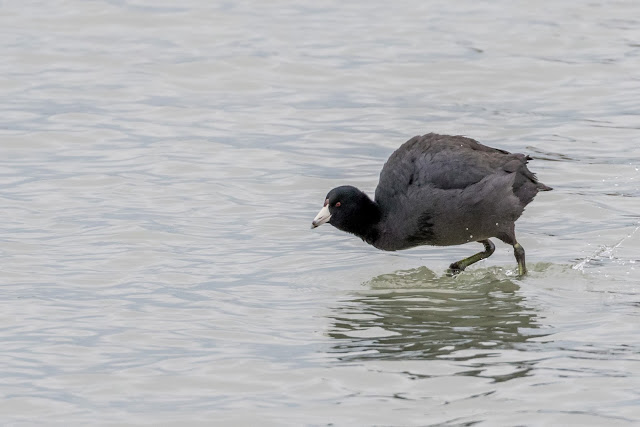
This american coot was grooming and shook so hard it popped out of the water. Fulica americana Although it swims like a duck, the American Coot does not have webbed feet like a duck. Instead, each one of the coot’s long toes has broad lobes of skin that help it kick through the water. The broad lobes fold back each time the bird lifts its foot, so it doesn’t impede walking on dry land, though it supports the bird’s weight on mucky ground.

American Coot

Image
Seen in the marsh at Rondeau Provincial Park. Fulica americana The ecological impact of common animals, like this ubiquitous waterbird, can be impressive when you add it all up. One estimate from Back Bay, Virginia, suggested that the local coot population ate 216 tons (in dry weight) of vegetation per winter. https://www.allaboutbirds.org/guide/American_Coot/lifehistory
Image
A covering of coots. This is just a small portion of hundreds of American Coots in the commercial boat basin at Erieau Ontario, Canada. A gathering of coots is called a cover. Fulica americana

American coot

Image
We have had thousands of these birds in Rondeau Bay, always to far out for a good photo. There was a pair walking along the median at Erieau the other day and I took advantage of the situation. Fulica americana The ecological impact of common animals, like this ubiquitous waterbird, can be impressive when you add it all up. One estimate from Back Bay, Virginia, suggested that the local coot population ate 216 tons (in dry weight) of vegetation per winter.

A covering of coots.

Image
This is a small portion of about 500 American Coots that were at the south end of Rondeau Bay back in October. A gathering of coots is called a cover. Fulica americana Although it swims like a duck, the American Coot does not have webbed feet like a duck. Instead, each one of the coot’s long toes has broad lobes of skin that help it kick through the water. The broad lobes fold back each time the bird lifts its foot, so it doesn’t impede walking on dry land, though it supports the bird’s weight on mucky ground. The oldest known American Coot lived to be at least 22 years 4 months old. source - Cornell Lab of Ornithoogy

Do you come here often?

Image
Do you come here often? , a photo by ricmcarthur on Flickr. There were about 20 American coots feeding on grass at the edge of a road, looked like a flock of free range chickens. They would wander over and drink from this roadside puddle. Fairly large at 15 inches they are a ducklike bird with a blackish head and neck, slate grey body and a white bill. It's big feet are lobed. Fulica americana