Posts

Showing posts with the label black throated blue warbler

Black throated blue warbler

Image
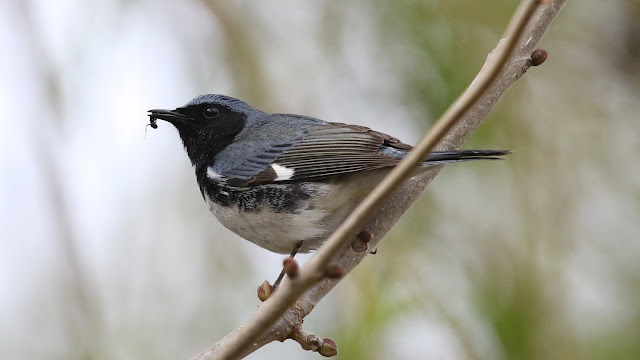
Black throated blue warbler, Rondeau Provincial Park, Ontario, Canada, May 6, 2022. Had a BTB come into the grape jelly feeder today which is unusual. They don't come to feeders but the weather has been cool/cold and wet. Not much in the way of insects to eat. Setophaga caerulescens This warbler doesn't spend much time in the treetops, so looking for this bird won't give you a case of warbler neck; look for them in the shrubby understory and lower canopy in larger tracts of forest during the breeding season. source - Cornell Lab of Ornithology.
Black throated blue warbler

Image
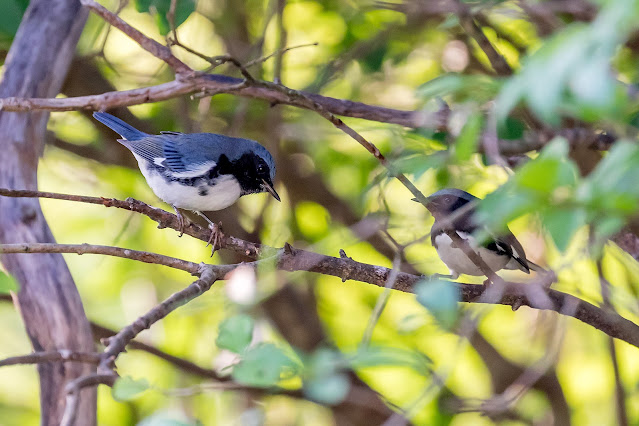
Sept 28, 2020, Rondeau Provincial Park, Ontario, Canada. A pond visitor, probably the darkest face and throat I've seen. Setophaga caerulescens During migration, they forage in all types of woodlands, parks, and gardens, still keeping to lower levels compared to some warblers. Unlike other warblers that molt into "confusing fall plumage," male Black-throated Blue Warblers keep their distinctive black-and-blue plumage year-round. The distinctive white square on the wing also helps ID females.

Shake your booty.

Image
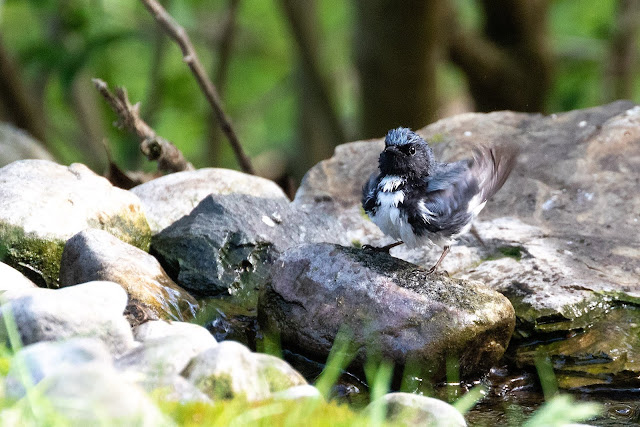
After a long bath at the pond this black throated blue gave himself a good shake. Black throated blue warbler, May 28, 2020, Rondeau Provincial Park, Ontario, Canada. Setophaga caerulescens In the Dominican Republic, Black-throated Blue Warblers take advantage of a sweet treat created by insects harvesting tree sap. These insects feed on tree sap and excrete drops of sweet sap or "honeydew" from their back ends that the warblers drink up. source -  https://www.allaboutbirds.org/g…/Black-throated_Blue_Warbler

An elegant warbler.

Image
Black-throated blue warbler, Rondeau Provincial Park, Ontario, Canada, May 8, 2019. Up close and personal. Setophaga caerulescens Male and female Black-throated Blue Warblers look so different that they were originally described as two different species. source -  https://www.allaboutbirds.org/g…/Black-throated_Blue_Warbler

Black throated blue warbler.

Image
Black throated blue warbler, Rondeau Provincial Park, Ontario, Canada, May 8, 2017. Setophaga caerulescens Unlike other warblers that molt into "confusing fall plumage," male Black-throated Blue Warblers keep their distinctive black-and-blue plumage year-round. The distinctive white square on the wing also helps ID females. source - https://www.allaboutbirds.org/guide/Black-throated_Blue_Warbler

Black-throated blue warbler.

Image
Anne spotted this black throated blue flitting around the pond this morning. Still looking good in his non breeding plumage. We also had a colourful parula. Setophaga caerulescens The sexes of the Black-throated Blue Warbler look so different that they were originally described as two different species.

Black throated blue warbler.

Image
The gentleman warbler with a hanky in his pocket. This is Anne's favourite warbler, she finds it elegant. As far as I can tell it is eating an ant. Setophaga caerulescens The sexes of the Black-throated Blue Warbler look so different that they were originally described as two different species. source - Cornell Lab of Ornithology.
A fall visitor

Image
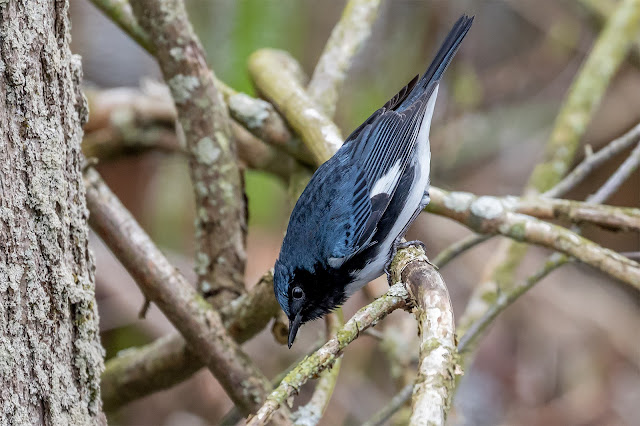
A fall visitor , a photo by ricmcarthur on Flickr. A male black throated blue warbler(dendroica caerulescens for those of you so inclined) spent an hour feeding in the hedge above and behind the pond. He eventually came down for a drink and a bath.