Posts

Showing posts with the label Aythya valisineria

Canvasback

Image
Windsor, Ont, Feb 4, 2023. A road trip with two friends to some birdng along the Detroit River yesterday. We ha hoped there would be more ice which would bring the ducks, geese, swans, and eagles in closer, but you take what you get. Aythya valisineria. The species name of the Canvasback, valisineria, comes from Vallisneria americana, or wild celery, whose winter buds and stems are the duck’s preferred food during the nonbreeding period. The oldest recorded Canvasback was a male, and at least 22 years, 7 months old when he was shot in California in 1991. He had been banded in the same state in 1969 source - allaboutbirds-org
Canvasback

Image
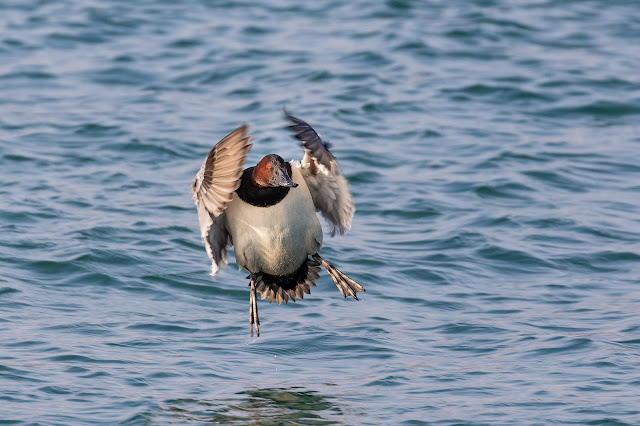
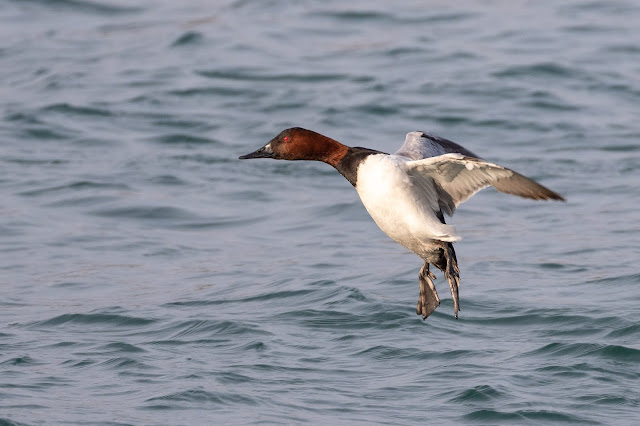
Canvasback duck landing in Detroit River at Windsor, Feb 21, 2019. Aythya valisineria The species name of the Canvasback, valisineria, comes from Vallisneria americana, or wild celery, whose winter buds and stems are the duck’s preferred food during the nonbreeding period. The oldest recorded Canvasback was a male, and at least 22 years, 7 months old when he was shot in California in 1991. He had been banded in the same state in 1969. source -https://www.allaboutbirds.org/guide/Canvasback

Canvasback

Image
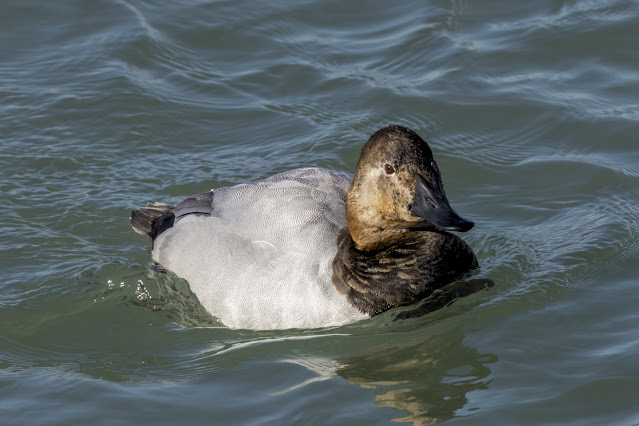
Rondeau Provincial Park, Ontario, Canada, July 28, 2019. Not one we usually see in the summer, we are in a migration area. Just sitting on the shore, no apparent injury. Aythya valisineria The species name of the Canvasback, valisineria, comes from Vallisneria americana, or wild celery, whose winter buds and stems are the duck’s preferred food during the nonbreeding period. source - Cornell Lab of Ornithology.

Canvasback.

Image
Landing gear down, full flaps. Canvasback duck, Windsor, Ontario, Canada, Feb 21, 2019. I think of duck landings as controlled chaos, if there is such a thing. Aythya valisineria In the world of ducks, females abide by the saying, “don't put all your eggs in one basket.” Female Canvasbacks sometimes lay eggs in another Canvasback's nest; and Redheads and Ruddy Ducks sometimes lay their eggs in a Canvasback's nest. source - https://www.allaboutbirds.org/guide/Canvasback/

Canvasback

Image
Canvasback flyby, Windsor, Ontario, Feb 22, 2019, Lakeview Marina. Had a chance to check out the ducks on the Detroit River. Lots of Canvasbacks flying by. Aythya valisineria The species name of the Canvasback, valisineria, comes from Vallisneria americana, or wild celery, whose winter buds and stems are the duck’s preferred food during the nonbreeding period. source -   https://www.allaboutbirds.org/guide/Canvasback/

Stretch.

Image
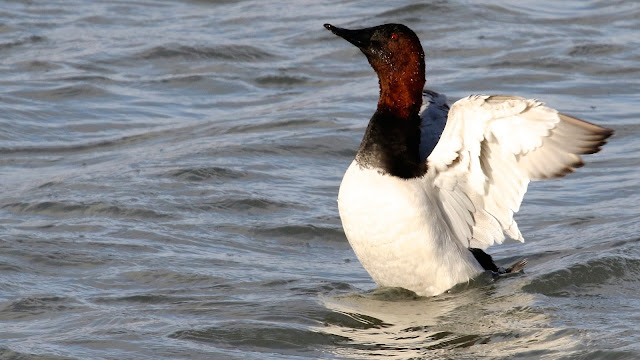
This was one of several canvasback ducks in the marina at Erieau, Ontario, Canada, today. After a vigorous grooming session he reared up and stretched. I also saw 7 bald eagles at one time and a lone harrier plus a late kingfisher. Aythya valisineria

Sleeping with one eye open.

Image
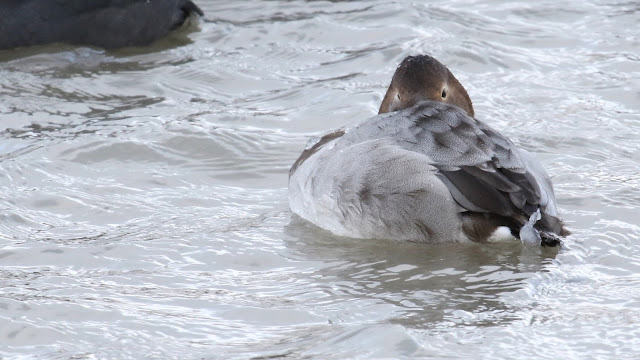
Female canvasback drifting in the marina but still aware of her surroundings and of me. Aythya valisineria The species name of the Canvasback, Aythya valisineria, comes from Vallisneria americana, or wild celery, whose winter buds and rhizomes are its preferred food during the nonbreeding period. source - Cornell Lab of Ornithology.