Posts

Showing posts with the label scaup

The chase.

Image
A male lesser scaup with a clump of zebra muscles is playing keep away with a male redhead duck who appears to be trying to steal his lunch. Lasalle Park Marina, Burlington, Feb 5, 2018 Aythya affinis Lesser Scaup is the most abundant diving duck in North America, with a global breeding population estimated at 3.8 million. source -  https://www.allaboutbirds.org/guide/Lesser_Scaup/
Lesser Scaup

Image
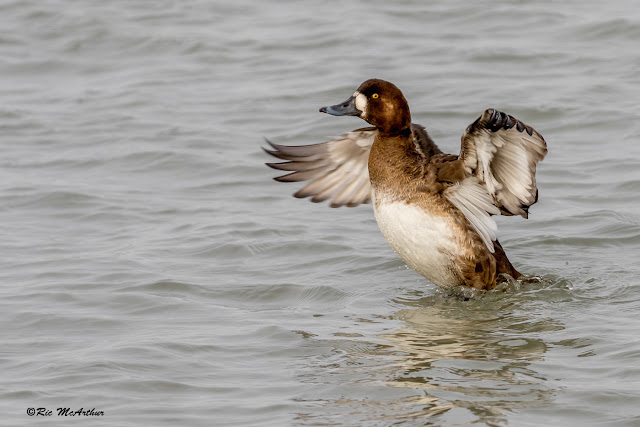
A female lesser scaup doing a wing flap/stretch/water shake. Aythya affinis Lesser Scaup chicks are capable of diving under water on their hatching day, but they are too buoyant to stay under for more than just a moment. By the time they are 5 to 7 weeks old they are able to dive for 2-25 seconds and swim underwater for 15-18 meters (50-60 ft).

Daffier than Daffy Duck

Image
Not sure why her tongue is sticking out but it reminded me of Daffy Duck. This is a female lesser scaup in breeding plumage seen at Erieau Ontario a few days ago. Aythya affinis Lesser Scaup chicks are capable of diving under water on their hatching day, but they are too buoyant to stay under for more than just a moment. By the time they are 5 to 7 weeks old they are able to dive for 2-25 seconds and swim underwater for 15-18 meters (50-60 ft).

Lesser Scaup (?)

Image
Probably. Had a hard time deciding if this was a lesser or greater scaup. Lesser have a slight bump or peak on back of head. The greater has a more rounded head. While this one looks rounded other photos of the birds showed the more characteristics of a lesser. For me the definitive id is the white on the underside of the wing, the lessers white stops halfway to the wing tip and the greater goes almost to the tip. They weren't flying so I couldn't tell. You birders out there should feel free to add your thoughts. Aythya affinis Lesser Scaup chicks are capable of diving underwater on their hatching day, but they are too buoyant to stay under for more than just a moment. By the time they are 5 to 7 weeks old they are able to dive for 2-25 seconds and swim underwater for 15-18 meters (50-60 ft).

Birds of a feather.............

Image
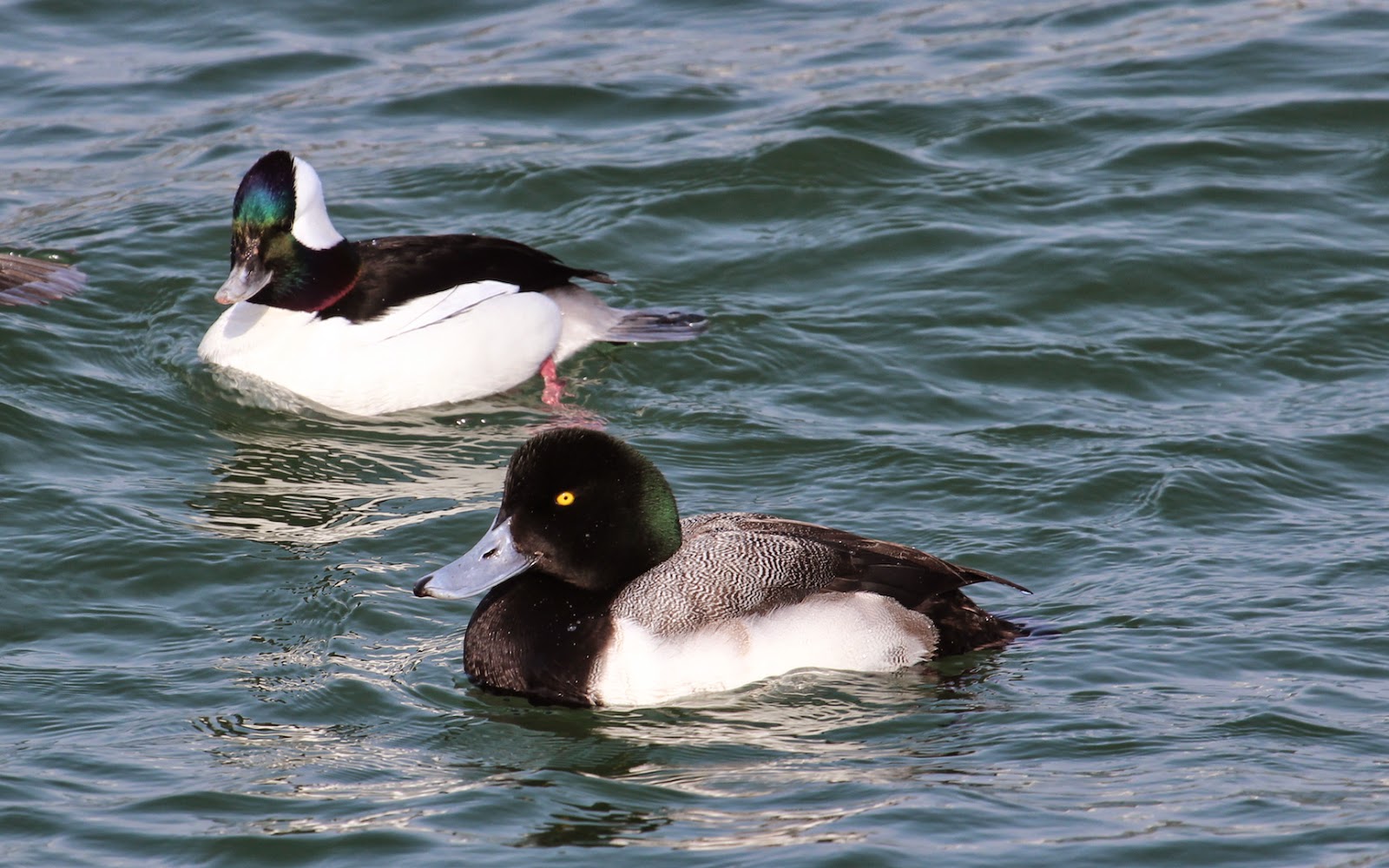
mingle with others. Or something like that. A greater scaup in the foreground and a bufflehead the back, both in beautiful plumage. Greater Scaup -Aythya marila Medium-sized diving duck. Rounded head. Bill bluish with black tip. Bufflehead -Bucephala albeola Bufflehead are very small, compact ducks with large, rounded heads and short, wide bills. The Bufflehead nests almost exclusively in holes excavated by Northern Flickers and, on occasion, by Pileated Woodpeckers.

Greater scaup, male

Image
Greater scaup, male , a photo by ricmcarthur on Flickr. Breeding Plumage: Head, neck, upper back, and breast black; head with greenish iridescence. Back white to gray, covered with thin, black wavy lines. Rump black. Belly white. Sides white, with some fine dark streaks. Undertail black.

Water of a ducks back, or front for that matter.

Image
Water off a ducks back, or front for that matter. , a photo by ricmcarthur on Flickr. his is a female greater scaup that we saw at Bronte Harbour, Ont. I like the way the bow wave she is generating flows off the sides leaving her dry. Aythya marila The nest of a Greater Scaup is usually lined with a thick layer of down plucked by the mother from her own breast. Nests of poor-condition females may lack down and instead may contain small, grayish-white feathers plucked from beneath the outer body feathers.