Posts

Showing posts with the label Spinus pinus

Pine siskin

Image
Rondeau Provincial Park, Ontario, Canada, Mar 13,2022. We have had a good year for siskins so far. Now they are showing more colour on their wings. Spinus pinus Pine Siskins get through cold nights by ramping up their metabolic rates—typically 40% higher than a “normal” songbird of their size. When temperatures plunge as low as –70°C (–94°F), they can accelerate that rate up to five times normal for several hours. They also put on half again as much winter fat as their Common Redpoll and American Goldfinch relatives. Source - Cornell Lab of Ornithology.

Pine siskin

Image
Rondeau Provincial Park, Ontario, Canada, Feb 8, 2022. We have a large number of siskins frequenting our yard. Earlier we would see one or two, now it is 15 to 25 and they are swarming the niger seed feeders. They also use the water feature in the yard. Spinus pinus Pine Siskins get through cold nights by ramping up their metabolic rates—typically 40% higher than a “normal” songbird of their size. When temperatures plunge as low as –70°C (–94°F), they can accelerate that rate up to five times normal for several hours. They also put on half again as much winter fat as their Common Redpoll and American Goldfinch relatives. source- Cornell Lab of Ornithology.

A few pine siskin dropped in for a visit yesterday.

Image
Pine siskin, Sept 23, 2020, Rondeau Provincial Park, Ontario, Canada. This is just a few of the siskin that came to the yard. The pond was a popular place. Spinus pinus Pine Siskins can temporarily store seeds totaling as much as 10% of their body mass in a part of their esophagus called the crop. The energy in that amount of food could get them through 5–6 nighttime hours of subzero temperatures.
Image
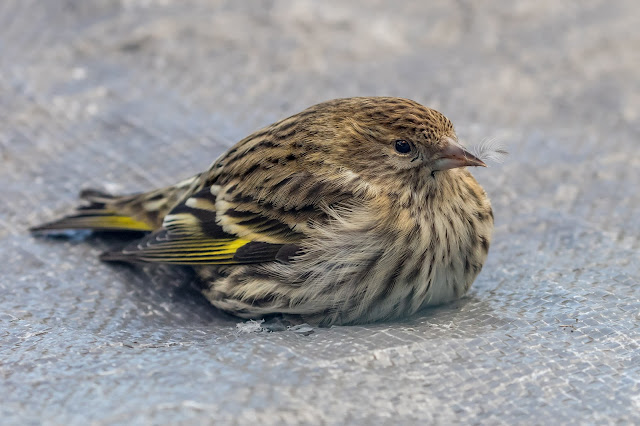
Pine siskin, Rondeau Provincial Park, Ontario, Canada, Nov 13, 2018 This siskin hit a window and sat on the tarp covering our lawn furniture. After a few minutes it flew away. Spinus pinus Pine Siskins get through cold nights by ramping up their metabolic rates—typically 40% higher than a “normal” songbird of their size. When temperatures plunge as low as –70°C (–94°F), they can accelerate that rate up to five times normal for several hours. They also put on half again as much winter fat as their Common Redpoll and American Goldfinch relatives. source -  https://www.allaboutbirds.org/guide/Pine_Siskin/

HEY! You got any seed down there.

Image
Our mini pine siskin invasion is continuing. This one perched above the feeders and watched the other birds on the ground. Np more bird shots for a while, my 100-400 lens won't focus properly so it is going in for repairs. It is the long lens I use for most of my wildlife shots. Spinus pinus Pine Siskins protect their eggs from cold damage, too. The nest is highly insulated, and the female remains on the nest continuously, fed by the male throughout brooding. Following a large irruptive winter flight, some individuals may stay near a dependable food source and breed far south of the normal breeding range. source - Cornell Lab of Ornithology

No room at the bath

Image
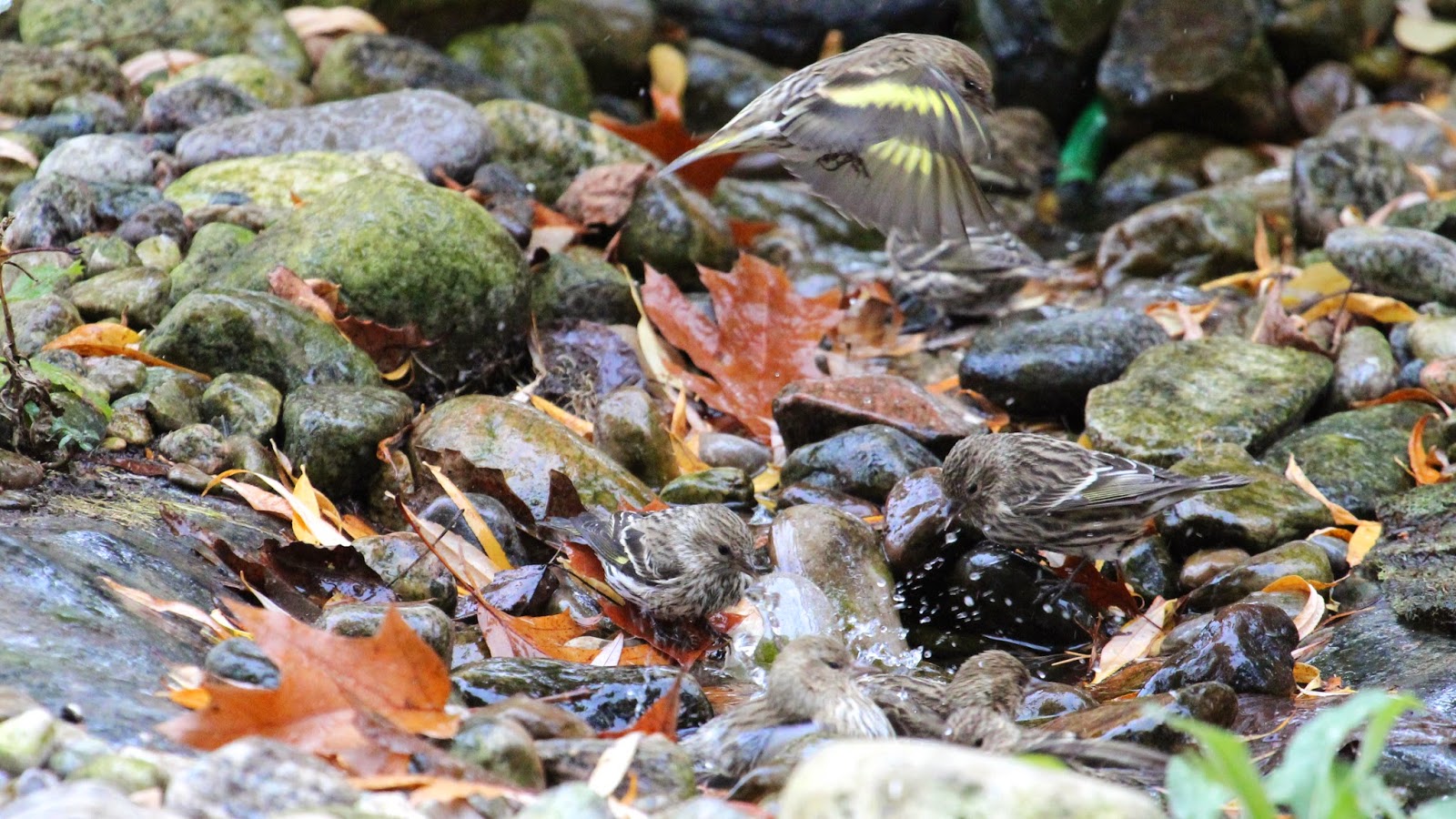
We had about 70 pine siskins show up at our feeders today and then they descended on the pond. At one point there were 10 in the two small ponds. It was so crowded that they were hovering waiting for a space to land. Spinus pinus Flocks of tiny Pine Siskins may monopolize your thistle feeder one winter and be absent the next. This nomadic finch ranges widely and erratically across the continent each winter in response to seed crops. Pine Siskins can temporarily store seeds totaling as much as 10% of their body mass in a part of their esophagus called the crop. The energy in that amount of food could get them through 5–6 nighttime hours of subzero temperatures. source - Cornell Lab of Ornithology.