Posts

Showing posts with the label Arenaria interpres

Ruddy turnstone

Image
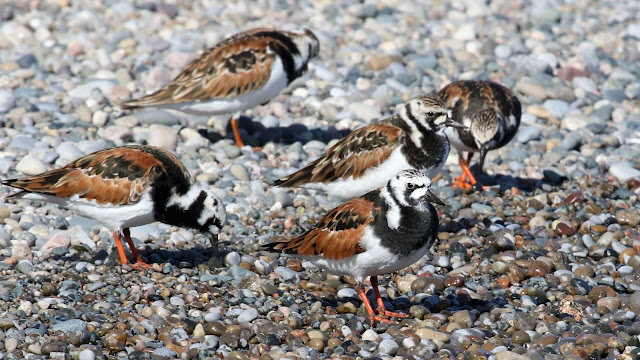
Rondeau Provincial Park, Ontario, Canada, Sept 9, 2020. Seen while out on the pontoon on Rondeau Bay. Arenaria interpres Young turnstones need to grow up and learn to fly quickly. They take their first flight when they are around 19 days old and fly thousands of miles to the nonbreeding grounds 2 days later. To make things harder, their parents will have departed by this time, leaving the youngsters to make their first migration on their own. source - https://www.allaboutbirds.org/guide/Ruddy_Turnstone
Image
A less colourful find. Ruddy turnstone, Rondeau Provincial Park, Ontario, Canada, May 26, 2020. Seen along the shore while out on the pontoon boat. Arenaria interpres Young turnstones need to grow up and learn to fly quickly. They take their first flight when they are around 19 days old and fly thousands of miles to the nonbreeding grounds 2 days later. To make things harder, their parents will have departed by this time, leaving the youngsters to make their first migration on their own. source - https://www.allaboutbirds.org/guide/Ruddy_Turnstone

Ruddy Turnstone.

Image
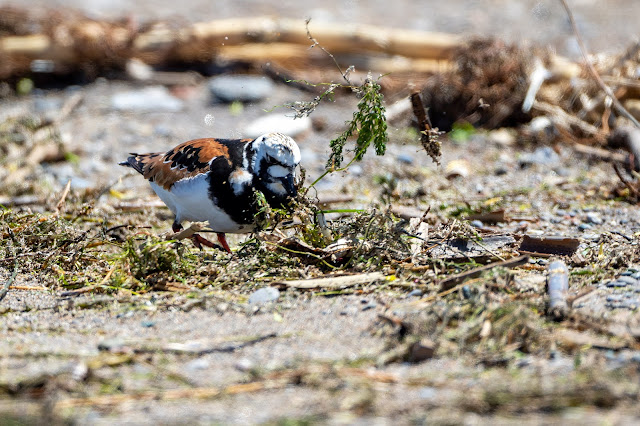
Rondeau Provincial Park, Ontario, Canada, May 27, 2019. It may be a turnstone but it was doing a good job of tossing vegetation. Arenaria interpres Walking on wet and slippery rocks can be treacherous for just about anyone without good gripping shoes. Ruddy Turnstones have special feet that are somewhat spiny, with short, sharply curved toenails that help them hold on. They also have a low center of gravity thanks to their short legs that helps keep them anchored. source - https://www.allaboutbirds.org/guide/Ruddy_Turnstone/

Face to face.

Image
We were out on the pontoon boat along the south beach at Rondeau when we saw a flock of shorebirds. One was this Ruddy Turnstone. They use their stout, slightly upturned bill to flip debris on the beach to uncover insects and small crustaceans. Arenaria interpres. Walking on wet and slippery rocks can be treacherous for just about anyone without good gripping shoes. Ruddy Turnstones have special feet that are somewhat spiny, with short, sharply curved toenails that help them hold on. They also have a low center of gravity thanks to their short legs that helps keep them anchored. source - Cornell Lab of Ornithology.

Rudy turnstone.

Image
They come by their name honestly, they often forage by turning over stones and other objects. On the south beach at Rondeau Provincial Park, May 19/16 Arenaria interpres The oldest recorded Ruddy Turnstone was a female, and at least 14 years, 11 months old, when she was recaptured and rereleased during a scientific study in New Jersey. source - Cornell Lab of Ornithology.

Up close and personal with a ruddy turnstone

Image
Another photo from the pontoon. There is a sandbar in Rondeau bay that can be good for shorebirds. The down side is that cormorants use it as a roost and it stinks to high heaven. We were only about 8 feet away from this turnstone. There were 5 or 6 on the sandbar and they didn't seem to mind the smell. Arenaria interpres The male Ruddy Turnstone makes nest-like scrapes in the ground within his territory, often close to the final site selected by the female. The male's scrapes are made before the female starts to lay eggs, and are part of the courtship and nest site selection process. No eggs are laid in the scapes the male makes. As their name suggests, turnstones often forage by turning over stones and other objects. source - Cornell Lab of Ornithology.