Posts

Showing posts with the label Eremophila alpestris

Horned lark.

Image
Not much variety in bird species in the yard these days. Went out looking for snow buntings and horned larks but nothing came close enough to photograph.  This one is from the archives.  January 14, 2015, Kent county, Ontario, Canada. Eremophila alpestris. Female Horned Larks often collect “pavings”—pebbles, clods, corncobs, dung—which they place beside their nests, covering soil excavated from the nest cavity. The “paved” area resembles a sort of walkway, though the birds don’t seem to use it that way. While nobody fully understands the function of these pavings, they may help prevent collected nesting material from blowing away while the nest is under construction.
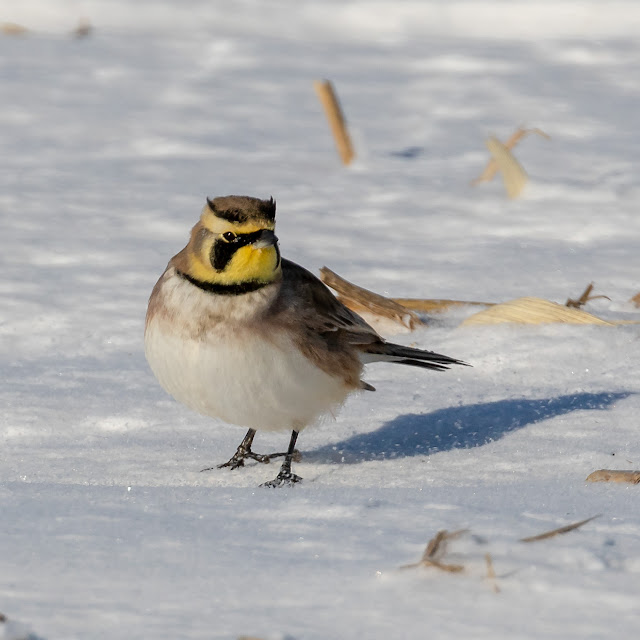
Horned lark.

Image
Horned lark, Jan 27, 2019, near Blenheim, Ontario, Canada. Eremophila alpestris Female Horned Larks often collect “pavings”—pebbles, clods, corncobs, dung—which they place beside their nests, covering soil excavated from the nest cavity. The “paved” area resembles a sort of walkway, though the birds don’t seem to use it that way. While nobody fully understands the function of these pavings, they may help prevent collected nesting material from blowing away while the nest is under construction. source -  https://www.allaboutbirds.org/guide/Horned_Lark

Horned Lark.

Image
Horned lark, near Blenheim, Ontario, Canada, Jan 27, 2019. Mixed flock of larks and longspurs on a gravel side road. Eremophila alpestris Horned Larks inhabit an extensive elevation range, from sea level to an altitude of 13,000 feet. source - https://www.allaboutbirds.org/guide/horned_lark

Yah. I enjoy winter.

Image
Sure. That's it. I like freezing my feet and tail feathers. I even enjoy sticking my bill in snow banks in search of seeds. Sure I do. Which way is south? Horned lark. Eremophila alpestris Female Horned Larks often collect “pavings”—pebbles, clods, corncobs, dung—which they place beside their nests, covering soil excavated from the nest cavity. The “paved” area resembles a sort of walkway, though the birds don’t seem to use it that way. While nobody fully understands the function of these pavings, they may help prevent collected nesting material from blowing away while the nest is under construction.

Horned lark

Image
Horned lark , a photo by ricmcarthur on Flickr. This is a clearer photo of one of the horned larks I saw the other day. The tufted feathers make up the "horns". Scientific stuff - Eremophila alpestris Interesting stuff -The only true lark native to North America, the Horned Lark is a common, widespread bird of open country. Adult Horned Larks eat primarily weed and grass seeds, but they feed insects to their young.