Posts

Showing posts with the label Turdus migratorius

The robin and the caterpillar.

Image
  This American robin was showing off his lunch to the crowd at the pond. For some reason nothing tried to steal his meal. Rondeau Provincial  Park, Ontario, Canada, August 1, 2025. Turdus migratorius Robins eat different types of food depending on the time of day: more earthworms in the morning and more fruit later in the day. Because the robin forages largely on lawns, it is vulnerable to pesticide poisoning and can be an important indicator of chemical pollution.

The nest builder

Image
 Designer, architect, builder, Robin Construction does it all. This American Robin was bathing with a mouthful on nest building materials in our little water feature in the yard. Rondeau Provincial Park, Ontario, Canada, June 12, 2025 Turdus migratorius An American Robin can produce three successful broods in one year. On average, though, only 40 percent of nests successfully produce young. Only 25 percent of those fledged young survive to November. From that point on, about half of the robins alive in any year will make it to the next. Despite the fact that a lucky robin can live to be 14 years old, the entire population turns over on average every six years.

The early bird gets the sandy worm.

Image
This American robin was foraging in the back of the yard and pilled up a worm. It din't seem to mind the sand. Just a little grit to help it go down. Rondeau Provincial Park, May 4, 2023. . Turdus migratorius. An American Robin can produce three successful broods in one year. On average, though, only 40 percent of nests successfully produce young. Only 25 percent of those fledged young survive to November. From that point on, about half of the robins alive in any year will make it to the next. Despite the fact that a lucky robin can live to be 14 years old, the entire population turns over on average every six years.

Environmentally friendly lawn sprinkler.

Image
A very enthusiastic robin was trying its best to empty the little stream. Rondeau Provincial Park, July 24, 2022. Turdus migratorius. Robins eat different types of food depending on the time of day: more earthworms in the morning and more fruit later in the day. Because the robin forages largely on lawns, it is vulnerable to pesticide poisoning and can be an important indicator of chemical pollution. source - allaboutbirds-org.

American robin

Image
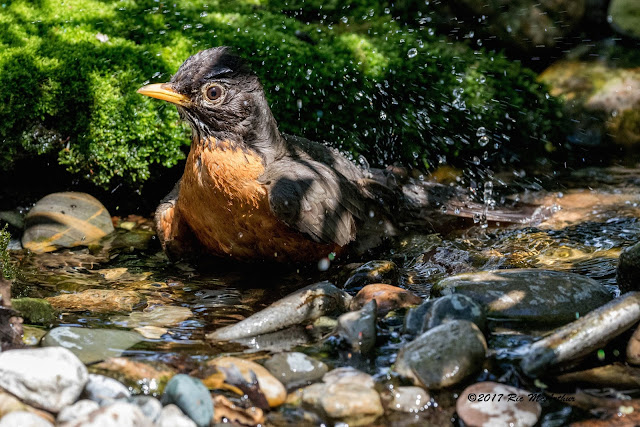
Rondeau Provincial Park, Ontario, Canada, June 4, 2021. An enthusiastic bather, it can splash a significant amount of water out to the stream. Turdus migratorius An American Robin can produce three successful broods in one year. On average, though, only 40 percent of nests successfully produce young. Only 25 percent of those fledged young survive to November. From that point on, about half of the robins alive in any year will make it to the next. Despite the fact that a lucky robin can live to be 14 years old, the entire population turns over on average every six years. Source -Cornell Lab of Ornithology- All About Birds

The berry eater.

Image
American Robin Jan 23, 2020, Rondeau Provincial Park, Ontario, Canada. An occasional winter visitor, eating berries from the hedge. Taken through a window. Turdus migratorius An American Robin can produce three successful broods in one year. On average, though, only 40 percent of nests successfully produce young. Only 25 percent of those fledged young survive to November. From that point on, about half of the robins alive in any year will make it to the next. Despite the fact that a lucky robin can live to be 14 years old, the entire population turns over on average every six years. source - Cornell Lab of Ornithology.

American robin having a frolic.

Image
This is why I have to keep adding water to the pond. Turdus migratorius Although robins are considered harbingers of spring, many American Robins spend the whole winter in their breeding range. But because they spend more time roosting in trees and less time in your yard, you're much less likely to see them. The number of robins present in the northern parts of the range varies each year with the local conditions. source -  https://www.allaboutbirds.org/gu …/American_Robin/lifehistory

American robin

Image
Junior! I've told you to leave me alone when I'm having a bath. Go eat a worm or something. Turdus migratorius An American Robin can produce three successful broods in one year. On average, though, only 40 percent of nests successfully produce young. Only 25 percent of those fledged young survive to November. From that point on, about half of the robins alive in any year will make it to the next. Despite the fact that a lucky robin can live to be 14 years old, the entire pop ulation turns over on average every six years. source -  https://www.allaboutbirds.org/gu…/American_Robin/lifehistory

Black headed, red breasted American Thrush

Image
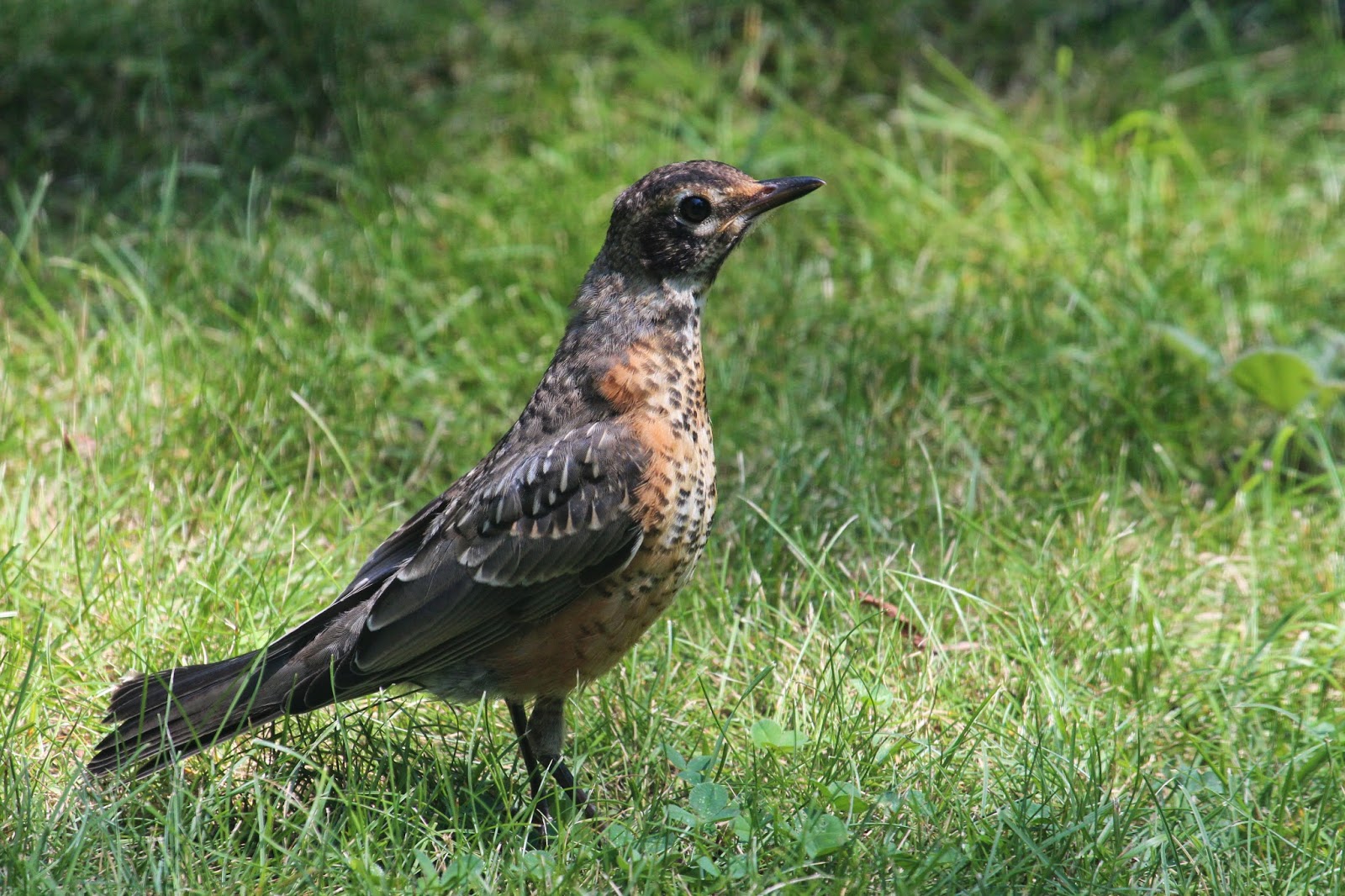
Young robins can be confusing if only for a minute or two. This one doesn't have the typical black head and red breast of an adult. It has a disk like patch on its cheek reminiscent of several other thrushes. Robins, like some other birds have regional variations of songs. We once followed an odd looking bird with a some what familiar song for 30 minutes in South Carolina. It turned out to a robin. Well a birder can't follow a robin for 30 minutes trying to identify it so it became a black headed, red breasted American thrush Turdus migratorius Robins eat a lot of fruit in fall and winter. When they eat honeysuckle berries exclusively, they sometimes become intoxicated. The oldest recorded American Robin was 13 years and 11 months old.