Posts

Showing posts with the label t3i

Work in progress.

Image
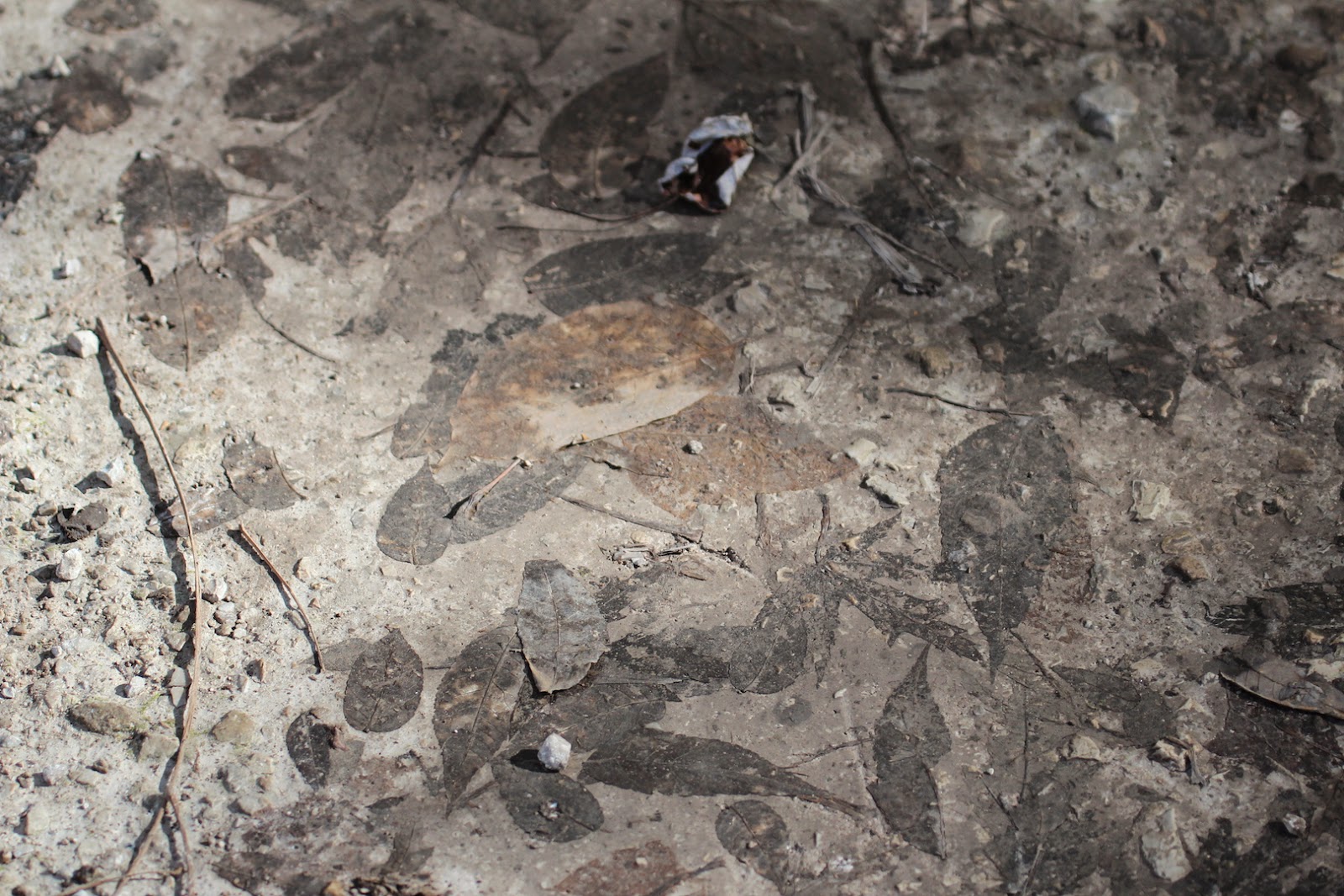
Come back in approximately 100,000 years and we will see if they turned into fossils. These leaves were on a dirt road and had been pressed into the mud making an interesting design. I wonder if this is how the fossilization process starts.

Work in progress

Image
Come back in approximately 100,000 years and we will see if they turned into fossils. These leaves were on a dirt road and had been pressed into the mud making an interesting design. I wonder if this is how the fossilization process starts.

Pied-billed grebe

Image
We went to the hawk watch at Holiday Beach in southern Ontario on the weekend. There weren't a lot of birds passing through but we did find four pied-billed grebes in the marsh which is adjacent to the tower. Podilymbus podiceps   These are brown birds, slightly darker above and more tawny-brown on the underparts. During spring and summer, the crown and nape are dark and the throat is black. While breeding, the bill is whitish with a black band (“pied’), but otherwise is yellow-brown. Juveniles have striped faces. Like other grebes, the Pied-billed Grebe eats large quantities of its own feathers. Feathers may at times fill up more than half of a grebe’s stomach, and they are sometimes fed to newly hatched chicks. The ingested plumage appears to form a sieve-like plug that prevents hard, potentially harmful prey parts from passing into the intestine, and it helps form indigestible items into pellets which they can regurgitate. The longest-lived Pied-billed Grebe on reco...

A turtle i the hand...

Image
is a fine thing to see. This is a hatchling eastern softshelled turtle. They are part of the turtle recovery program at Rondeau Provincial Park. Apalone spinifera Unlike the hard shell of most other turtles, the shell of the spiny softshell turtle is soft and leathery, with a sandpaper-like surface. The spiny softshell turtle spends most of its life in water, often lying buried in the sandy or muddy bottom with only its head and neck protruding.

The opportunist.

Image
A person who exploits circumstances to gain immediate advantage rather than being guided by consistent principles or plans or maybe just a good salesman.

Do you always drool when you drink?

Image
It is "just" a starling starling basically a nuisance bird. First brought to North America by Shakespeare enthusiasts in the nineteenth century, European Starlings are now among the continent’s most numerous songbird As a single bird they can be very handsome in flocks of hundreds they can clean out your feeders in the blink of an eye. Sturnus vulgaris Starlings are boisterous, loud, and they travel in large groups (often with blackbirds and grackles). They race across fields, beak down and probing the grass for food; or they sit high on wires or trees making a constant stream of rattles, whirrs, and whistles. The oldest recorded wild European Starling was 15 years 9 months old. source - Cornell Lab of Ornithology.

Juvenille semipalmated sandpiper.

Image
Another shore bird we saw from the boat before taking it out for the season. It was on a very smelly sandbar in Rondeau Bay with some other shorebirds. Calidris pusilla The Semipalmated Sandpiper breeds in the Arctic and winters along the coasts of South America. Semipalmated Sandpipers from eastern populations probably undertake nonstop transoceanic flights of 3,000 - 4,000 km (1,900 - 2,500 mi) from New England and southern Canada to South America, powered by extensive fat reserves. The Semipalmated Sandpiper gets its common name from the short webs between its toes ("palmated" means webbed). The Western Sandpiper is the only other small sandpiper with similarly webbed toes.

A surprise visitor.

Image
I saw an animal that I thought was a squirrel near our small pond but when I looked closely I realized it was a mink. We have had them in the yard before but not hunting in the pond. It dove into the pond which is not much bigger than the mink. It came out with a frog which it left on the grass. It went back several more times and caught more frogs. I went outside to get better photos and it seemed to scent me and started taking his prizes away. Neovison vison Minks are a voracious predator, and they eat a wide variety of prey and will store any surplus to eat later. source -arkive.org

Where have all the peanuts gone

Image
Long time passing Where have all the peanuts gone? Long time ago Where have all the peanuts gone? Young chipmunks have eaten them everyone Oh, when will thye ever learn? Oh, when will they ever learn? Apologies to Peter,Paul and Mary who recorded the real song. He seems to be telling us that the peanut feeder is empty and his cheeks are empty as well. Master peanut theifs one and all. Tamius striatus Average life span - Often less than 1 year, but can reach 5 years. Their front feet have four toes and the back ones have five toes.

Family bath time.

Image
We have large numbers of chipping sparrows around right now. A group came in to the pond for to bathe. The one on the right is an immature so he looks a little different. The pond brings in as many if not more birds than the feeders do. Spizella passerina The early naturalists had a gift for description you just don’t see anymore. In 1929, Edward Forbush called the Chipping Sparrow “the little brown-capped pensioner of the dooryard and lawn, that comes about farmhouse doors to glean crumbs shaken from the tablecloth by thrifty housewives.” The oldest known Chipping Sparrow was 11 years, 10 months old

...and that's why they call it a white-throated sparrow.

Image
Finally a name that makes sense. I suppose it could be called the yellow eye-browed sparrow or the sparrow with the white stripes on its head but they went for the obvious. Besides there is already a white-crowned sparrow and who talks about eyebrows. Zonotrichia albicollis Crisp facial markings make the White-throated Sparrow an attractive bird as well as a hopping, flying anatomy lesson. There’s the black eyestripe, the white crown and supercilium, the yellow lores, the white throat bordered by a black whisker, or malar stripe. The oldest recorded White-throated Sparrow was 9 years 8 months old.

Up close and personal with a ruddy turnstone

Image
Another photo from the pontoon. There is a sandbar in Rondeau bay that can be good for shorebirds. The down side is that cormorants use it as a roost and it stinks to high heaven. We were only about 8 feet away from this turnstone. There were 5 or 6 on the sandbar and they didn't seem to mind the smell. Arenaria interpres The male Ruddy Turnstone makes nest-like scrapes in the ground within his territory, often close to the final site selected by the female. The male's scrapes are made before the female starts to lay eggs, and are part of the courtship and nest site selection process. No eggs are laid in the scapes the male makes. As their name suggests, turnstones often forage by turning over stones and other objects. source - Cornell Lab of Ornithology.

We have lift off.

Image
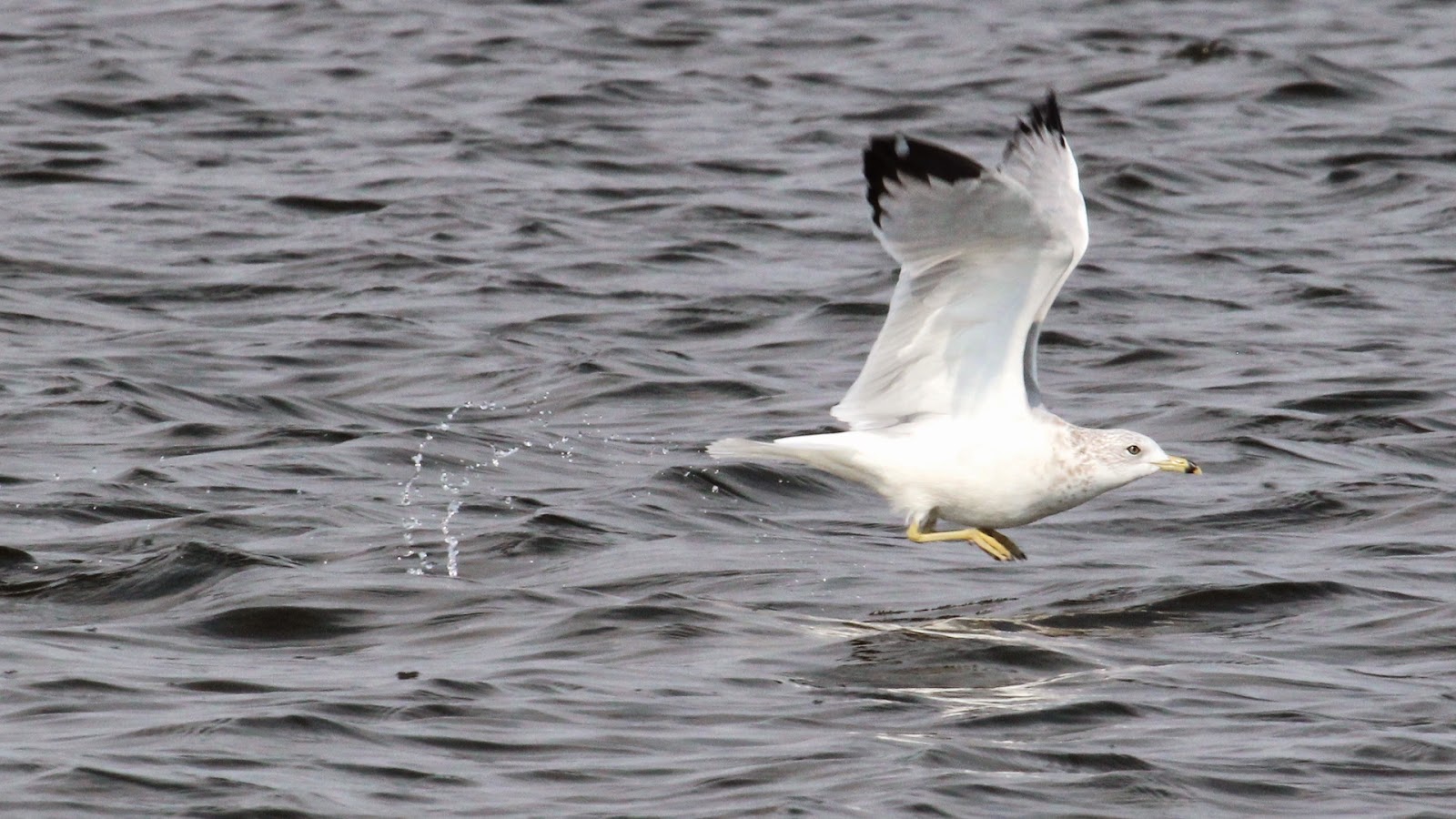
We got a little too close to this ring-billed gull when we were out on the pontoon on Friday. After a running start it lifted off, gave us the evil eye and flew away. Larus delawarensis Most Ring-billed Gulls nest in the interior of the continent, near freshwater. Migrating Ring-billed Gulls apparently use a built-in compass to navigate. When tested at only two days of age, chicks showed a preference for magnetic bearings that would take them in the appropriate direction for their fall migration. source - Cornell Lab of Ornithology.

Death on the wing.

Image
When you see a northern harrier, also know as a marsh hawk, cruising over the reeds you know now something is going to be dinner. We watched it for about ten minutes as it glided and dipped and dove in search of a meal. Beautiful to watch in flight but it didn't very close. Circus cyaneus Northern Harriers are slender, medium-sized raptors with long, fairly broad wings and a long, rounded tail. They have a flat, owl-like face and a small, sharply hooked bill. Harriers often fly with their wings held in a dihedral, or V-shape above the horizontal. Northern Harrier fossils dating from 11,000 to 40,000 years ago have been unearthed in northern Mexico. source - Cornell Lab of Ornithology.
Another camoflauge expert.

Image
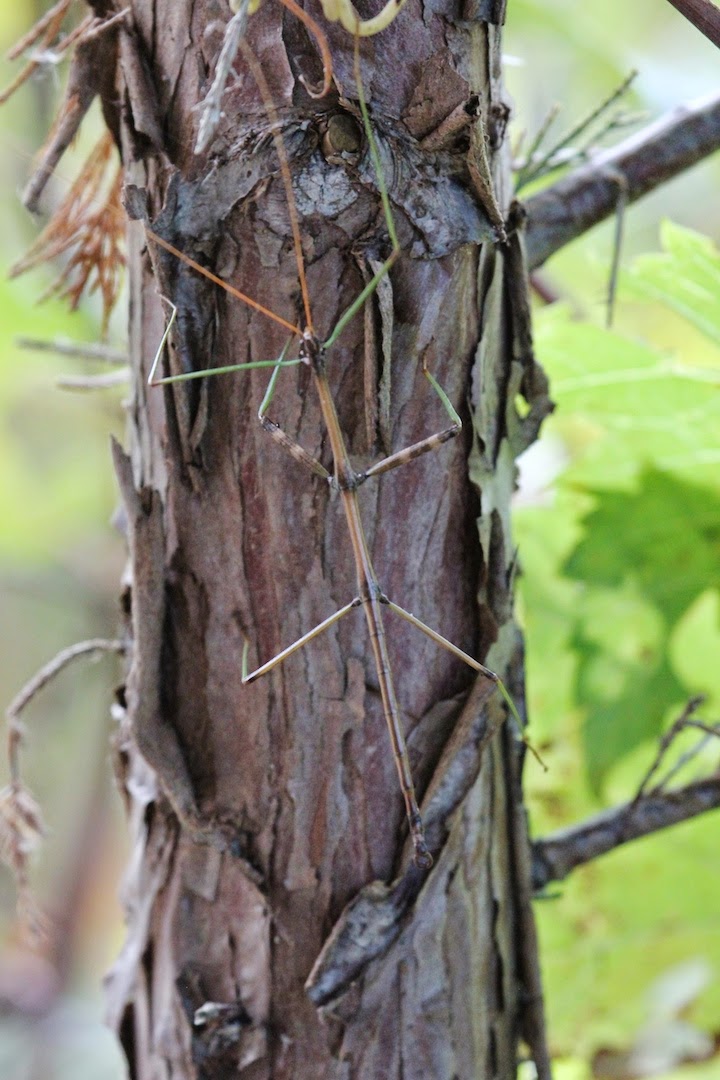
Walking sticks are hard to find for a number of reasons. They look like branches or twigs and the move extremely slowly. I don't know much about them other than they are interesting. Diapheromera fermorata The Northern Walkingstick is our most common "stick insect," which camouflages itself to look like a stick. Northern Walkingsticks grow over 3 1/2 inches long, with males being smaller than females. Walkingsticks have long, skinny bodies which closely resembles twigs or stems of plants. Males are brown, females are greenish-brown. These insects have very long antennae, about 2/3 the length of their bodies. Northern Walkingsticks feed on the leaves of many deciduous trees, including: oaks, Sassafras, Black Cherry, and Black Locust. They also eat clovers. source - Fairfax County Public Schools

The Cookie Monster

Image
Or perhaps the Keeper of the Cookies. Ozzie seems to like sitting on things, be it a newspaper or the cookie container. He certainly wasn't letting anyone have a treat unless he got something in return, chin scratches work well as do ear rubs.

Low rider

Image
This horned grebe rides low in the water and can do a fast flip and disappear in the blink of an eye. There were four of them, in non-breeding plumage, cruising in the lake of Rondeau Provincial Park. Podiceps auritus A sleeping or resting Horned Grebe puts its neck on its back with its head off to one side and facing forward. It keeps one foot tucked up under a wing and uses the other one to maneuver in the water. Having one foot up under a wing makes it float with one "high" side and one "low" side.

Where's Waldo?

Image
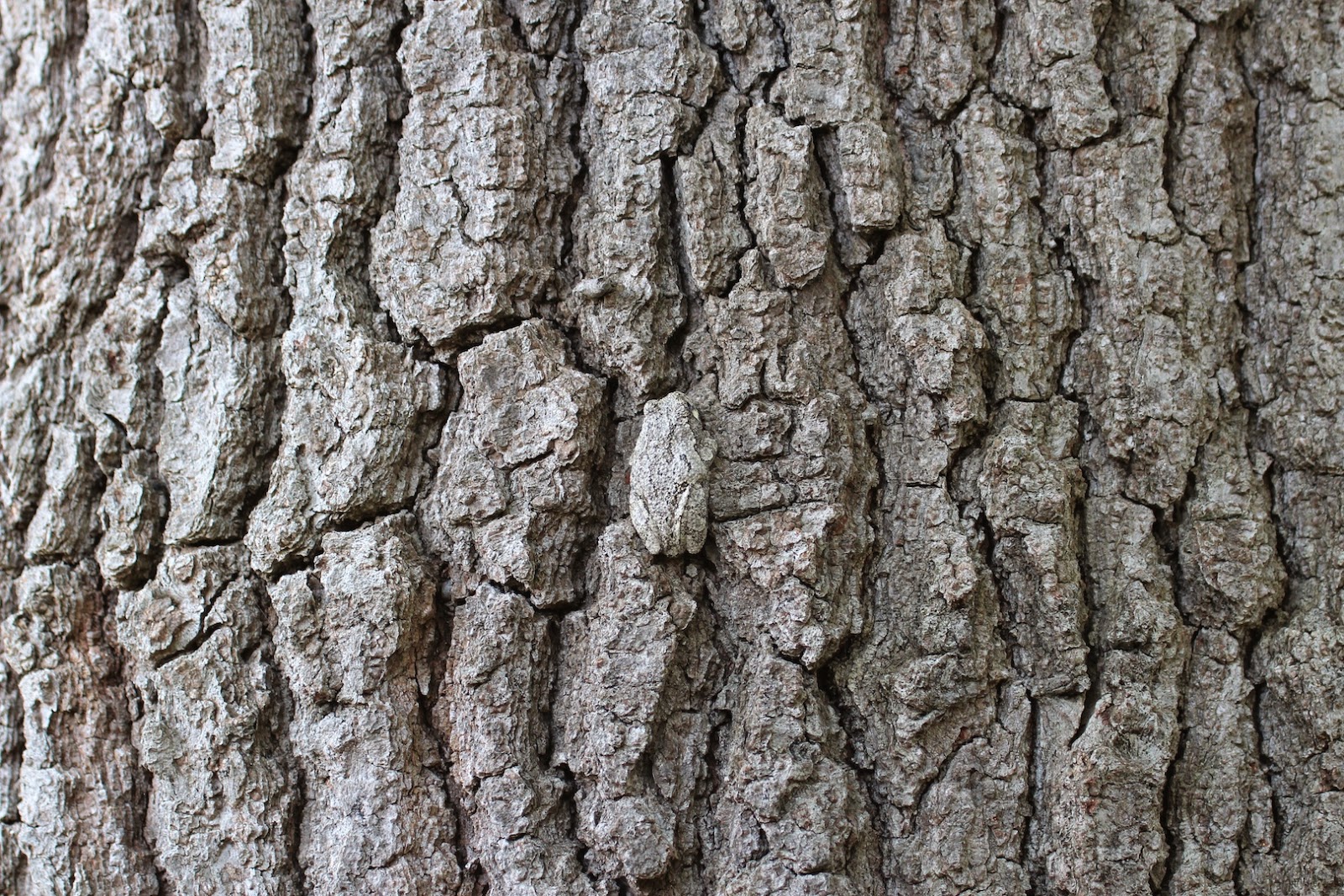
Do you see the gray tree frog? He's hiding in plain sight. Check the other photo to get a better look. Hyla versicolor The gray treefrog has “warty” green, brown or grey skin with large darker blotches on the back. Like many treefrogs, this species has large suction-cup-like toe pads. It has a white patch under each eye and is bright yellow-orange under the thighs. Adults may reach a length of six centimetres. The gray treefrog may be found in many types of tree and shrub communities located near permanent water. source - Ontario Nature.

Papper mache

Image
Well, not quite. Actually it is a piece of a wasps nest made by bald faced wasps. They build a football-shaped paper nest and it is one of the largest of wasp nests. It can be up to 14 inches (35 cm) in diameter and 23 inches (60 cm) in length. They chew up wood, which mixes with a starch in their saliva. They then spread it around with their mandibles and legs, and it dries into a papery structure. Dolichovespula maculata

A world of green

Image
A green heron waiting for a nice frog to come up through the green duck weed. Butorides virescens From a distance, the Green Heron is a dark, stocky bird hunched on slender yellow legs at the water’s edge, often hidden behind a tangle of leaves. Seen up close, it is a striking bird with a velvet-green back, rich chestnut body, and a dark cap often raised into a short crest. These small herons crouch patiently to surprise fish with a snatch of their daggerlike bill. They sometimes lure in fish using small items such as twigs or insects as bait. The oldest Green Heron on record was 7 years, 11 months old. source - Cornell Lab of Ornithology.