Posts

Happy Easter

Image
 

I'm , melting, I'm melting

Image
 An American goldfinch slowly melting away like the Wicked Witch of the West. "You cursed brat! Look what you've done! I'm melting! melting!" Rondeau Provincial Park, Ontario, Canada, September 4, 2018. Spinus tristis Goldfinches move south in winter following a pattern that seems to coincide with regions where the minimum January temperature is no colder than 0 degrees Fahrenheit on average .

The creature of the back woods.

Image
 Be very careful when you travel the back woods, there are things that no-one has seen and survived . Rondeau Provincial Park, April 26, 2018.

Look Ma, no cavities.

Image
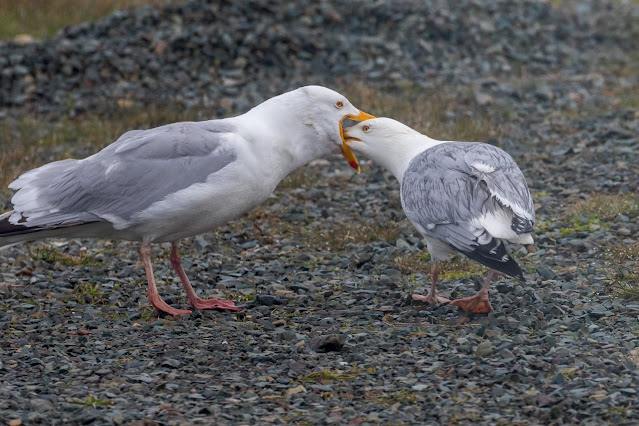
Look Ma, no cavities . Herring gulls, Twillingate, Newfoundland,June 2, 2918, Larus argentatus The Herring Gull has extended its breeding range southward along the Atlantic Coast, and may be displacing the more southern Laughing Gull from some areas. At the northern end of its range, however, the Herring Gull is itself being displaced by increasing numbers of the Great Black-backed Gull.

Chestnut-mandibled toucan.

Image
Chest-mandibled Toucan, One of the many toucans, toucanets, barbets etc that we saw on our Costa Rica trip in 2002. Ramphastos ambiguus swainsonii Small flocks, usually consisting of 3–12 birds, move through the forest with an undulating flight, rarely travelling more than 100m at a time. This species is primarily an arboreal fruit-eater, but will also take insects, lizards, eggs, and frogs. Flocks will follow keel-billed toucans to exploit their sources of food.

Faster than a speeding bullet

Image
Three legged rabbit. Don't know of there were 4 legs but ether way it was fast. Newfoundland, Canada,May 27, 2018.

Shall we dance?

Image
  A pair of fox kits playing while waiting for mom to bring food. May 10, 2021, Shrewsbury, Ontario. Vulpes vulpes The red fox, is a member of the Canid family, which also includes the wolf, coyote and jackal. The Cree word for red fox is “Wah-kus,” while among the Chippewa it is known as “Nak-ee.” To French Canadians, the fox is “le renard”. In 1650, the European red fox was imported to the Atlantic coast of what is now the United States. The foxhunting settlers who imported it had found the local grey fox unable to give their horses and hounds a suitable chase. Eventually, a red fox native to more northern areas of the continent encountered and interbred with the imported fox producing the strain found today.

Black-billed magpie

Image
Black-billed magpie, March 13, 202 4, Fargo Line Near Blenheim, Ontario. Followed up on a report of a black-billed magpie in the neighbourhood. Rare here, common further west and north. Got 2 for the price of 1 Not a super shot but you take that you can get. Pica hudsonia The Black-billed Magpie frequently picks ticks from the backs of large mammals, such as deer and moose. The magpie eats the ticks or hides some for later use, as members of the crow and jay family often do with excess food. Most of the ticks, however, are cached alive and unharmed, and may live to reproduce later.

Golden-crowned kinglet.

Image
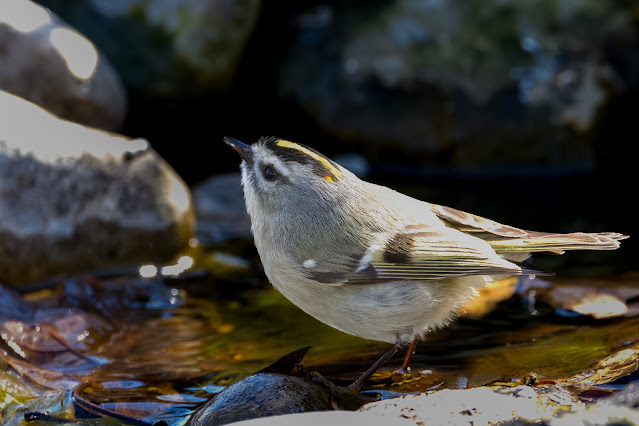
Golden-crowned kinglet, Rondeau Provincial Park, Ontario, Canada.,April 3, 2023. This little speedster stopped long enough to get an image.  Normally the are flirting around so much you can't get one in focus. Regulus satrapa The tiny Golden-crowned Kinglet is hardier than it looks, routinely wintering in areas where nighttime temperatures can fall below –40° Fahrenheit.

The reflection

Image
The reflection As light as a feather, Rondeau Bay, Ontario, Canada.  3, 2017

Red-eyed vireo.

Image
  Seems to be unhappy with something or he is signing on territory. Rondeau Provincial Park, Ontario, Canada, August 27, 2021. Vireo olivaceus On May 27, 1952, Louise de Kiriline Lawrence counted the number of songs sung by a single Red-eyed Vireo seeking a mate on his territory 180 miles north of Toronto. He sang 22,197 songs in the 14 hours from just before dawn to evening, singing for 10 of those hours. source-allaboutbirds-org.

Mute swans

Image
Don't know about ducks, but I've got my swans in a row. February 4, 2023, Windsor, Ontario, Canada. Mute swans Cygnus olor The black knob at the base of the male Mute Swan's bill swells during the breeding season and becomes noticeably larger than the female's. The rest of the year the difference between the sexes is not obvious. source-allaboutbirds-org

House finch.

Image
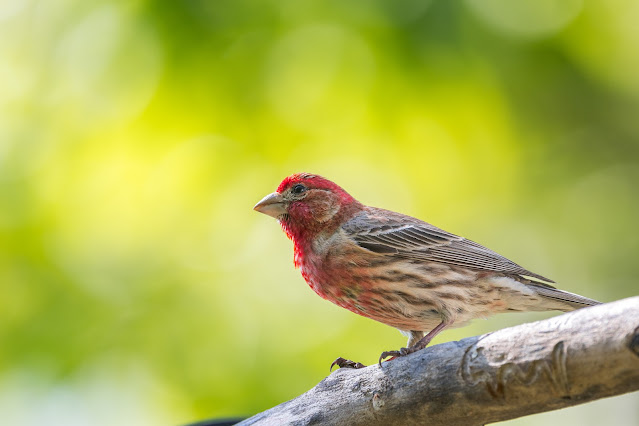
 House finch, Rondeau Provincial Park, Ontario, Canada, May 30, 2023, waiting its turn at the water. Haemorhous mexicanus. The red of a male House Finch comes from pigments contained in its food during molt (birds can’t make bright red or yellow colors directly). So the more pigment in the food, the redder the male. This is why people sometimes see orange or yellowish male House Finches. Females prefer to mate with the reddest male they can find, perhaps raising the chances they get a capable mate who can do his part in feeding the nestlings.

Great blue heron on the wing

Image
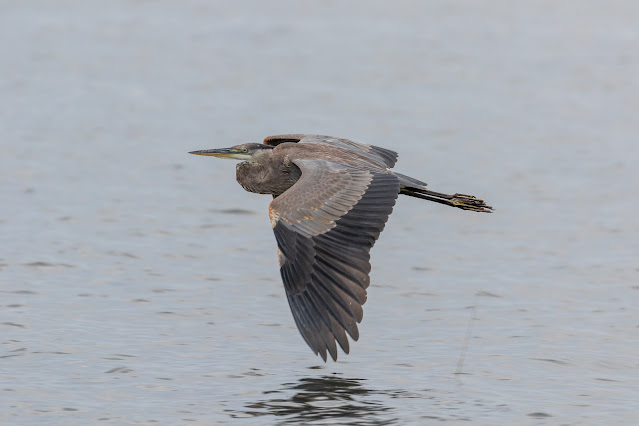
 Take from the pontoon boat at Rondeau Provincial Park, Ontario, Canada, October 14, 2023. Ardea herodias,  Great Blue Herons can hunt day and night thanks to a high percentage of rod-type photoreceptors in their eyes that improve their night vision. source-allaboutbirds-org

Blackburnian warbler

Image
  May 21, 2023, Rondeau Provincial Park, Ontario, Canada. Sitting on a branch above the small water feature. Setophaga fusca.  If your backyard has plenty of trees, you might attract Blackburnian Warblers on migration or in summer. They may remain hard to find in the tree canopy, but they may come down into view if you offer a bird bath or water dripper. See more ideas for   creating water features  in your yard. Warblers don’t come to seed feeders, although they may stop by if you offer mealworms. source-allaboutbirds-org

Tennessee warbler

Image
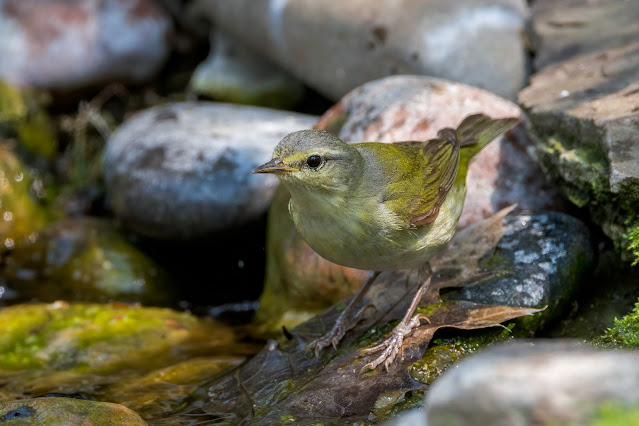
  This one is for Denise, she asked for more warblers while waiting for the birds to show up. Tennessee warbler just above our little water feature. Rondeau Provincial Park, Ontario, Canada. Leiothlypis peregrina.  The Tennessee Warbler is a common nectar "thief" on its wintering grounds in tropical forests. Most nectar-eating birds, bats, and insects probe a flower from the front to get the nectar, spreading pollen on their faces in the process. But Tennessee warblers pierce the flower tube at the base, lapping up the nectar without helping pollinate the flower.

Canada warbler.

Image
Continuing a theme, grey, snow shower and limited species of birds sent me back to the archives,  May 21, 2023, Rondeau Provincial Park, Ontario, Canada Cardellina canadensis.  Canada Warblers fly more than 3,000 miles from their wintering grounds in South America to their breeding grounds in the United States and Canada.

Nashville warbler

Image
Still waiting for the spring migration. Another from the archives, May 21, 2023, Rondeau Provincial Park, Ontario, Canada. Waiting for its turn in the water feature. Leiothlypis ruficapilla.  Nashville Warblers don't breed anywhere near Nashville, Tennessee, although they do migrate through. The species got its name because Nashville was where Alexander Wilson  first saw it, in 1811, and went on to name it. source-allaboutbirds-org

Prothonotary warbler,

Image
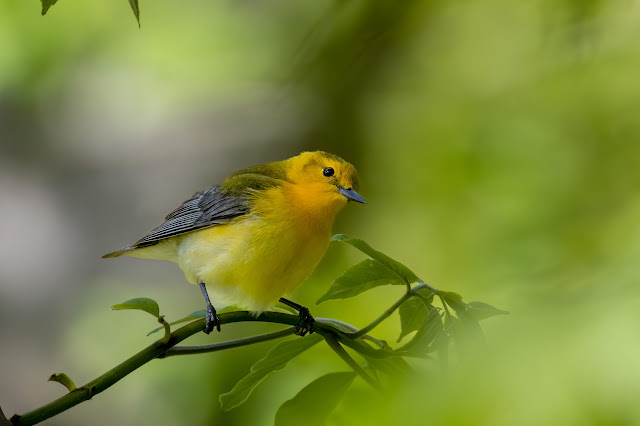
Prothonotary warbler, May 23, 2023, Rondeau Provincial Park, Ontario, Canada. Another from the archives.    Protonotaria citrea. Most warblers nest either on the ground, in shrubs, or in trees, but the Prothonotary Warbler and the Lucy's Warbler build their nests in holes in standing dead trees. They may also use nest boxes when available.

Chestnut-sided warbler.

Image
  Another from the archives, May 29, 2023, Rondeau Provincial Park, Ontario, Canada. Just before its bath in our little water feature. Setophaga pensylvanica.  On the wintering grounds in Central America the Chestnut-sided Warbler joins in mixed-species foraging flocks with the resident antwrens and tropical warblers. Individual warblers return to the same areas year after year, joining back up with the same foraging flock it associated with the year before.