Posts

Not much freeboard.

Image
Not made for rough water. Spotted this aquacar at Erieau Marina today. They were doing fine until the got to the main channel and encountered rough waters and inconsiderate boaters. Not much freeboard on this contraption. The turned back and cruised the marina before driving away.

Blanding's turtle.

Image
Got out on the pontoon today, I even got to drive. One of the things we saw was this Blanding's turtle sitting at the edge of the marsh. Emydoidea blandingii Blanding's Turtles live in shallow water, usually in large wetlands and shallow lakes with lots of water plants. It is not unusual, though, to find them hundreds of metres from the nearest water body, especially while they are searching for a mate or traveling to a nesting site. Blanding's Turtles hibernate in the mud at the bottom of permanent water bodies from late October until the end of April. source - https://www.ontario.ca/page/blandings-turtle

Spring peeper.

Image
Anne spotted this tiny spring peeper on a wire fence in the front yard. Tiny thing, maybe 1"(2.4cm) in length. It moved around from plant to plant. Pseudacris crucifer The tiny spring peeper is tan or light brown in colour with a darker X-shaped marking on the back. The largest peeper on record was a mere 3.7 centimetres long. The breeding call of this species is a single, loud, high-pitched peep repeated over and over. A full chorus can be deafening up close and can be heard over a kilometre away. In large choruses, peepers will also trill, advising other males to keep their distance. source- https://www.ontarionature.org/protect/species/reptiles_and_amphibians/spring_peeper.php

Eastern Kingbird, Rondeau Provincial Park, June 2017

Image
Delivering fruit to its young, probably a raspberry. Tyrannus tyrannus Parent Eastern Kingbirds feed their young for about seven weeks. Because of this relatively long period of dependence, a pair generally raises only one brood of young per nesting season. source -  https://www.allaboutbirds.org/ …/Eastern_Kingbird/lifehistory

Red-headed woodpecker, immature.

Image
Most of the adults have stopped feeding young birds. It is fun to watch the youngsters try to figure out the feeders. This is an immature redheaded woodpecker. Melanerpes erythrocephalus Immatures have gray-brown heads, and the white wing patches show rows of black spots near the trailing edge. Adults have bright-red heads, white underparts, and black backs with large white patches in the wings, making the lower back appear all white when perched source - https://www.allaboutbirds.org/guide/Red-headed_Woodpecker/id

Immature male red winged blackbird.

Image
Enjoying a bath on a hot day. Not a large selection of birds around the yard these days but their is lots of activity. Agelaius phoeniceus Red-winged Blackbirds roost in flocks in all months of the year. In summer small numbers roost in the wetlands where the birds breed. Winter flocks can be congregations of several million birds, including other blackbird species and starlings. Each morning the roosts spread out, traveling as far as 50 miles to feed, then re-forming at night. source -  https://www.allaboutbirds.org/…/Red-winged_Blac…/lifehistory

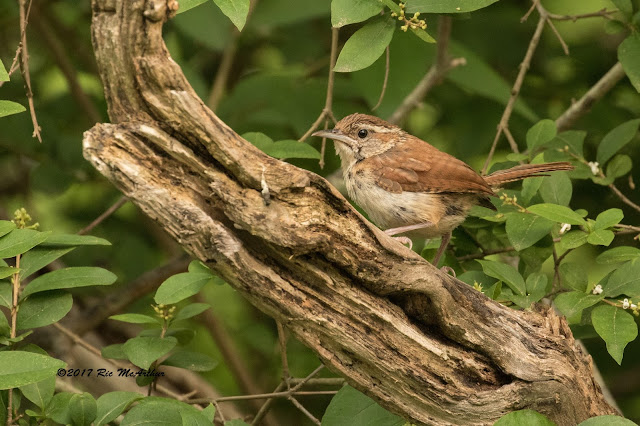
When nature gives you wrens, you post wrens.

Image
This is a Carolina Wren in the hedge in bad light. Yes excuses, excuses. Thryothorus ludovicianus A pair bond may form between a male and a female at any time of the year, and the pair will stay together for life. Members of a pair stay together on their territory year-round, and forage and move around the territory together.

Who's a pretty boy?

Image
Not me but that's okay. Had two surgeons do a 7 hour open heart surgery on Tues July 4, now I'm back home. Won't be doing much on flickr but don't forget about me , new photos coming.

A few yard visitors this morning

Image
Sitting in the yard having coffee this morning. Cardinal Male and female cowbirds Male rose breasted grosbeak House finch - hitching a ride. Ruby throated hummingbird- juggling breakfast. White breasted nuthatch - male pattern baldness. Red bellied woodpecker Red-headed woodpecker Swallows

Magnificent Frigatebird, Leamington, Ontario, July 1, 2017

Image
Like many birders from southwest Ontario we went to Leamington to see the magnificent frigatebird. Very co-operative, sitting in the same tree it has been seen in for the past two days. A big thank you to the homeowner who is allowing birders on to his property to get stellar views of this rare bird. It has been seen flying and catching fish so, hopefully it will stay a while. We saw one at Rondeau on July 2, 2012, and this one July 1, 2017. Fregata magnificens The male Magnificent Frigatebird abandons its mate and half-grown chick and leaves the breeding colony, presumably to molt and return for another breeding attempt with a different mate. The female cares for the young for over a year. This difference in parental care allows the male to breed each year while the female breeds only every other year. source -  https://www.allaboutbirds.org/ …/Magnificent_Fri…/lifehistory

Tufted titmouse.

Image
Obviously it isn't showing its crest/tuft, probably because it was having a bath. This is the first time I can recall getting photos of a titmouse at the pond. Baeolophus bicolor Tufted Titmice hoard food in fall and winter, a behavior they share with many of their relatives, including the chickadees and tits. Titmice take advantage of a bird feeder’s bounty by storing many of the seeds they get. Usually, the storage sites are within 130 feet of the feeder. The birds take only one seed per trip and usually shell the seeds before hiding them. source -https://www.allaboutbirds.org/guide/Tufted_Titmouse/lifehistory

It is feeding time in the yard.

Image
Lots of young birds being fed by adults. These are hairy woodpeckers using the suet log as a take out restaurant. Picoides villosus Hairy Woodpeckers sometimes follow Pileated Woodpeckers, and sometimes appears when it hears the heavy sounds of a pileated excavating. As the pileated moves on, the Hairy Woodpecker investigates the deep holes, taking insects the pileated missed. source -  https://www.allaboutbirds.org/ …/Hairy_Woodpecker/lifehistory

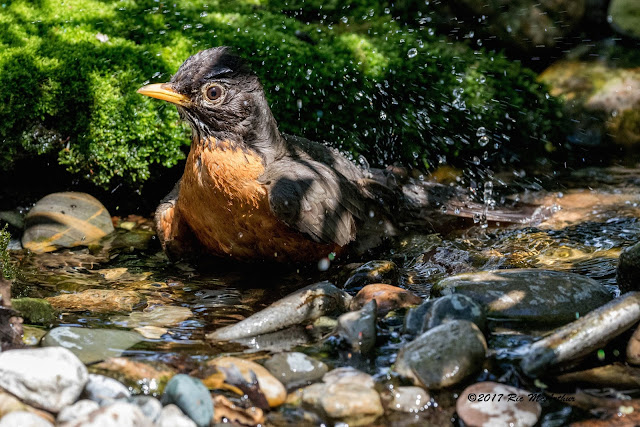
American robin having a frolic.

Image
This is why I have to keep adding water to the pond. Turdus migratorius Although robins are considered harbingers of spring, many American Robins spend the whole winter in their breeding range. But because they spend more time roosting in trees and less time in your yard, you're much less likely to see them. The number of robins present in the northern parts of the range varies each year with the local conditions. source -  https://www.allaboutbirds.org/gu …/American_Robin/lifehistory

A really bad hair day.

Image
Found this starling chick on the road. Moved it to the sided, hope the adults can find it. Not a fan of starlings, but one at a time they aren't bad for an invasive species. Sturnus vulgaris Starlings are great vocal mimics: individuals can learn the calls of up to 20 different species. Birds whose songs starlings often copy include the Eastern Wood-Pewee, Killdeer, meadowlarks, Northern Bobwhite, Wood Thrush, Red-tailed Hawk, American Robin, Northern Flicker, and many others. source - https://www.allaboutbirds.org/guide/European_Starling/lifehistory

Disputed Territory.

Image
Red winged blackbird and a Hairy woodpecker, Rondeau Provincial Park, June 26, 2017. A red winged blackbird and a hairy woodpecker were having a dispute over the suet feeder in the yard yesterday. The hairy won

Sagrada Familia

Image
This is part of the skyline of Barcelona Spain. The large cathedral just left of centre is The Basílica i Temple Expiatori de la Sagrada Família. Construction was started in 1882 and is projected to be completed by 2026.

New and improved.

Image
Needed a new a pump for the pond/stream which necessitated rearranging the rocks and bits and pieces. At first I bought a 1500 gallon per hour pump. Quickly realized I wanted 1500 litre per hour pump. The 1500 gph would have shot the water out of the pool and half way across the yard. I don't think woodland birds like to surf. Piranga olivacea The female Scarlet Tanager sings a song similar to the male's, but softer, shorter, and less harsh. She sings in answer to the male's song and while she is gathering nesting material. source -  https://www.allaboutbirds.org/g…/Scarlet_Tanager/lifehistory

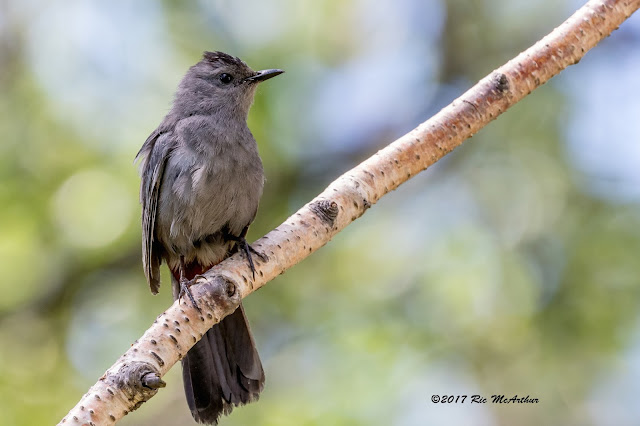
The jelly thief.

Image
We put out grape jelly for the orioles and it turns out that gray catbirds like it as well. Not big enough to push orioles off, he just waits his turn. How Canadian. Dumetella carolinensis The Gray Catbird’s long song may last for up to 10 minutes. source - https://www.allaboutbirds.org/guide/Gray_Catbird/lifehistory
Image
Hovering Jay. A close relative of the Blue Jay. We have a suet feeder for woodpeckers that blue jays ad grackles keep raiding. It is a piece of log with holes drilled into it that is filled with homemade suet. Woodpeckers can hold on and feed without problem. The jays have to hover and stab at the suet as this one is doing. Cyanocitta cristata The pigment in Blue Jay feathers is melanin, which is brown. The blue color is caused by scattering light through modified cells on the surface of the feather barbs. source - https://www.allaboutbirds.org/guide/Blue_Jay/lifehistory

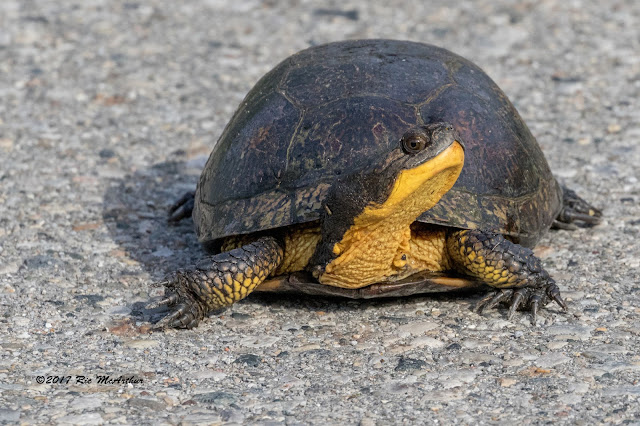
Blanding's turtle.

Image
Went looking for a fawn a friend saw, missed it but found this Blanding's turtle near the parking lot of the trail. Watched until it was safely across the road. Emydoidea blandingii Blanding's Turtles live in shallow water, usually in large wetlands and shallow lakes with lots of water plants. It is not unusual, though, to find them hundreds of metres from the nearest water body, especially while they are searching for a mate or traveling to a nesting site. Blanding's Turtles hibernate in the mud at the bottom of permanent water bodies from late October until the end of April. source - https://www.ontario.ca/page/blandings-turtle